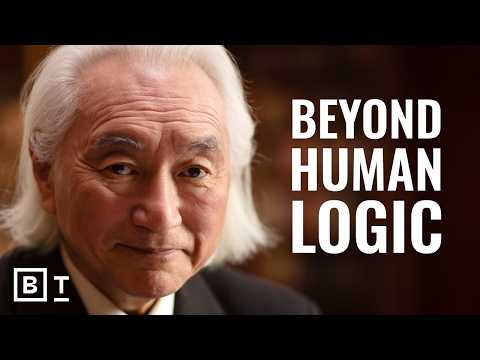
In this blog post, physicist Michio Kaku discusses the Kardashev scale, categorizing civilizations based on energy consumption. He explores the implications of different types of intelligence, the potential for extraterrestrial life, and the significance of recent data on unidentified aerial phenomena (UAPs). Kaku emphasizes the need for rigorous data analysis to understand these phenomena and the shift in the burden of proof regarding their origins.
In a thought-provoking discussion, physicist Michio Kaku delves into the concept of intelligence in the universe, particularly in relation to the Kardashev scale. This scale categorizes civilizations based on their energy consumption and technological advancement. Kaku's insights challenge our understanding of intelligence and the potential existence of extraterrestrial life.
Kaku begins by emphasizing that intelligence may manifest in forms vastly different from human intelligence. To explore this idea, he recounts an experiment where he was placed in a swimming pool with dolphins. Sensors recorded the dolphins' sounds, which were then analyzed by a computer to identify patterns. This analysis revealed that dolphins communicate in a language distinct from humans, suggesting that their criteria for intelligence differ from ours.
Kaku explains that just as we can analyze the frequency of letters in a text to identify authorship, we can apply similar algorithms to assess intelligence across species. For instance, while dolphins exhibit complex communication, insects have a much simpler system primarily focused on survival. This ranking of intelligence can extend to potential extraterrestrial civilizations.
The Kardashev scale categorizes civilizations into three types based on their energy consumption:
Kaku points out that humanity currently ranks as a Type 0 Civilization, relying on fossil fuels and other non-renewable energy sources. We have yet to achieve the energy capabilities of a Type I civilization.
Kaku discusses the concept of Planck energy, the energy level associated with the Big Bang and black holes. He posits that to transition to a Type III civilization, humanity would need to advance approximately 100,000 years in technology to harness this energy and explore beyond our universe.
The search for intelligent life in the galaxy raises the question of how we would recognize advanced civilizations. Kaku notes that Type II civilizations emit specific energy signatures that we can measure. However, despite extensive searches, no definitive evidence of such civilizations has been found, which may be due to the limitations of our current technology.
Kaku highlights the importance of data in the investigation of unidentified aerial phenomena (UAPs). The U.S. Navy has acknowledged the existence of hours of video footage that can be analyzed to understand these objects better. Some of these UAPs have demonstrated capabilities far beyond our current engineering, such as traveling at Mach 20 and maneuvering in ways that would crush any living being inside a conventional aircraft.
Historically, sightings of UAPs were often dismissed without rigorous investigation. However, Kaku notes a significant shift: the burden of proof now lies with the military to demonstrate that these phenomena are not extraterrestrial. This change has been driven by public pressure and the Freedom of Information Act, which has allowed citizens to access previously classified information.
Kaku stresses that while 90% of UAP sightings can be attributed to natural phenomena or misidentified objects, about 10% remain unexplained and warrant further investigation. He cites a notable incident involving a Japan Airlines flight in the 1980s, where multiple objects were tracked alongside the aircraft, leading to a chilling response from the aviation industry regarding reporting unusual sightings.
In conclusion, Michio Kaku's exploration of the Kardashev scale and the nature of intelligence invites us to reconsider our place in the universe. As we gather more data on UAPs and the potential for extraterrestrial life, the need for careful analysis and open-mindedness becomes increasingly crucial. The future of humanity may depend on our ability to understand and harness the energy that lies beyond our current capabilities, paving the way for a new era of exploration and discovery.