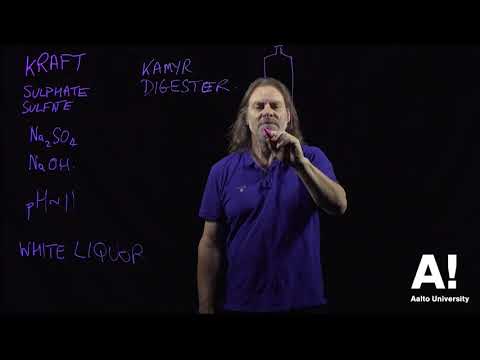
The Kraft process, also known as the sulfate process, is a method of producing pulp from wood chips using sodium sulfate and sodium hydroxide. This alkaline process effectively removes lignin from wood, allowing for the production of high-quality paper and cardboard. The process is energy-efficient, utilizing the byproduct black liquor to power operations and potentially export electricity.
The Kraft process, often referred to as the sulfate process, is a crucial method in the pulp and paper industry. This process utilizes two primary chemicals: sodium sulfate and sodium hydroxide, creating a highly alkaline environment essential for breaking down wood fibers.
The Kraft process begins with wood chips that are impregnated with a mixture known as white liquor, which consists of sodium sulfate and sodium hydroxide. This mixture is crucial for the subsequent steps in the process. The pH of this process is around 11, indicating its highly alkaline nature.
Once the wood chips are treated with white liquor, they are placed in a reactor called a digester. Modern digesters, often referred to as continuous digesters, were developed in Finland and are designed to handle the high pressures and temperatures required for effective digestion.
In the digester, the wood chips are heated under pressure for a specific duration. After this period, the pressure is suddenly released into a blow tank. This rapid decompression causes the wood chips to explode, effectively releasing the fibers from the chips.
Following the explosion in the blow tank, the mixture undergoes a series of presses, screens, and filters. This step is crucial for removing larger particles, such as knots, which do not contribute to the pulp quality. These knots are typically repurposed as an energy source.
The main byproduct of this process is known as black liquor, which contains the residual chemicals and lignin extracted from the wood. Lignin is undesirable in paper production because it imparts a brown color and rigidity to the fibers. Therefore, the removal of lignin is essential for producing high-quality paper.
Black liquor is not just a waste product; it is a valuable resource. It contains significant energy that can be harnessed to power the entire Kraft process. The black liquor is sent to a recovery boiler, where it is combusted to recover energy. This energy recovery makes the Kraft process notably energy self-sufficient, with the potential to export excess electricity back to the grid.
After the combustion of black liquor, a series of processes are employed to regenerate white liquor. Some makeup chemicals are added to replace those lost during the process, allowing the white liquor to be reused repeatedly. This cyclical nature of the Kraft process enhances its efficiency and sustainability.
While the Kraft process effectively removes lignin, the resulting fibers still contain some residual lignin. To produce high-quality white paper, these fibers must undergo a bleaching process. Various technologies can be employed for bleaching, which will be discussed in detail in a separate article. The goal of bleaching is to achieve the desired whiteness and flexibility in the paper without compromising the integrity of the fibers.
In summary, the Kraft process is a sophisticated and efficient method for producing pulp from wood chips. By utilizing sodium sulfate and sodium hydroxide in a highly alkaline environment, this process effectively removes lignin and separates the fibers necessary for high-quality paper and cardboard production. The energy recovery from black liquor not only powers the process but also contributes to its sustainability, making the Kraft process a cornerstone of modern pulp and paper manufacturing.