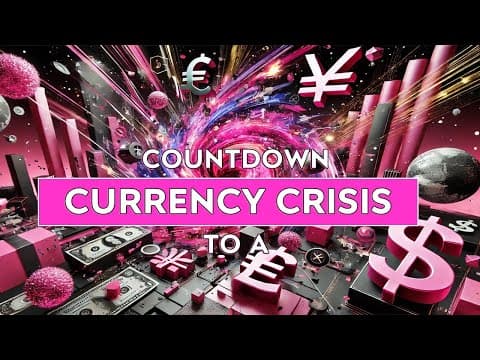
The Milkshake Theory explains the dynamics of the US dollar as the global reserve currency, highlighting how its strength impacts global economies, debt servicing, and asset prices. As the dollar strengthens, it creates challenges for other currencies and economies, potentially leading to a currency crisis.
The recent surge in the value of the US dollar has sparked discussions about the Milkshake Theory, a concept that explains the dollar's role as the global reserve currency and its implications for the global economy. This article delves into the intricacies of the Milkshake Theory, exploring how the dollar's strength affects international markets, debt obligations, and asset prices.
The Milkshake Theory posits that the US dollar, as the global reserve currency, acts as a safety haven during economic downturns. When global economic conditions worsen, investors flock to the dollar, which leads to its appreciation. This phenomenon is driven by several factors:
As the dollar strengthens, it creates a ripple effect across the globe. Countries that have borrowed in dollars face increased challenges in servicing their debts. For instance, if a country like China owes a billion dollars, a stronger dollar means that the local currency must be exchanged for more dollars to meet that obligation. This situation can lead to economic strain, particularly if the local currency depreciates against the dollar.
The dollar index (DXY) has recently approached a 30-year high, indicating a robust dollar. However, this strength can weaken other economies, leading to a cycle of economic distress. The correlation between a strong dollar and weaker foreign economies is nearly perfect, raising questions about whether the dollar's rise is a cause or a response to global economic issues.
Critics often argue that excessive printing of money will devalue the dollar. While this is partially true, the unique position of the dollar allows the US to export its inflation. Other countries, which do not have the same demand for their currencies, experience higher inflation rates when they print more money. This phenomenon is referred to as "Fiat versus Fiat," where the dollar remains strong relative to other fiat currencies.
Historically, financial crises have often involved a component of Fiat versus Fiat dynamics. For example, during the 1990s, Mexico faced a crisis due to its dollar-denominated debt, leading to what was known as the tequila crisis. The US dollar's demand remains high, primarily because it is viewed as a stable currency compared to others.
The current political landscape, particularly under the Trump administration, has seen a push for manufacturing in the US. A strong dollar can hinder manufacturing competitiveness by making US goods more expensive abroad. Tariffs can be used to protect domestic industries, but they also reduce the flow of dollars to other countries, complicating international trade dynamics.
While the current strength of the dollar benefits asset prices in the US, it poses risks for the global economy. If the dollar becomes too strong, it could trigger an international crisis, affecting not only foreign economies but also the US itself. The influx of foreign capital into US assets, such as real estate, may continue to drive prices higher, but this trend is not without its challenges.
As countries explore alternatives to the dollar, such as cryptocurrencies or regional currencies like BRICS, the question remains whether a consensus can be reached on a viable replacement. The complexity of international agreements and the desire for control over monetary policy complicate this transition.
The Milkshake Theory provides a framework for understanding the dynamics of the US dollar in the global economy. While a strong dollar can offer short-term benefits, it also carries the potential for long-term challenges, including increased wealth inequality and the risk of a currency crisis. As the world navigates these complexities, the future of the dollar and its role as the global reserve currency remains a critical topic for investors and policymakers alike.