The natural rate of unemployment represents the level of unemployment that exists when the labor market is in equilibrium, encompassing structural, frictional, and seasonal unemployment. This article explores the concept, its implications, and the factors influencing the natural rate across different economies.
The natural rate of unemployment is a fundamental concept in economics that often perplexes many. It refers to the level of unemployment that exists when the labor market is in equilibrium. This article delves into the intricacies of the natural rate of unemployment, its components, and the determinants that influence its variation across different economies.
The natural rate of unemployment is not merely a theoretical construct; it reflects the reality that even in a balanced labor market, some level of unemployment persists. This unemployment arises from three primary types:
Despite being at equilibrium, the presence of these types of unemployment means that achieving a zero percent unemployment rate is unrealistic. Instead, the macroeconomic goal is to reach full employment, which corresponds to the natural rate of unemployment.
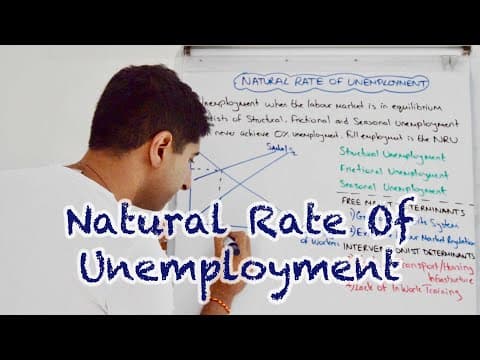
To understand the natural rate of unemployment, it is essential to visualize the labor market. The labor market can be represented with:
In this model, the demand for labor is depicted by a downward-sloping curve, representing firms' desire to hire workers. Conversely, the supply of labor is shown as an upward-sloping curve, indicating that more individuals are willing to work at higher wage rates.
However, the actual labor supply curve differs from the theoretical one. The actual supply curve reflects the number of workers who accept jobs at various wage rates, which tends to be lower than the theoretical supply due to various factors affecting job acceptance.
The equilibrium in the labor market occurs where the actual supply of labor intersects with the demand for labor. At this point, while some workers (Q2) are willing and able to work, only a subset (Qfe) is employed, creating a gap that represents the natural rate of unemployment.
The natural rate of unemployment varies significantly across countries, influenced by several determinants. Economists often debate the reasons behind these differences, with two primary schools of thought:
Free market proponents argue that excessive government intervention contributes to higher natural rates of unemployment. They highlight several factors:
On the other hand, interventionist economists contend that insufficient government intervention leads to higher natural rates of unemployment. They point to:
The natural rate of unemployment is a complex yet crucial concept in understanding labor market dynamics. It encompasses various forms of unemployment that persist even in equilibrium. By examining the determinants of the natural rate, we can better understand the economic conditions that lead to varying unemployment levels across different countries. This knowledge is essential for policymakers aiming to achieve full employment and enhance economic stability.