This article explores the role of evolutionary psychology in explaining human behaviors such as attachment, language development, and sex differences. It discusses the interplay between biology and culture, the genetic basis of behavior, and the concept of freedom as an evolutionary product. The article highlights how evolutionary psychology informs our understanding of behavior while acknowledging cultural influences and individual variability.
Evolutionary psychology seeks to understand human behavior through the lens of evolution, exploring how certain behaviors may have developed to enhance survival and reproduction. This article delves into key examples such as attachment, language, and sex differences, discussing the interplay between biology and culture and the implications for understanding human nature.
Attachment between an infant and a caregiver is a universal phenomenon observed across all cultures. Evolutionary psychology provides a framework to predict outcomes when attachment processes go awry. For example, insecure attachment in infancy, especially in cases of neglect or abuse, can lead to personality disorders in adulthood. This understanding has contributed to the development of evolutionary psychiatry.
Attachment is not unique to humans; it is observed in other species such as chimpanzees, monkeys, dogs, and cats. This cross-species observation raises the question of whether attachment is an evolved behavior. The attachment system keeps immature offspring close to their parents, enhancing their survival by protecting them from predators and ensuring parental vigilance.
Language is another human universal that evolutionary psychology examines. Children across all cultures learn to speak, but other animals do not develop language in the same way. While the specific language learned varies culturally—such as Danish, Finnish, English, or Welsh—the capacity for language development appears biologically ingrained.
This interplay between biology and culture illustrates the classic nature versus nurture debate. The biological system enables language acquisition, while cultural inputs shape the specific language learned. Evolutionary psychology helps explain the biological basis of language while acknowledging cultural specificity.
When observing different behaviors across disparate cultures, evolutionary psychology suggests that common themes may indicate underlying evolved mechanisms. However, understanding the genetic basis of behavior does not always translate into practical benefits for how societies organize themselves.
Differences in behavior among groups do not necessarily negate biological influences. Instead, they may reflect cultural variations rather than distinct genetic modules. Evolutionary psychology faces challenges in distinguishing behaviors shaped primarily by biology from those shaped by culture.
A classical evolutionary psychology argument posits that men primarily spread their genes and do not engage in child-rearing, which is the mother's role. However, contemporary observations show men increasingly participating in parenting, challenging this traditional view.
Research into sex differences in empathy reveals that women, on average, score higher on empathy tests across 57 countries with over 300,000 participants. This difference may be explained by evolutionary pressures on mothers to read their infants' needs for survival. Nonetheless, men also possess empathy and can effectively engage in caregiving.
The cultural shift towards shared parenting roles demonstrates the malleability of behavior and culture. Both genders have the capacity for empathy, and cultural norms influence how these capacities are expressed.
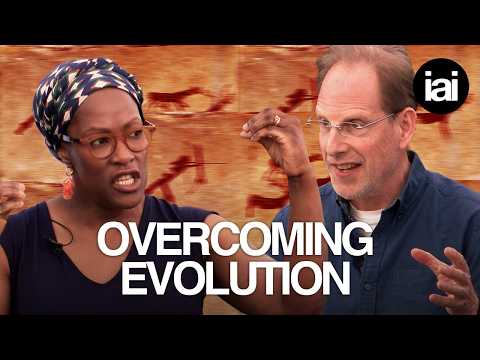
The debate about the extent to which behavior is biologically determined or culturally shaped is ongoing. The dichotomy between nature and nurture is overly simplistic; instead, humans are biological entities engaged in a co-construction with culture.
Evolution has endowed humans with significant autonomy and flexibility, allowing us to set our own goals and adapt to changing circumstances. This freedom is a product of evolution, not a divine gift. For example, humans can choose not to reproduce, a decision that may seem counterintuitive from a genetic perspective but reflects our evolved capacity for self-control and autonomy.
Understanding the genetic contributions to behaviors such as language development can aid in identifying and addressing developmental disabilities. For instance, some children experience language delays due to genetic factors, while environmental factors like parental attention also play a crucial role.
The interaction between biology and social environment is evident in phenomena such as girls typically speaking earlier than boys and firstborn children speaking earlier than their siblings, likely due to receiving more parental attention.
Evolutionary psychology provides valuable insights into the origins and functions of human behaviors by examining their evolutionary roots. It highlights the complex interplay between genetic predispositions and cultural influences, emphasizing that neither operates in isolation.
The field encourages us to consider how evolved biological mechanisms interact with cultural contexts to shape behaviors such as attachment, language, empathy, and parenting roles. Moreover, it underscores the remarkable freedom and adaptability humans possess as a result of evolutionary processes.
Understanding these dynamics enriches our comprehension of human nature and informs approaches to social organization, education, and mental health.
Thank you for engaging with this exploration of evolutionary psychology and its significance in understanding human behavior and culture.