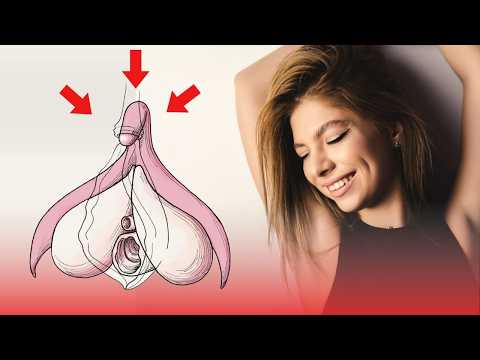
Dr. Sophie LaRam, a sexual health physician, reveals that many men misunderstand female pleasure, especially in postmenopausal women. She explains that intimacy is a process involving trust, patience, and the right kind of touch, focusing on indirect stimulation and emotional connection rather than intensity. Through real-life stories, she emphasizes slowing down, paying attention, and adapting to changes to deepen intimacy in long-term relationships.
If you have been trying to love her the right way, and she still goes quiet, looks away, or just waits for it to be over, it is important to understand that this silence is not rejection or indifference. It is something far more heartbreaking. She doesn't want to hurt you, so she says nothing.
I am Dr. Sophie LaRam, based in Vancouver, and for over 25 years, I have worked as a sexual health physician specializing in intimacy and relationship counseling for older adults. I have sat across from hundreds of couples—men in their 60s, 70s, and 80s—who came to me confused, embarrassed, or quietly devastated. Almost every time, the problem was not a lack of love or effort but a lack of the right information. Nobody ever taught this stuff—not in school, not at home, nowhere.
Today, I want to fix that. What I am going to share is not about desire but about biology, neurology, and understanding that can genuinely transform the last chapter of your relationship into something unexpectedly fulfilling.
Almost every man I have worked with believes the key to a woman's pleasure is the clitoris and that more stimulation means more response. They focus directly, persistently, and sometimes intensely on the clitoris and wonder why she doesn't seem to feel it.
The clitoris is indeed one of the most nerve-dense areas of the female body. However, the central tip—the part most men instinctively target—is extraordinarily sensitive and can easily tip from pleasure into overstimulation, discomfort, or even pain. This is especially true for postmenopausal women, where hormonal changes make the tissue thinner, more delicate, and less cushioned. What felt good decades ago can now produce a very different response.
When this happens, she often says nothing because she loves you and doesn't want you to feel like you failed. She closes her eyes, goes somewhere else mentally, and waits for it to be over. This is not a relationship problem but an information problem with a solution.
Pleasure doesn't begin the moment you start touching; it begins long before—in the nervous system, the emotional atmosphere, and the feeling of safety. You cannot shortcut this process or skip to the destination without walking the path. The path matters more than most men realize.
The areas that generate the deepest, most sustainable response are not at the surface but in the softer surrounding tissue—the lateral folds around the clitoral structure and the connective regions where branches of the pudendal and pelvic nerve networks converge. Sustained, warm, gentle pressure combined with rhythm and patience can trigger the pelvic floor muscles to shift into a receptive state. The body decides it is safe and can open to this.
This transition happens because of trust, which takes time to build—even in a marriage of 40 years. Old habits create old expectations, and bodies adapt in ways that are not always helpful.
In my clinical work, I found that most women report indirect stimulation—the surrounding tissue and the approach rather than the destination—produces far more pleasure than direct central contact. Many describe direct stimulation as uncomfortable or painful at some stages. This is normal and not a sign that something is wrong.
Before approaching the most sensitive areas, the body needs to feel safe. Think of it like knocking before opening a door. Start at the outermost areas, the labia majora, where the skin is resilient and less sensitive. This is the introduction, not the destination.
Use your lips—soft, warm, unhurried, without sound, urgency, or performance—just presence. Stay here for 3 to 5 minutes minimum. This stage alone, done right, produces more genuine response than anything done wrong afterward.
Watch her breathing. It starts shallow and tense but gradually deepens as muscles soften. This is confirmation you are doing the right thing. Let her nervous system fully arrive.
This area is more nerve-dense and sensitive. Switch from lips to the flat of your tongue—not the tip. The flat, broad surface distributes contact, softens it, and feels like a warm presence rather than a specific probing.
Temperature matters: a cold tongue shocks the system, causing contraction. Warm your mouth by breathing slowly through your nose before contact. Moisture should be balanced—not too dry to cause friction, not too wet to desensitize.
When she responds—hips shift, thighs tighten, breathing changes—do not escalate. Stay at the same pace and pressure. Let the moment breathe. The body asks for presence, not pushing forward.
Women often wish they could explain this to their partners: it is not more stimulation but consistent, gentle presence that matters.
The nervous system habituates to repetitive stimulation, dampening the response. The most effective thing is to stop for 3 to 5 seconds—no movement, just warmth and presence.
During this pause, the nervous system resets and prepares. Anticipation heightens sensitivity. When you resume gently and slowly, her response will be deeper.
One woman described this pause as more intimate than anything else shared in decades because it communicated, "I'm here. I'm paying attention. You matter more than the destination."
Once the body is receptive, work with an alternating side-to-side pattern around the clitoral area, deliberately avoiding the center:
This unpredictability within safety activates the nervous system, increasing sensitivity and producing a deeper, full-body, emotionally connected response.
After about five cycles, pause fully, breathe, and be present. Her body will prepare for the next wave, and when you resume, the response will be stronger.
Pause just as she approaches the peak of her response—not before or after. When breath shortens and the body moves toward you, stop all movement and contact. This creates deep trust, showing you see her and choose to be present rather than rushing.
Resume even more slowly and gently. Let her body come to meet you rather than reaching toward it.
A 72-year-old man and his 69-year-old wife had been married 44 years. She had been withdrawing from intimacy, and he was confused. He had always tried to make her feel good but didn't understand what was wrong.
After learning about physiology, neurology, and emotional dynamics, he listened and took it seriously. Six weeks later, she said it felt different—safe and like he was with her instead of trying to get somewhere. He joked it took 44 years to learn the difference between doing something for her and being with her.
A retired engineer in his early 80s felt disconnected from his wife. He came alone, sheepish, unsure how to fix it. Months later, he said, "When I was young, I touched her to feel something myself. Now, I touch her to understand something about her, and somehow I feel more than ever before."
This is not about performance, proving something, or achieving numbers. It is about the quality of your attention and the willingness to slow down to notice another person—their breathing, body language, and tiny signals.
Long-term partners have access to a language of intimacy that younger couples are still building. The foundation is there; this is a way to speak it more fluently.
Some may think their situation is complicated due to physical limitations, health issues, or long periods of distance. What I have described is a starting point, not a complete map. Every relationship and body is different.
The principles—patience, attention, warmth, deliberate pause, and approach rather than destination—apply broadly, but specifics need discovery together. This process of learning each other again or differently is itself an act of intimacy.
If something here resonates, try one simple thing tonight: slow down. Do whatever you normally do at half the speed. Notice what changes and how she responds when you stop rushing. This single shift might tell you more than anything I could say.
If you want to understand more about how aging bodies respond to touch, hormonal changes, or how to have conversations leading to intimacy, share your thoughts and questions. Every comment helps me understand your needs.
There is no shame in this. The only barrier to intimacy is the absence of the right information, and that is fixable. The quality of your relationships—physical and emotional—does not have to decline with age. It can deepen and become something neither of you has experienced before.
You just have to be willing to keep learning.
Take care of yourselves. Take care of each other.
Dr. Sophie LaRam