
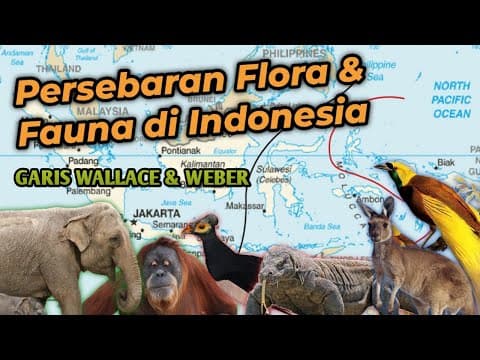
Indonesia's biodiversity is characterized by its unique distribution across three biogeographical zones: the Oriental, Australian, and Transition zones, influenced by historical geological events and the presence of endemic species.
Indonesia is renowned for its high biodiversity, which is uniquely distributed across various biogeographical zones. This post explores the six main biogeographical zones and the distinct characteristics of flora and fauna in Indonesia, particularly focusing on the Oriental and Australian zones, as well as the transition zone.
The world is divided into six primary biogeographical zones:
Indonesia's unique position lies between the Oriental and Australian zones, which significantly influences its biodiversity.
The Oriental zone encompasses the western part of Indonesia, including the islands of Sumatra, Java, Bali, and Kalimantan. This region is home to various species that share similarities with those found in Asia. Notable fauna in this zone includes:
In addition to these large mammals, the Oriental zone is characterized by a rich diversity of primates, particularly in Kalimantan, which hosts numerous species such as:
The avian population in this zone, while capable of singing, tends to have less vibrant colors compared to their Australian counterparts. Examples include:
Flora in the Oriental zone mirrors that of Asia, featuring species such as:
The Australian zone includes the eastern regions of Indonesia, particularly Maluku and Papua. The fauna here shares similarities with Australian wildlife, including:
The fauna in this zone is generally smaller in size, with Papua hosting around 110 species of mammals, including:
Additionally, the presence of marsupials is notable, with kangaroos being a prime example. Unlike the Oriental zone, primates are absent in Australia, but Sulawesi is home to many endemic species, such as:
Papua boasts the highest diversity of birds in Indonesia, with approximately 320 species, half of which are endemic, including:
The transition zone, particularly Sulawesi and Nusa Tenggara, features a mix of both Oriental and Australian fauna. This area is characterized by:
The division between the Oriental and Australian zones is marked by Wallace's Line, a conceptual boundary identified by the English naturalist Alfred Russel Wallace in 1863. This line runs through Makassar Strait and separates the distinct faunal regions.
In 1941, German zoologist Max Weber proposed a further division, suggesting that Sulawesi's fauna included both Oriental and Australian characteristics. He established Weber's Line, which runs to the east of Sulawesi, indicating that this island serves as a transition zone.
Indonesia is home to a plethora of endemic species, contributing to its high level of endemism globally. Some notable examples include:
Indonesia's biodiversity is a remarkable testament to its unique geographical and historical context. The interplay between the Oriental and Australian zones, along with the transition zone, creates a rich tapestry of life that is both diverse and endemic. Understanding these patterns is crucial for conservation efforts and appreciating the natural heritage of this archipelago.
As we continue to explore the wonders of Indonesia's biodiversity, it is essential to recognize the importance of preserving these unique ecosystems for future generations.



















