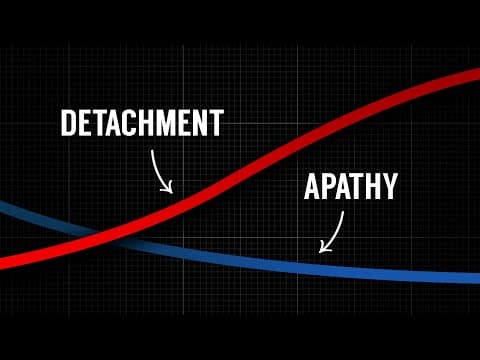
Detachment is often misunderstood as apathy, but it is actually a powerful tool for overcoming internal resistance and fostering genuine motivation. By cultivating awareness and reducing ego attachment, individuals can engage more fully with the world and find motivation in curiosity and interest rather than desperation or ambition.
In today's discussion, we delve into the concepts of detachment, apathy, and motivation. Many spiritual traditions advocate for detachment, suggesting that it leads to greater happiness, contentment, and freedom. However, the practical application of detachment can often be confusing, especially when it seems to conflict with our natural motivations.
A common misconception is that detachment equates to apathy. People often fear that if they detach from their desires and attachments, they will stop caring altogether and become inactive. This fear is understandable, as many struggle with feelings of apathy and the lack of motivation that can accompany it.
However, it is crucial to understand that detachment and apathy are polar opposites. While apathy leads to a lack of action and engagement, detachment can actually empower individuals to move forward in life.
To grasp how detachment can be beneficial, we must first examine how we typically motivate ourselves. Motivation often arises from an internal drive that must overcome external resistance. For instance, someone may feel ambitious but dislike their job. This internal ambition must counteract the external resistance of a negative work environment.
In many cases, individuals rely on strong emotions—like ambition or the pain of loneliness—to push through challenges. This reliance can lead to burnout or a cycle of anxiety and loneliness, which ultimately hinders progress.
The resistance we face in life often stems from our ego. When we desire to engage in activities, such as dancing at a party, our ego may hold us back due to fears of judgment or embarrassment. This attachment to our ego creates barriers that prevent us from fully enjoying life.
Detachment, therefore, is not about withdrawing from the world but rather about stepping away from our ego. By doing so, we can lower the resistance we face and engage more freely with our surroundings.
When we detach from our ego, we reduce the emotional barriers that typically hinder our actions. This shift allows us to be motivated by genuine interests and curiosity rather than by desperation or the need for external validation. For example, if we stop worrying about what others think, we can engage with people based on shared interests rather than loneliness.
In the workplace, many dislike their jobs due to a lack of recognition or fear of consequences. However, these feelings are often tied to our attachments and ego. By cultivating detachment, we can navigate our careers with less emotional burden and more clarity.
The Sanskrit term "vairagya" refers to detachment and offers insight into how we can cultivate this state of being. The key to developing detachment lies in awareness. In Western culture, there is a tendency to believe that success comes from doing more. However, this approach often leads to exhaustion and minimal returns.
Awareness precedes control. For instance, individuals struggling with addiction often exert tremendous effort without realizing the underlying issues. Gaining awareness of these issues is the first step toward change.
Detachment is often misunderstood as a lack of care or engagement. In reality, it is a powerful tool that allows us to lower the resistance we face in life. By cultivating awareness and reducing our attachment to ego, we can engage more fully with the world around us. This shift enables us to find motivation in curiosity and interest rather than in desperation or ambition. Ultimately, embracing detachment can lead to a more fulfilling and liberated life.