This article explores the overwhelming scientific consensus on climate change, explaining why 97% of scientists agree it is occurring and the challenges in public and political acceptance. It clarifies the nature of scientific predictions, the importance of acting on scientific knowledge despite uncertainties, and the distinction between science and policy decisions.
Imagine if 97% of engineers warned that a bridge was going to collapse, while only 3% believed it would remain standing. It would be unreasonable to ignore the majority and trust the minority. Similarly, 97% of scientists agree that climate change is occurring, yet this consensus is often ignored or questioned by the public and policymakers. This raises an important question: why is there such resistance to accepting this scientific fact?
Is the problem a failure in communication by scientists, or is it due to misinformation spread by those who reject scientific evidence? To answer this, we need to understand what scientific statements truly represent and how science operates.
The fundamental question in climate science is straightforward: if we increase greenhouse gases like CO2 in the atmosphere, will the climate change, and if so, how?
The only way to answer this question is through measurements and climate modeling. These methods represent the best tools science has to predict future climate behavior. Alternatives like guessing or using non-scientific methods are not valid.
Climate models provide predictions with a range of uncertainty. For example, current estimates suggest that if greenhouse gas emissions continue unchecked, global temperatures could rise between 1.7 to 4.5 degrees Celsius by 2100. While this range is broad, it reflects the inherent uncertainties in modeling complex systems, not a lack of scientific consensus.
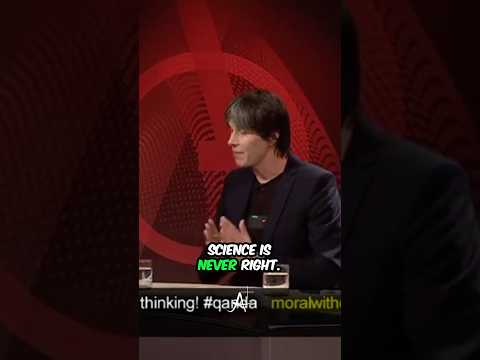
Science is inherently provisional and always open to revision based on new evidence. This is not a weakness but a strength. Unlike dogmatic belief systems, science acknowledges its own fallibility and continuously refines its understanding.
This self-correcting nature of science was eloquently described by Jacob Bronowski, who noted that science is an expression of our humanity because it recognizes human fallibility.
Therefore, scientific predictions are the best available knowledge at any given time. They are not absolute certainties but are the most reliable guides we have for understanding phenomena like climate change.
Some skeptics invoke the story of Galileo to argue that the majority of scientists could be wrong and that dissenting voices should be trusted. However, this misrepresents how science works. Galileo's challenge to the prevailing view was based on evidence and rigorous inquiry, not mere contrarianism.
Science does not claim to be infallible but demands evidence and reproducibility. The overwhelming agreement among climate scientists is based on extensive data and rigorous analysis, not on uncritical acceptance.
While science provides the facts and predictions, deciding what to do about climate change is a matter of policy and politics. Scientists can inform policymakers about the risks and likely outcomes, but the decisions on how to respond involve values, economics, and societal priorities.
This distinction is crucial. Frustration often arises when scientific findings are attacked to undermine policy actions. However, questioning science to avoid policy changes is a misuse of scientific debate.
The consensus among 97% of scientists that climate change is real and driven by human activities is based on robust evidence and sound scientific methods. While uncertainties exist, they do not negate the overall conclusion.
Understanding the provisional nature of science and the difference between scientific knowledge and policy decisions is essential for informed public discourse. Accepting scientific consensus should guide our actions to address climate change effectively, rather than being dismissed due to misunderstandings or misinformation.
Ignoring the overwhelming scientific agreement on climate change is as illogical as ignoring the majority of engineers warning about a failing bridge. It is time to listen to the science and act accordingly.