This article explains the role of cardio in fat loss, emphasizing that weightlifting primarily preserves muscle during fat loss, while calorie reduction creates the deficit needed for fat loss. It discusses the importance of maintaining moderate physical activity to sustain the deficit and avoid excessive hunger or fatigue. The optimal approach combines moderate calorie reduction with moderate-high physical activity for effective and sustainable fat loss.
In the journey of fat loss, many people wonder why cardio is often recommended and how it fits into the overall strategy. Dr. Mike from Renaissance Periodization provides a detailed explanation of the role cardio plays in fat loss, alongside weightlifting and diet management. This article breaks down his insights to help you understand how to engineer fat loss effectively and sustainably.
Weightlifting is a cornerstone of fat loss programs, but its primary role is often misunderstood. While many think lifting weights is mainly for burning extra calories, its true value during fat loss phases is in retaining muscle mass.
In contrast, many weight loss studies show muscle loss because participants do not lift weights, which can negatively affect their results.
The most significant factor in fat loss is controlling calorie intake. Creating a calorie deficit by reducing food consumption is the main way to reduce body fat.
This calorie reduction is the main lever for fat loss, with weightlifting ensuring muscle retention.
Physical activity throughout the day, including cardio, plays a vital role in sustaining the calorie deficit.
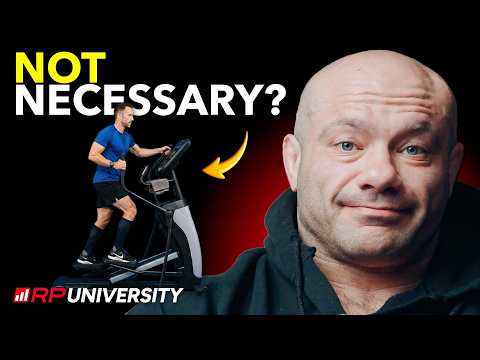
Contrary to popular belief, formal cardio sessions are not mandatory for fat loss.
There are two ends of the spectrum when creating a calorie deficit:
Low activity, high calorie reduction:
High activity, moderate calorie reduction:
Both extremes have drawbacks, so a balanced approach is optimal.
Dr. Mike suggests a two-rule system for fat loss:
Rule 1: Moderate calorie reduction
Rule 2: Moderate-high physical activity
This approach keeps clients energized, preserves muscle, and supports a sustainable fat loss process.
Cardio is a valuable tool in fat loss, not because it burns massive calories on its own, but because it helps sustain a calorie deficit created primarily through diet. Weightlifting ensures muscle retention, while moderate physical activity prevents the body from compensating by reducing movement. The secret to effective fat loss lies in balancing moderate calorie reduction with moderate-high physical activity, creating a sustainable and efficient fat loss environment.
By understanding these principles, coaches and clients can design fat loss programs that maximize results while maintaining energy, muscle mass, and quality of life.
Stay tuned for the next lecture in this series, where we will debunk common cardio myths and explore more strategies for fat loss success.