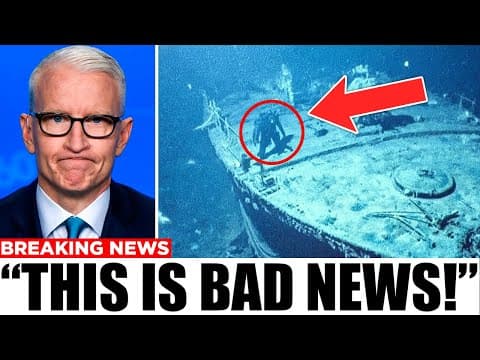
The SS Edmund Fitzgerald sank in 1975, claiming all 29 crew members. Recent underwater drone surveys reveal critical design flaws and missing components that contributed to the disaster, challenging long-held theories about the sinking.
46 years ago today, the SS Edmund Fitzgerald sank in Lake Superior, taking the lives of all 29 crew members aboard. Known as the pride of the American side, this steel behemoth was over 700 feet long and was once thought to be unsinkable. However, on a stormy November night, she was swallowed whole by Lake Superior, igniting a 50-year debate over the causes of her tragic demise. Recent advancements in underwater drone technology have provided new insights that may finally resolve this mystery.
Launched in 1958, the SS Edmund Fitzgerald was a marvel of engineering, measuring 729 feet in length and weighing over 13,000 tons when empty. She was the largest freshwater freighter ever built, tasked with transporting taconite iron ore pellets from Minnesota to steel mills near Detroit. For 17 years, she was celebrated for her speed and reliability, earning nicknames like "the mighty Fitz" and "the queen of the lakes."
Captain Ernest Msurley, a seasoned veteran with over 40 years of experience, commanded the Fitzgerald. He was respected by his crew, who shared a deep loyalty to the ship that provided their livelihoods. However, the Great Lakes are notorious for their treacherous conditions, particularly during November storms known as the "witch of November," which can produce hurricane-force winds and towering waves.
On November 9, 1975, the Fitzgerald loaded over 26,000 tons of iron ore in Superior, Wisconsin, despite grim weather forecasts. Captain Msurley consulted with the captain of another freighter, the Arthur M. Anderson, and they agreed to travel together across Lake Superior. Little did they know, this would be the Fitzgerald's final journey.
The storm that struck on November 10 was more ferocious than anticipated, with winds exceeding 80 mph and waves reaching 35 feet. Throughout the day, Captain Msurley maintained radio contact with the Anderson, reporting a concerning list and damage to the ship. His last communication, stating, "We are holding our own," was made shortly before the Fitzgerald vanished from radar, leaving no distress calls or survivors.
The wreck of the Fitzgerald was located a few days later, resting in 530 feet of water, split into two large pieces. The official Coast Guard report attributed the sinking to flooding through ineffective hatch closures, suggesting that massive waves had washed over the deck, allowing water to pour into the cargo holds. This conclusion, however, was met with skepticism from the maritime community, which believed it unfairly blamed the crew.
For decades, various theories emerged, including the possibility of the Fitzgerald striking an uncharted shoal or being overwhelmed by rogue waves. Yet, without clear evidence, the sinking remained a chilling mystery, immortalized in song and folklore.
Nearly 50 years after the tragedy, a new expedition set out to explore the wreck using a high-tech remotely operated vehicle (ROV). Equipped with 4K cameras and advanced sensors, the ROV aimed to capture the wreck in unprecedented detail and uncover the truth behind the sinking.
As the ROV descended into the depths of Lake Superior, it revealed the bow of the Fitzgerald, with the ship's name still faintly visible. The footage showed twisted metal and silt covering the wreck, indicating severe damage. The primary focus of the investigation was the cargo hatches, which had been at the center of the 50-year debate.
Upon examining the hatches, the ROV operators discovered missing clamps that were supposed to secure the hatch covers. This alarming finding suggested that the ship's primary defense against the storm had been compromised. As the drone continued its survey, it became evident that multiple clamps were missing or damaged, painting a grim picture of the Fitzgerald's condition.
The ROV also uncovered a critical piece of evidence: a sheared-off air vent pipe, which created a gaping hole leading directly into the cargo hold. This significant breach would have allowed water to flood the ship at an alarming rate, potentially thousands of gallons per minute, especially during a storm with 35-foot waves.
The implications of these findings were profound. The Fitzgerald was likely flooding long before the crew realized the severity of the situation. The iron ore pellets in the hold would have absorbed much of the initial water, masking the growing weight in the bow. This explains Captain Msurley's calm demeanor during his final radio calls, as he was unaware of the catastrophic flooding occurring below deck.
As the bow sank lower, it would have acted like a scoop, forcing the ship to nose-dive into oncoming waves. The immense stress from the waterlogged bow diving while the stern was still elevated would have led to the ship's catastrophic breakup.
While the drone footage provided compelling evidence of the Fitzgerald's structural flaws, some theories persist regarding the nature of the sinking. Some marine theorists suggest the possibility of a phenomenon known as a rogue siege wave, which could have overwhelmed the ship. Others speculate about harmonic resonance or geomagnetic fluctuations affecting the vessel's stability.
Despite the official report attributing the sinking to flooding, the legend of the Fitzgerald continues to evoke questions about the true nature of its demise. The combination of design flaws, severe weather, and perhaps even unknown forces may have contributed to this maritime tragedy.
The secrets of the SS Edmund Fitzgerald have finally begun to surface, revealing a tragic tale of engineering flaws and unforeseen circumstances. While the findings from the underwater drone provide clarity, they also deepen the haunting legacy of the Fitzgerald. Understanding how the tragedy occurred does not diminish its impact; instead, it serves as a reminder of the perils faced by those who navigate the treacherous waters of the Great Lakes. What are your thoughts on this maritime mystery?