Ancient humans primarily scavenged for bone marrow, brains, and insects before mastering fire and cooking, which fueled brain development. Their diet expanded to include diverse meats, plants, and honey, shaping cravings for sugar, fat, and protein that persist today. Evidence also reveals ritualistic cannibalism and consumption of fermented, rotten meat. Modern food exploits these ancient cravings, though today's abundance contrasts sharply with ancestral scarcity.
Open your fridge right now. You might find a can of soda, some yogurt, leftover pizza, and maybe some fruit flown in from the other side of the planet. But to your ancestors, none of this would have been considered food. So, what did they actually eat? The answer might horrify most people alive today.
To understand ancient human diets, we have to go back roughly 3 million years. Your earliest ancestors were not hunters; they were scavengers. When a lion killed an antelope on the African savannah, it ate the best parts first — the muscle, liver, and heart. Then hyenas came in for the rest, crunching through ribs, skin, and smaller bones. By the time our ancestors arrived, only scraps remained: thick leg bones too tough even for hyenas to break.
This was their signature meal: bone marrow. Early humans would creep up to a stripped carcass, grab the thickest leg bones, and smash them open with stone flakes called Oldowan tools. Inside was marrow — gray, slick, dripping fat — which they scooped out with their fingers and ate raw. This marrow was a feast no other animal could access, sealed inside thick thigh bones, and humans had the unique ability to grip rocks hard enough to break them open.
They also ate brains, which held almost a pound of solid fat, the most calorie-dense food in the animal. For ancestors living on scraps, a skull was a jackpot. This is why our bodies still treat fat like treasure — it remembers its importance.
In addition to marrow and brains, insects such as termites, grubs, and beetles were a staple. These fat white larvae, the size of a thumb, crunched like shrimp and were not a last resort but a regular dinner.
This way of life persisted for over a million years, day after day, generation after generation.
What came later changed everything: fire. The oldest evidence of human-controlled fire is found inside Wonderwerk Cave in South Africa, about a million years old. With fire came cooking — roasting meat over coals, burying roots in hot ashes, and dropping marrow bones into embers.
Cooking is essentially predigestion. Raw meat and plants require hours of chemical work by the gut to break down, but cooked food is already partly broken apart. This means the body spends less energy digesting and extracts more calories from every bite.
Scientists believe that as ancestors started cooking, their guts shrank, freeing up energy that was redirected to the brain. Although the brain is only 2% of body weight, it uses 20% of the body's calories. Such a calorie-intensive organ cannot be fueled by raw leaves and termites alone; it needs cooked, fat-rich food.
Cooking gave us our brains, and our brains gave us everything else.
By 300,000 years ago, ancestors looked much like modern humans and ate almost everything they could catch, dig up, or reach. Their diet included:
The Hadza, a hunter-gatherer tribe in Tanzania, still eat similarly today. About 15% of their calories come from wild honey. They climb dangerous trees, endure hundreds of stings, and keep returning because nothing else in the wild packs as many calories into one bite.
The craving for sugar is deeply wired in our brains because, for hundreds of thousands of years, sugar provided two things at once: instant energy and extra fuel stored as fat. That fat was crucial for survival during times of scarcity. A dripping honeycomb was the richest meal most ancestors ever saw.
Modern food exploits this ancient signal, turning it into a business. Soda, candy, cereal, sauces, and even most bread are sugar in disguise. This is why many people find it hard to stop eating sugary foods — the body is still trying to store fat for the next famine.
Meat was another essential craving. A single mammoth carcass could feed a tribe for weeks, saving hundreds of hours that would otherwise be spent gathering plants. This saved time was used to raise children, teach skills, make better tools, and tell stories around fires. Our bodies still crave protein because it was vital for survival.
There is one craving that is harder to admit. In Gough's Cave in England, researchers found human bones from about 14,700 years ago that told a disturbing story. The skulls had been meticulously cleaned with stone tools, faces and bases removed, leaving the top shaped into cups. Long bones were cracked open like marrow bones.
This was not starvation; the cave also contained remains of horses, deer, and other animals, indicating plenty of food. A 2017 study calculated that a human body provides around 125,000 calories, while a bison holds 600,000 and a mammoth 3 million. Humans were a choice, not a last resort.
One forearm bone was carved with a zigzag pattern after the meat was gone, suggesting ritual. Similar remains have been found across Europe, indicating that for hundreds of thousands of years, humans practiced cannibalism not always for survival but for symbolic reasons.
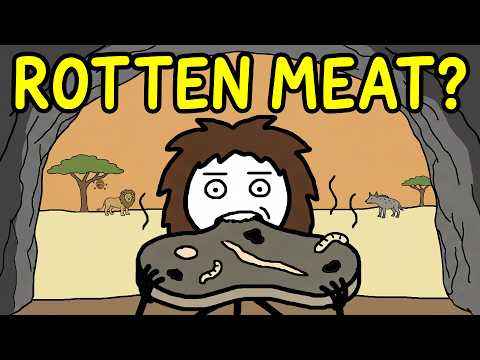
Additionally, ancestors ate rotten meat. Since they couldn't consume an entire kill at once, they buried or stored meat in caves or cold streams for days, weeks, or months. By the time they returned, the meat was crawling with maggots and rife with decay, yet they ate it anyway.
Some researchers believe they preferred it that way. Rotting meat is partly broken down by bacteria, making it easier to chew and absorb. The bacteria also produce B vitamins essential for the body.
Our love for fermented foods like cheese, yogurt, sourdough, beer, wine, soy sauce, and pickles is a legacy of this ancient practice of controlled rot.
Every craving for fat, salt, sugar, and the richest foods is still running inside you. Your body does not know about grocery stores or refrigerators; it only knows to eat what is rich, rare, and available because tomorrow there might be nothing.
At 11 p.m., when you open the fridge even if you're not hungry, you are running a 3 million-year-old program, still scanning and trying to keep you alive.
However, the world this program was built for is gone. If a modern human were dropped into the world 50,000 years ago, they would likely die within days, unable to find water, identify edible plants, or hunt effectively.
Conversely, a 50,000-year-old human dropped into your kitchen would be overwhelmed by the abundance and variety of food, unable to comprehend cold, sweet drinks sealed in metal, baked bread, or fresh milk stored for weeks.
For three million years, every human who ever lived was hungry, cold, and tired. You might be the first who isn't, and you have no idea how rare that is.