Empty space is not truly empty but filled with invisible quantum fields that give rise to particles, mass, and forces. Quantum field theory reveals that particles are excitations in these fields, and even the vacuum hums with zero point energy and virtual particles. The Higgs field gives mass, the Casimir effect proves vacuum energy, and quantum foam shows spacetime's restless nature. Consciousness may emerge from these fields, and dark energy drives cosmic expansion, making the universe a vast,
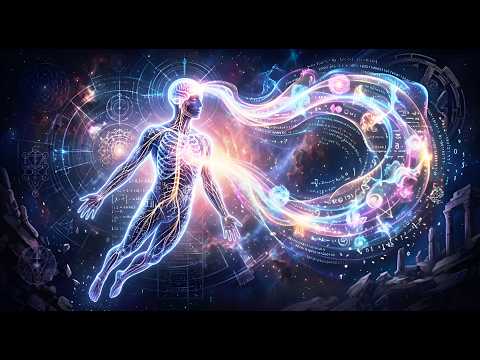
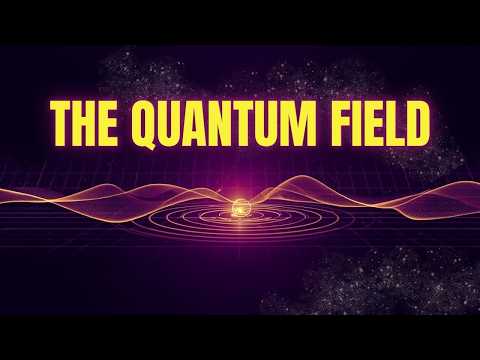
What if empty space isn't empty at all? Imagine swimming through an invisible ocean — a quantum field that gives you mass, holds atoms together, and contains more energy than all the stars in the universe combined. This hidden fabric is not just where reality exists; it is what reality is.
Welcome to a journey through quantum field theory, vacuum energy, and the deepest mysteries of spacetime. This exploration reveals how the universe is woven from invisible fields vibrating with energy, shaping everything from particles to consciousness.
For centuries, space was imagined as emptiness — a void or vacuum through which matter moves. Isaac Newton pictured the universe as objects moving through absolute space, like actors crossing an empty stage. The stage itself did nothing but provide room for action.
However, Albert Einstein's theory of general relativity in 1915 revolutionized this view. Space is not a passive container but an active participant that curves and warps in response to mass and energy. Imagine a trampoline with a bowling ball creating a dip; nearby marbles roll toward it not because of an invisible force but because the fabric itself is curved.
Einstein's spacetime is a fabric that matter tells how to curve. Space has geometry, structure, and properties. It can ripple with gravitational waves, expand with the universe, and tear at black holes.
In the 1920s, quantum mechanics revealed that particles behave like waves smeared across space in clouds of probability. But waves need a medium. Physicists discovered that space is filled with quantum fields — every particle is an excitation, a ripple in an underlying field permeating all reality.
For example:
Even empty space, stripped of particles, contains these fields humming with potential energy.
This shift from particles to fields is profound. Particles are not fundamental; fields are. Particles are localized excitations of these fields, like waves on an ocean.
Quantum fields exist everywhere in space and time, having a value at every point. When these values oscillate, we perceive particles. Think of quantum fields as the universe's operating system, running invisible code beneath the visible interface.
Each particle type corresponds to a field:
The Standard Model describes about 17 fundamental fields interacting through precise mathematical rules.
Fields are omnipresent and continuous, extending infinitely. You are made of these fields; every atom in your body is a complex pattern of excitations in multiple fields.
Quantum fields fluctuate constantly due to quantum uncertainty, even in their lowest energy state, called zero point energy.
Why do particles have mass? The Standard Model initially predicted particles should be massless. The solution came in 1964 when Peter Higgs and others proposed the Higgs field permeates all space.
Particles gain mass by interacting with the Higgs field. Imagine moving through water instead of air; you feel heavier due to resistance. Similarly, particles interacting strongly with the Higgs field acquire mass.
Photons do not interact with the Higgs field and remain massless, traveling at light speed.
The Higgs boson, discovered in 2012 at CERN, confirmed the Higgs field's existence.
Most of the mass in protons and neutrons comes not from the Higgs field but from the energy of the gluon field binding quarks together.
The Higgs field switched on shortly after the Big Bang, allowing particles to gain mass and form atoms, stars, and life.
Classically, the lowest energy state is stillness. Quantum mechanics, however, shows that due to Heisenberg's uncertainty principle, quantum fields cannot be perfectly still, even at absolute zero.
This minimum energy is zero point energy, causing fields to jitter and fluctuate constantly.
These fluctuations give rise to virtual particles — fleeting particle-antiparticle pairs that pop into existence and annihilate quickly, borrowing energy from the vacuum.
Zero point energy has measurable effects, such as the Lamb shift in hydrogen atoms, confirming the vacuum is alive with quantum activity.
Virtual particles are temporary excitations in quantum fields, allowed by the energy-time uncertainty principle. They mediate forces between particles:
Virtual particles cannot be directly observed but have real effects, such as altering particle properties and contributing to mass.
The Casimir effect, where two uncharged metal plates attract in a vacuum due to restricted virtual particles between them, provides direct evidence of vacuum energy.
Proposed in 1948 and experimentally confirmed in 1997, the Casimir effect shows that two uncharged metal plates placed close together in a vacuum attract each other due to quantum vacuum fluctuations.
The vacuum between the plates restricts virtual particle wavelengths, creating a pressure difference that pushes the plates together.
Recent research has demonstrated control over the Casimir force using magnetic fields and ferrofluids, with implications for nanotechnology.
At the Planck length (~1.6 x 10^-35 m), spacetime is not smooth but turbulent and foamy, fluctuating with tiny wormholes and black holes appearing and disappearing rapidly.
This quantum foam is the ultimate restlessness of the universe, where spacetime itself is subject to quantum uncertainty.
Theories like string theory and loop quantum gravity attempt to describe this scale, but a complete theory of quantum gravity remains elusive.
Consciousness remains a profound mystery. Some hypotheses suggest it may arise from the brain's electromagnetic field or quantum processes within neurons.
Roger Penrose and Stuart Hameroff propose orchestrated objective reduction (Orch-OR), where quantum coherence in microtubules produces moments of awareness.
While speculative and controversial, these ideas suggest consciousness might be a field phenomenon, a localized excitation in a broader quantum field.
In 1998, astronomers discovered the universe's expansion is accelerating, driven by dark energy, which makes up about 68% of the universe's energy.
Dark energy might be the energy of empty space itself — the quantum vacuum energy.
However, theoretical calculations of vacuum energy density exceed observed dark energy by 120 orders of magnitude, a major unsolved problem called the cosmological constant problem.
Recent data suggest dark energy might be dynamic, possibly a field called quintessence, influencing the universe's fate.
The solidity we perceive is an illusion. Atoms are mostly empty space, and what we feel as solid is electromagnetic fields repelling each other.
You are not made of particles but are a localized pattern of excitations in quantum fields — a wave in the ocean.
Your body, thoughts, and consciousness are patterns of energy and fields interacting in harmony.
The universe is a vast symphony where quantum fields are instruments, particles are notes, and you are a melody — a temporary pattern in the infinite ocean.
Empty space is not empty. It is filled with quantum fields vibrating with energy, giving rise to particles, mass, forces, and possibly consciousness.
The Higgs field gives mass, zero point energy keeps the vacuum restless, virtual particles mediate forces, quantum foam churns spacetime, and dark energy drives cosmic expansion.
You are the quantum field experiencing itself — a wave in the cosmic ocean, briefly cresting into form, aware of existence.
Rest in this knowledge, knowing the ocean of quantum fields is always there, holding you in being.
This journey through the hidden ocean beneath reality reveals the profound and beautiful nature of the universe, inviting us to see ourselves not as separate objects but as integral parts of the quantum fabric of existence.