Michio Kaku explains that the vast distances, the speed of light limit, and the nature of spacetime make it impossible for humans to ever meet aliens. The universe's immense scale, the brief communication windows of civilizations, and the challenges of interstellar travel mean that while life may exist elsewhere, direct contact is beyond our reach. Instead, the pursuit of understanding ourselves and the cosmos is humanity's true journey.
As a child, Michio Kaku would lie on his back at night, staring into the sky, wondering if someone, somewhere, was staring back. The stars seemed close, like tiny lanterns just beyond reach. This childhood curiosity is not trivial; it is the engine of science itself. Every telescope, equation, and spacecraft ever built began with the simple question whispered into the dark: "Are we alone?"
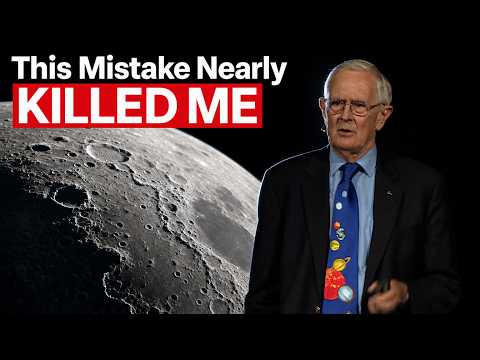
In 1969, when humans first stepped onto the moon, it was more than a technological triumph; it was a philosophical shockwave. For the first time, a species born on one world touched another. The moon landing cracked open our perception of reality, showing that gravity could be challenged, distance could be crossed, and destiny could be rewritten.
However, it also revealed something humbling. Even our greatest leap barely carried us beyond our cosmic doorstep.
Looking up at the night sky with scientific eyes reveals that every star is not just a place but a prison of distance. Space is not empty; it is vast beyond intuition. Our fastest spacecraft would take tens of thousands of years to reach even the nearest star. The universe is not designed for quick meetings; it is designed for patience.
The speed of light is the universe's ultimate speed limit. No matter how ambitious our dreams or advanced our machines, physics draws a line we cannot cross. Messages sent across the galaxy arrive thousands or even millions of years too late. If alien civilizations exist, they may have risen and fallen before our signals ever reach them.
In cosmic terms, we are ships passing not in the night but across different ages of time.
Spacetime itself resists us. Gravity bends paths, stretches time, and demands enormous energy for even the smallest escape. Traveling between stars is not just a matter of engineering; it is a negotiation with the fabric of reality.
The universe is elegant but unforgiving. Even technology has its limits.
Civilizations may destroy themselves, evolve beyond physical form, or choose silence. The window in which a society can communicate across stars may be brief—a flicker in cosmic history. The universe could be full of life and still appear quiet, not because no one is there, but because the timing never aligns.
This silence is not a failure; it is a lesson. It tells us that the universe is not waiting to be visited; it is waiting to be understood.
Perhaps meeting aliens was never the point. Perhaps the real purpose of looking outward is to understand ourselves—our fragility, intelligence, and responsibility. The moon taught us that exploration changes the explorer.
Space reminds us that we are made of star stuff, shaped by gravity, carried by time.
Our destiny may not be to meet other civilizations but to become one worthy of being met.
Michio Kaku leaves a call especially to the next generation: do not stop asking impossible questions. Embrace science, imagination, and curiosity. Build telescopes before weapons. Ask why before how.
The universe is vast, silent, and waiting—not for visitors but for thinkers. Humanity's greatest journey is not across space but toward understanding our place within it.
When we talk about aliens, the story never truly begins in laboratories or observatories. It begins in childhood, on quiet nights when the world slows down and the sky feels impossibly large.
As children, we look up and feel something science later struggles to put into equations: awe. Those tiny points of light don't feel distant; they feel personal, almost alive.
A child doesn't see light years or stellar distances. They see questions: Who is out there? Is someone watching us? Does the universe know we exist? That sense of wonder is powerful because it is pure. It isn't driven by proof or data but by imagination.
And imagination is where every scientific revolution is born.
Before rockets, equations, or radio telescopes scanning the heavens, there was a child daring to believe the universe was more than just a ceiling of stars. That curiosity is not naive; it is revolutionary. It pushes humanity forward, whispering that reality might be bigger than what our eyes can see.
Even in that wonder, there is a quiet tension. The stars sparkle like invitations but are also reminders of distance.
The more we learn, the more mysterious they become. Childhood curiosity opens the door, but science forces us to ask harder questions: What does it actually mean to reach the stars? What does the universe allow and what does it forbid?
That innocent gaze upward becomes the first step in a journey that will challenge not just our technology but our understanding of reality itself.
The moon landing was not just a moment captured on grainy black and white screens; it was a crack in the wall of human limitation.
For centuries, the moon lived in our myths and poetry as a symbol of mystery, madness, and unreachable beauty. Then, in a single generation, humanity turned legend into landscape when human boots touched lunar dust. The universe seemed to lean in and watch.
But something far deeper happened that day: the moon stopped being a distant object and became a mirror.
From its silent surface, Earth rose into the sky—a fragile blue marble floating in darkness. Borders vanished; conflict shrank. For the first time, humanity saw itself not as nations or ideologies but as a single species riding a thin layer of atmosphere through an unforgiving cosmos.
The moon landing rewired how we think about possibility. It proved that imagination, when guided by science, can bend reality. Gravity, once thought to bind us forever to Earth, was negotiated with equations and courage. Distance, once measured in dreams, became something that could be calculated, planned, and crossed.
Yet paradoxically, the moon also revealed our smallness. If reaching our nearest celestial neighbor required such effort, risk, and precision, what does that say about reaching the stars?
In stepping onto the moon, we didn't move closer to aliens; we moved closer to understanding the universe's rules.
The landing opened a doorway not to other civilizations but to deeper questions about time, space, and the limits of human ambition.
It was humanity's first whisper into the cosmic void, and the echo that returned was not an answer but a challenge to think bigger, deeper, and more honestly about our place in reality.
Once we leave Earth and the moon behind, the universe reveals its true scale—and it is nothing like what our instincts prepared us for.
The stars that decorate our night sky are not scattered nearby like lanterns along a road. They are separated by oceans of emptiness so vast that even light, the fastest traveler in existence, takes years to cross them.
Space is not just big; it is relentlessly big, designed in a way that defies human intuition.
Imagine shrinking the entire solar system down to the size of a coin. In that scale model, the nearest star would still be kilometers away.
This is the first great shock of cosmic reality: the universe is structured to keep things apart.
Distance is not an obstacle we simply overcome with better engines; it is a fundamental feature of how reality is built.
Every signal we send into space, every radio wave, every hopeful message, is a bottle thrown into a cosmic ocean.
By the time it reaches even a fraction of our galaxy, centuries may have passed, civilizations may rise, evolve, or disappear before the message ever arrives.
Meeting aliens may be impossible due to the vast distances, the speed of light limit, and the nature of spacetime. The universe's immense scale and the brief communication windows of civilizations mean that while life may exist elsewhere, direct contact is beyond our reach.
Instead, the pursuit of understanding ourselves and the cosmos is humanity's true journey. The universe is vast, silent, and waiting—not for visitors but for thinkers. Our greatest journey is not across space but toward understanding our place within it.
The journey has only just begun.