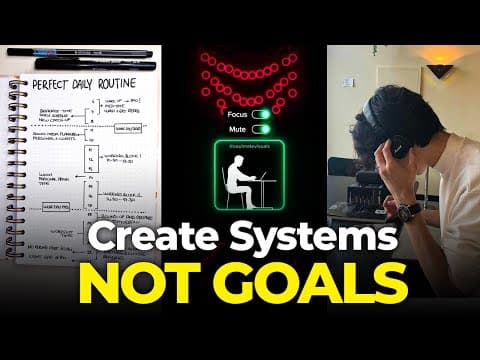
Instead of traditional goal setting, successful individuals are focusing on creating systems that lead to sustainable progress. This blog post explores the advantages of systems over goals and provides a simple three-step process to implement effective systems in your life.
In today's fast-paced world, many individuals find themselves frustrated with traditional goal setting. Despite the best intentions, goals often remain unachieved, leading to feelings of inadequacy and disappointment. This blog post explores a transformative approach that has helped many, including myself, shift from goal-oriented thinking to system-oriented living.
Six months ago, I was in a familiar place: staring at my journal filled with goals like "get fit," "save more money," and "start a business." Despite my efforts, these goals remained unfulfilled, some lingering for over two years. I followed all the self-help advice—setting SMART goals, visualizing success, and creating vision boards—but nothing seemed to work.
The turning point came during a coffee meeting with an old friend who had built a successful tech company. Instead of sharing ambitious goals, he revealed that he hadn't set a single goal in three years. This revelation was shocking but also enlightening. How could he achieve so much without goals?
After our conversation, I began to understand the concept of systems. Unlike goals, which are often vague and result-oriented, systems focus on the processes and actions that lead to success. For example, instead of simply aiming to lose 20 pounds, one could establish a system of preparing healthy meals every Sunday and taking a 20-minute walk after dinner. This approach provides a clear path to achieving the desired outcome.
Last year, I aimed to start my own online business, fixating on specific revenue targets. However, progress was slow. Once I shifted my focus to creating a system—researching market trends every Monday, connecting with potential clients every Wednesday, and reviewing my services every Friday—my business began to grow rapidly. By concentrating on daily actions rather than numbers, I found success came more naturally.
Systems offer several significant advantages compared to traditional goal setting:
Previously, I struggled with productivity, trying various apps and planners without success. Eventually, I created a simple morning system: waking up at 6:00 a.m., making my bed, drinking water, and working on my most important task for 90 minutes before checking messages. This specific sequence of actions transformed my productivity into an automatic process.
While systems are crucial for progress, goals still play an important role. Goals provide direction, while systems facilitate the journey. Think of it this way: a goal is like deciding to drive to Los Angeles, while the system is your car, the gas in the tank, and the act of driving itself. Both are necessary, but many people focus too much on the destination and not enough on building their vehicle.
To implement effective systems in your life, follow this simple three-step process:
Reflect on a goal you’ve been struggling with. Instead of fixating on the end result, consider one tiny system you could implement to move in that direction. Remember, while goals are important for setting direction, systems are what truly get you there. The most successful individuals understand this distinction and build reliable systems to achieve their aspirations.
As you embark on this journey of creating systems, consider incorporating personal growth activities, such as watching insightful videos, into your routine. If this approach resonates with you, share it with friends who might benefit from this perspective. Success isn’t solely about your goals; it’s about the systems you create to achieve them.