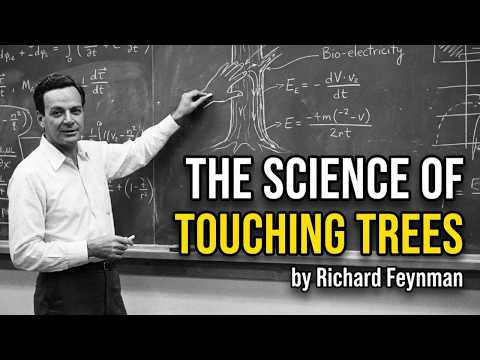
Touching a tree initiates complex physical and biological interactions that benefit human health, including exposure to antimicrobial compounds, electron transfer from the earth, and thermal comfort. Trees are living systems formed from atmospheric carbon dioxide through photosynthesis, connected underground by fungal networks sharing resources and information. Unlike animals, trees do not age biologically but are limited by physical forces. Understanding these facts reveals the deep connection,
You've touched a tree before—perhaps briefly, then walked away. But something invisible and intangible began inside your body the moment your hand met the bark, and this effect can last for days. What exactly is a tree doing to your body without any chemical pills? The answer lies in the physics and biology of trees, the forest floor, and the remarkable longevity of the oldest living organisms on Earth.
When you hold out your hand, you might think you've touched thousands of objects today—a doorknob, a coffee cup, your phone, or your clothes. But in reality, you have never truly touched any of them. The electron clouds around the atoms in your skin repel those in the objects you reach for, creating a gap that never closes. What you feel as touch is actually electromagnetic force pushing back across empty space.
However, when you put your hand on a tree, something crosses that gap—not through direct contact, but through the air between you and the bark.
Trees constantly release molecules called volatile organic compounds (VOCs) into the air. These molecules, such as alpha-pinene, beta-pinene, d-limonene, and 1,8-cineole, are light enough to become airborne and are collectively known as phytoncides. Contrary to popular belief, phytoncides are not just pleasant aromas; they are chemical defense weapons produced by trees to kill bacteria, fungi, and insects threatening their survival.
These molecules diffuse from the bark into the surrounding air, creating a sterilization zone around the tree. For example, one hectare of pine forest releases about 5 kilograms of phytoncides daily, significantly reducing bacterial presence in the air compared to city environments.
When you stand near or touch a tree, you are within this diffusion cloud, inhaling these antimicrobial compounds.
Research led by Dr. Qing Li at Nippon Medical School in Tokyo showed that exposure to phytoncides increases the activity of natural killer cells—a type of lymphocyte that destroys tumor and virus-infected cells. This increased immune activity lasts more than seven days after a single exposure and can extend beyond 30 days with prolonged forest exposure.
Additionally, stress hormones like adrenaline and noradrenaline decrease significantly in the presence of these compounds, indicating a reduction in the fight-or-flight response.
Trees are electrical conductors connected to the earth's surface, which carries a net negative charge maintained by the global electrical circuit. When your skin contacts a grounded conductor like a tree, electrons flow from the earth through the tree into your body.
A 2013 study found that grounding increases the zeta potential on red blood cells, meaning the cells repel each other more strongly and blood viscosity decreases. This electron transfer through the tree trunk connected to the ground has measurable effects on human blood.
Wood conducts heat about 1,000 times more slowly than metal. When you touch wood, your hand stays warm, and your brain interprets this as comfort. This warmth is not provided by the tree but is a neurological illusion created by the low thermal conductivity of wood.
A mature oak tree can weigh around 10,000 pounds. Where does this mass come from? Early experiments by John Baptist Van Helmont in 1648 showed that the mass of a growing tree does not come from soil or water but from the air.
Trees pull carbon dioxide (CO2) from the atmosphere through tiny pores called stomata. Using sunlight, trees convert CO2 into glucose and then cellulose and lignin, forming the structural material of wood. This process captures electromagnetic energy from sunlight and converts it into chemical bond energy, effectively turning air into solid matter.
In the 1990s, forest ecologist Suzanne Simard discovered that trees are connected underground by fungal networks called mycorrhizae. These networks allow trees to share carbon, water, nutrients, and chemical signals.
Simard's experiments using radioactive carbon isotopes demonstrated that carbon flows between trees through these fungal connections, not just through the air or soil water. This network resembles a scale-free network, where older, larger trees act as hubs connected to many younger trees.
Trees even recognize their offspring, preferentially sharing resources with genetically related seedlings and making physical space for them. When a mother tree dies, it transfers its carbon reserves to connected trees through the network.
Unlike animals, trees do not age biologically. Their meristematic cells replicate indefinitely, and enzymes that maintain chromosome integrity are more active in older trees.
However, trees are limited by physics, not biology. Forces such as wind, gravity, and the physical limits of water transport through xylem cells eventually cause structural failure. For example, the tallest trees, like coast redwoods, reach near the theoretical maximum height allowed by water tension physics.
Bristlecone pines survive for thousands of years by growing slowly and remaining small, minimizing physical stress.
When you touch a tree, you are touching solidified air—carbon atoms pulled from the atmosphere and assembled by sunlight into wood. Simultaneously, antimicrobial molecules diffuse into your body, electrons flow from the earth through the tree into you, and your nervous system experiences comforting warmth.
Beneath your feet, a vast fungal network connects trees, redistributing resources and information across the forest. Trees are not solitary organisms but nodes in a complex, cooperative system.
Understanding these scientific truths reveals the deep, physical connection between humans and trees, encouraging us to engage with nature not just spiritually but through the tangible laws of physics and biology.
Touching a tree is more than a simple sensory experience. It initiates a cascade of physical and biological interactions that enhance your immune system, reduce stress, and connect you to a vast living network. Trees are living monuments of solar energy and atmospheric carbon, defying aging biologically and limited only by physical forces.
So next time you encounter a tree, take a moment to touch it—not just for spiritual reasons but because physics and biology are working silently to benefit your health and connect you to the natural world.