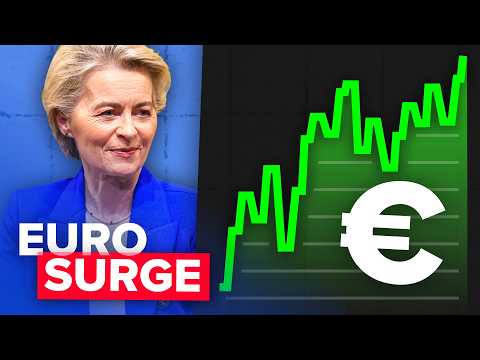
The recent surge of the euro, driven by geopolitical factors and changes in U.S. trade policy, presents both opportunities and challenges for the European economy. While it may boost consumer confidence and attract investment, it poses risks for exporters who may struggle with reduced competitiveness in global markets.
In recent weeks, the euro has experienced a significant surge, largely influenced by U.S. trade policies and geopolitical shifts. This blog post explores the implications of this rise for the European economy, particularly focusing on its impact on exporters and overall economic health.
Since March, the euro has climbed approximately 10%, reaching a record high on a trade-weighted basis. The European Central Bank (ECB) measures the euro's value against a basket of currencies from its trading partners, and this metric shows that half of the euro's gains occurred in April, marking its strongest month since late 2022. Notably, the euro has appreciated by 3% against the British pound, 6% against the Canadian and Australian dollars, and 9% against the Chinese yuan.
The primary catalyst for this surge has been the declining confidence in the U.S. dollar, triggered by President Donald Trump's announcement of tariffs on imports. The tariffs included a flat 10% rate on most imports and a 25% tariff on automotive vehicles, steel, and aluminum. Although these tariffs were delayed, the uncertainty they created led to a loss of faith in the dollar as a safe asset.
Contrary to expectations that tariffs would strengthen the dollar, the opposite occurred. Investors began to seek refuge in other currencies, including the euro, due to concerns over U.S. debt levels and Trump's comments about devaluing the dollar to boost American manufacturing.
Additionally, the euro's rise has been supported by a significant policy shift in Germany. Chancellor Friedrich Mertz announced a substantial increase in defense spending and the creation of a 500 billion euro infrastructure fund. This move marks a departure from Germany's traditional debt-averse policies, making German debt more attractive to investors who previously favored U.S. government bonds.
A stronger euro can have several positive effects on the European economy:
However, the surge in the euro poses significant challenges for European exporters, who are crucial to the EU's trade-oriented economy. The EU, after China, has the largest share of global exports, with the U.S. accounting for 20.6% of the EU's total goods exports. The eurozone has maintained a trade surplus since 2014, with exports constituting around 40% of its GDP.
A stronger euro makes European products more expensive for consumers outside the EU, which could dampen export growth. This situation is particularly concerning for sectors already facing challenges, such as high energy prices and competition from cheaper Chinese alternatives.
Several companies have already reported the negative effects of the euro's rise on their revenues:
The European automotive industry, already under pressure from competition, is particularly vulnerable to the rising euro, with the European Auto and Parts Stock Index declining significantly.
While the euro's surge presents opportunities for revitalizing parts of the European economy, it also raises concerns for exporters who may struggle to maintain competitiveness in global markets. The situation mirrors complaints from American companies regarding the dollar's overvaluation and its impact on domestic manufacturing.
As the euro continues to strengthen, it will be interesting to observe whether it gains a larger share of global reserves, especially as countries like Ukraine consider shifting their currency references from the dollar to the euro amid changing geopolitical dynamics. The complexities of this situation highlight the need for careful monitoring and analysis of the euro's impact on the European economy.