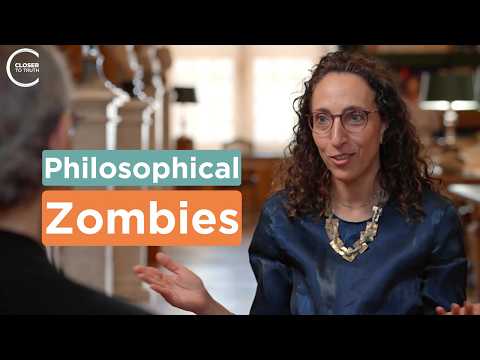
Every human begins life as a single cell that multiplies into trillions, but among these is a remarkable giant cell called the syncytiotrophoblast in the placenta. This massive cell, formed by the fusion of billions of cells, can span an area nearly twice the size of a king-sized bedsheet. Biophysicist Hannah Yevick studies this unique cell to understand its formation, structure, and potential applications, shedding light on an understudied yet vital organ.
If you are human, you started life as a single cell. This cell replicated repeatedly until it became approximately 30 trillion cells, most of which resemble the typical biology textbook diagram: a small blob encased by a membrane with smaller structures inside, such as the nucleus where DNA is stored. These cells are generally very small.
However, at some point during development, your body produced a cell so large that its surface area spanned around 13 square meters — almost twice the size of a king-sized bedsheet. This enormous cell did not grow inside your body but outside it, unless you belong to a specific subset of the population where such cells also grow internally.
This massive cell is known as the syncytiotrophoblast, found in the placenta. It is formed by the fusion of billions of individual cells, creating a large multinucleated cell with many folds. If laid flat, it would be large enough to cover a pickup truck.
The placenta itself is a temporary organ that provides oxygen and nutrients to the fetus during pregnancy. Interestingly, the placenta is made by the fetus, not the parent, meaning its cells carry the DNA of the child. This fact surprises many, as it means every person once had a placenta.
Hannah Yevick, a biophysicist at Brandeis University, is at the forefront of research into this giant cell. Her academic path is interdisciplinary, involving physics and biology, which allows her to approach scientific questions with diverse tools and perspectives.
Yevick's curiosity about the placenta began during her pregnancy when she read about the transformations her body was undergoing. She was fascinated to learn that the placenta is fetal tissue and that it contains this enormous syncytiotrophoblast cell.
Studying the syncytiotrophoblast is challenging because the placenta is a temporary organ that exists only during pregnancy. Moreover, the placenta has been understudied, partly due to societal discomfort and misconceptions about it.
Yevick and her team use advanced microscopy techniques to observe these cells. For example, they use microscopes capable of controlling light wavelengths to excite specific dyes in the samples, allowing them to visualize the multinucleated structure of the syncytiotrophoblast.
They also work with carcinogenic human cells that behave similarly to syncytiotrophoblast cells, as these cells spontaneously fuse and can be stimulated to fuse more readily. This helps in creating models to study the giant cell.
Yevick's research aims to study placental cells as organoids — three-dimensional cell cultures that mimic the structure and function of real organs. Instead of flat, two-dimensional layers, these organoids introduce curvature and allow cells to exist on external matrices with preset shapes, such as spheres.
This approach brings the models closer to real placental tissue, enabling better understanding of how the syncytiotrophoblast forms and functions.
The ability of placental cells to fuse into the syncytiotrophoblast is due to proteins called Syncytin-1 and Syncytin-2. Remarkably, these proteins originated from two separate endogenous retroviruses that became part of the mammalian genome.
This evolutionary adaptation is universal among placental mammals, highlighting the unique biology behind this giant cell.
Understanding the syncytiotrophoblast and placental biology has implications beyond basic science. For instance, researchers are exploring whether giant cell sheets like the syncytiotrophoblast could inspire bioengineered materials to cover implantable devices inside humans.
Such bioinspired applications could revolutionize medical implants and tissue engineering.
The syncytiotrophoblast is a fascinating example of a cell that defies typical size constraints, growing to cover an area larger than a bedsheet through the fusion of billions of cells. Despite its importance in fetal development, it remains understudied.
Researchers like Hannah Yevick are uncovering the mysteries of this giant cell using interdisciplinary approaches, advanced microscopy, and organoid models. Their work not only deepens our understanding of human development but also opens doors to innovative biomedical applications.
Every human once had this extraordinary cell, a testament to the complexity and wonder of life from its very beginning.