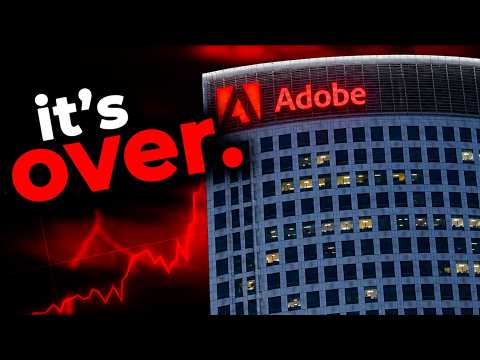
Adobe, once a trusted software provider, shifted from selling products outright to a subscription model, leading to rising costs, user frustration, and legal challenges. Despite record revenues, Adobe's stock has plummeted due to customer backlash, competition, and AI disrupting its core business. This case exemplifies the dangers of rentier capitalism and technofeudalism in the tech industry.
Adobe products were once considered reliable and trustworthy tools for creatives worldwide. Users could purchase software once and own it indefinitely, fostering loyalty and satisfaction. However, this landscape has drastically changed. Adobe transitioned to a subscription-based model, introducing rising fees, mandatory AI features that users did not request, and complicated cancellation processes. This shift has led to widespread dissatisfaction and legal scrutiny.
Previously, Adobe sold its software as a one-time purchase. For example, the Creative Suite cost around $2,600, and users owned the software outright. In 2013, Adobe ended this model with Creative Suite 6, introducing the Creative Cloud subscription service. Customers no longer owned the software but rented it monthly, losing access if they stopped paying.
This change dramatically increased costs for users. The full Creative Cloud suite now costs about $70 per month, or over $840 annually. Over three years, this equals the cost of the old boxed software. Over a 40-year career, a user could pay upwards of $33,000, and with price increases, potentially $60,000 to $100,000 just to maintain access to Adobe's tools.
Adobe's subscription plans often trap customers in long-term contracts disguised as monthly plans. The "Annual Paid Monthly" plan, pre-selected during sign-up, commits users to a year-long contract with hefty early termination fees—sometimes hundreds of dollars—hidden in fine print.
Canceling subscriptions is deliberately complicated, involving multiple pages of menus, discounts, and prompts designed to discourage cancellation. This practice, known as a "dark pattern," has led to thousands of frustrated users unable to cancel their subscriptions.
In 2024, the U.S. Department of Justice and the Federal Trade Commission sued Adobe for these practices, resulting in a $150 million settlement, although Adobe denied wrongdoing.
Adobe's dominance stems from strategic acquisitions and eliminating competition. Founded in 1982 by John Warnock and Charles Geschke, Adobe's early success came from PostScript technology and the PDF format, which became a global standard.
Adobe acquired Photoshop's license in 1988, turning it into the industry standard for image editing. The term "Photoshop" became synonymous with photo editing itself.
Adobe also eliminated competitors like Freehand by buying and shutting down rivals, consolidating its market power. This monopoly allowed Adobe to dictate market terms and pricing.
Adobe integrated AI features, branded as Firefly, into its software, justifying price increases. However, many users viewed this as an "AI tax" for features they did not request.
Moreover, Adobe reduced AI usage credits drastically for lower-tier plans, forcing users to pay more for full AI capabilities or accept limited functionality.
The 2025 releases of flagship products like Photoshop and Premiere Pro were criticized for bugs and underwhelming improvements, further alienating users.
In 2024, Adobe updated its terms of service to allow automated and human review of users' content, sparking outrage. A viral post explaining the new terms garnered over 12 million views. Adobe later retracted some of these policies but trust was severely damaged.
Further changes allowed Adobe to use stock photo content retroactively for AI training, deepening user distrust.
Adobe attempted to acquire Figma, a major competitor in collaborative design software, for $20 billion in 2022. The deal faced regulatory pushback in the US, UK, and EU due to antitrust concerns and was ultimately abandoned in late 2023. Adobe paid Figma $1 billion as a breakup fee, which Figma used to go public.
Meanwhile, competitors like Canva and Blackmagic's Da Vinci Resolve offered free or cheaper alternatives, attracting millions of users and challenging Adobe's dominance.
Adobe's business model exemplifies "rentier capitalism," where companies earn revenue by controlling scarce resources and charging rent rather than competing through innovation.
Economists and philosophers describe this as "technofeudalism," where tech giants own the digital "land" and extract rent from users, who become tenants rather than owners.
This model has spread across industries, affecting music, film, books, and more, eroding ownership rights and increasing consumer costs.
Despite record revenues of $23.8 billion in 2025, Adobe's stock price has fallen about 65% from its peak in 2021. Investors and asset managers are concerned about Adobe's future amid rising competition, user dissatisfaction, and AI-driven disruption.
Unlike other tech giants that have benefited from AI, Adobe's AI initiatives have cannibalized parts of its business, such as stock image sales.
Users are increasingly leaving Adobe for alternatives, a scenario once unthinkable due to Adobe's market dominance.
Adobe's transformation from a trusted software vendor to a rent-extracting monopoly highlights the risks of subscription models and aggressive corporate strategies. The company's struggles illustrate how customer trust, product quality, and fair pricing remain critical for long-term success.
Adobe's story serves as a cautionary tale for other companies embracing rentier capitalism and technofeudalism. Without genuine innovation and respect for users, even the most dominant players can face rapid decline.
The tech industry and consumers alike must consider the implications of these business models on ownership, creativity, and economic fairness in the digital age.