Hermes Agent introduces a groundbreaking mixture of agents (MOA) feature that combines multiple AI models to deliver stronger, more accurate responses than any single model alone. This open-source AI assistant allows seamless switching and integration of various models, overcoming access limitations to top-tier AI. The system-focused approach encourages building adaptable AI setups rather than chasing the latest model releases.
What if the best AI model isn't even available to you right now? And what if you didn't need it anyway? This is the question that Hermes Agent's new feature, the mixture of agents (MOA), addresses. Instead of relying on a single AI model, MOA allows multiple models to work together as one, producing results that outperform the top individual models currently available.
Hermes Agent is an open-source AI assistant developed by Noose Research. It functions as a smart assistant that can be accessed via your terminal or desktop app. Hermes can run commands, manage files, search the web, and remember your previous interactions across sessions. One of its key strengths is that it is not locked to any single AI model. Users can plug in various models such as Claude, GPT, Gemini, or open-source models and switch between them with a single command, avoiding vendor lock-in.
The new update in Hermes Agent introduces the mixture of agents (MOA) feature. Traditionally, when you ask a question to an AI, you receive one answer from one model. MOA changes this by sending your query to several models simultaneously. Each model attempts to answer, and then an aggregator combines these responses into one stronger, more accurate reply.
This approach is akin to having a panel of experts with a smart editor selecting the best parts of each answer. Similar concepts have been seen in systems like Fusion and Sakana Fugu, which also fuse multiple models into a single response.
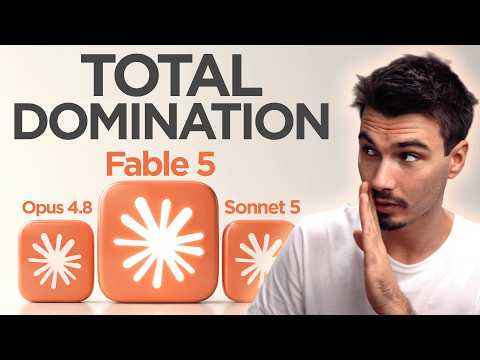
Many of the strongest frontier AI models are gated or in preview stages, such as Fable 5 or GPT 5.6, which are not widely accessible. Waiting for access to these models can be frustrating and uncertain. MOA offers a practical workaround by combining the models you already have access to, creating a superior AI experience without waiting for new releases.
Noose Research has implemented MOA presets as virtual models, making these combinations appear as normal models within the system. According to their own benchmarks, MOA setups score 8% higher than Opus 4.8 and 11% higher than GPT 5.5 on their Hermes Bench, demonstrating the effectiveness of combining models.
To get started with MOA:
Hermes update in your terminal or update via the dashboard to access the latest features.Hermes model to open the model picker, where you will find mixture of agents presets. These presets are pre-configured combinations of models ready to use./MOA followed by your prompt to run a single message through the mixture of agents, then return to your normal model.MOA is provider-agnostic and supports multiple model combinations, not limited to just two.
Here are some examples of what you can build with Hermes Agent inside the agent OS:
The key takeaway from MOA is to stop chasing the next shiny AI model and instead focus on building a robust system around the models you have. The model itself is interchangeable, but the system you build is your true asset.
This approach has been tested across multiple systems like Fusion, Sakana Fugu, and now MOA inside Hermes, all based on fusing multiple models into one stronger answer. These systems live within the agent OS, allowing seamless switching and integration without juggling multiple browser tabs.
Installing Hermes Agent is straightforward:
Hermes setup with the portal option to log in and configure your models and built-in tools like web search and image generation.Note that Hermes requires models with at least 64,000 tokens of context, which most hosted models support. For local models, increase the context size accordingly.
Hermes Doctor to diagnose and fix issues.Hermes Agent's mixture of agents feature is a game-changer in AI usage. It proves that combining existing models in a smart system can outperform waiting for exclusive access to the latest single model. This system-centric approach empowers users to leverage AI more effectively today.
For those interested in a complete setup, including SOPs, use cases, tutorials, and live coaching, the AI Profit Boardroom offers the full agent OS package with Hermes, Fusion, and Sakana Fugu pre-wired and ready to use.
Embrace the future of AI by building systems, not just chasing models.