Claude, an AI developed by Anthropic, is transforming the business landscape by enabling individuals without coding skills to build software and run companies. With features like autonomous task execution, parallel processing, and memory retention, Claude drastically reduces the time and cost of software development. Startups and businesses leveraging Claude are gaining significant competitive advantages, heralding a new era where AI literacy is essential for success.
Right now, a brand new group of millionaires is being created by AI. One standout example is a company called Vulcan, which builds software that operates inside government agencies. Remarkably, their software looks like the work of a hundred engineers, but most of their team can't even write a single line of code. They built the entire company by simply describing what they wanted inside Claude, an AI developed by Anthropic.
This phenomenon is not isolated. Many seven-figure founders are using Claude to run their businesses, and even I use Claude daily to manage my own ventures. This article explores why Claude is breaking new ground in the business space and how people with zero coding background are building real companies using Claude code.
Claude is an AI developed by Anthropic. On the surface, it may seem like just another ChatGPT competitor, but its impact and backing tell a different story. Two weeks ago, Anthropic raised $65 billion in a single funding round, valuing the company at $965 billion — just shy of a trillion dollars. This valuation surpassed OpenAI, the company behind ChatGPT, for the first time.
The revenue growth supports this valuation. Anthropic's run rate recently hit $47 billion, a massive leap from $1 billion at the end of 2024 — a 47-fold increase in about a year and a half. Run rate means businesses are paying Anthropic at a pace of $47 billion per year. This massive investment and revenue growth reflect the confidence of the world's smartest and richest investors.
Starting a software company traditionally required hiring expensive engineers and investing months before having a product to show. Without significant capital or investor backing, many great ideas never materialized.
Claude changes this dynamic dramatically. Here are four key features that set Claude Code apart:
It Does the Work: You describe what you want in plain English, and Claude builds a full app, website, or automates repetitive tasks in minutes, not months.
Agentic Behavior: Unlike chatbots that only answer questions, Claude takes autonomous actions towards goals. It builds, tests, finds bugs, and fixes them without constant human intervention.
Parallel Processing: Multiple Claude agents can run simultaneously, even while you sleep, as they don't require rest.
Memory Retention: Claude remembers your business context, team, priorities, and past failures, often better than humans. It can remind you of tasks and forgotten details.
Together, these features eliminate the gap between having an idea and launching a real product.
Vulcan, the company mentioned earlier, was founded by three individuals, two of whom couldn't code, and one who hadn't coded since high school. Their first prototype was built by copying and pasting code generated by the regular Claude app before Claude Code even existed.
This prototype evolved into a real product that won a Virginia state contract at about 10% of the price quoted by established consulting firms. The governor signed an executive order requiring every state agency to use Vulcan's AI regulatory review software. Vulcan claims their work is already saving Virginians over a billion dollars annually.
Tanner Jones, one of the founders, summarized it well: if you understand language and critical thinking, you can use Claude Code effectively. The new essential skill is describing exactly what you want and critically evaluating the AI's output.
Y Combinator (YC), the world-famous startup accelerator, recently revealed that over half of the startups in its newest batch are building with Claude. A year earlier, OpenAI held over 90% of that spot. This shift shows that founders are choosing Claude as their AI tool of choice.
In regular jobs and small businesses, Claude users are more productive and receive bigger projects and opportunities. Those who do everything manually struggle to compete with the speed and efficiency Claude provides.
This trend echoes the early internet days when early adopters of HTML and Facebook ads gained a massive advantage over competitors still relying on traditional methods.
If you want to leverage Claude to boost your productivity or start a business, here are four steps to begin immediately:
Access to Claude Code requires a paid plan, starting at just $20 per month. Think of this as hiring the cheapest, most efficient employee you'll ever have.
Pick a single repetitive or postponed task you want to automate or improve. Examples include organizing receipts, compiling weekly reports, sorting emails, or even doing your taxes. This task will be your first real project.
Explain what the task is, how you currently do it, and what success looks like. Before letting Claude build anything, engage it in brainstorming and devil's advocate discussions to identify potential flaws. Claude tends to be sycophantic and eager to please, so critical evaluation is essential.
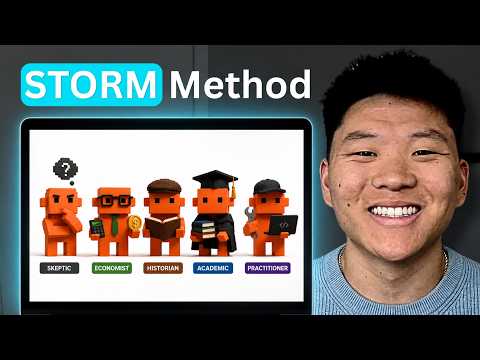
I use a method called "the roast," where Claude creates a council of sub-agents with different perspectives: one supports the idea, another critiques it, and a third gathers objective evidence. This council provides a thorough analysis and a clear verdict: proceed, reshape, or kill the idea.
If the idea passes, start building the smallest viable version. Break down big projects into manageable pieces and take baby steps. When Claude says it's done, ask it to prove it by running real examples and showing outputs.
Verification is crucial. Treat Claude like a human employee whose work you must review carefully. Claude can control browsers and perform any computer-based verification tasks.
Expect your first version to be about 60-70% correct. Use this feedback to guide improvements. Tell Claude what worked and what didn't in plain English, and let it fix its work. Over time, Claude improves as it learns your preferences and business context.
If you don't understand something Claude does, ask it to explain. Treat Claude as a mentor and your smartest friend.
Once your first task works, pick the next one and repeat the process. This approach allowed me to run my entire business through Claude, one task at a time.
The window of opportunity to get ahead with Claude is real. You don't need to build the next Vulcan immediately. Just a $20 subscription and one task can put you ahead of 95% of people worldwide.
Being AI-native today is a significant advantage, but in two years, it will be the baseline. Everyone will be AI-native, so starting now is crucial.
Claude AI is revolutionizing how software is built and businesses are run. By lowering the barriers to entry, it empowers people without coding skills to create impactful products and companies. Its unique features—autonomous action, parallel processing, and memory—make it a powerful tool for entrepreneurs and professionals alike.
The success of companies like Vulcan and the widespread adoption of Claude in startup accelerators like Y Combinator highlight the transformative potential of this technology. Embracing Claude today can set you on the path to becoming part of this new generation of millionaires.
If you're interested in learning more, there are free resources and communities available to guide you through your first projects with Claude. The future belongs to those who harness AI effectively, and Claude is leading the way.
Thank you for reading, and I hope this inspires you to explore the possibilities with Claude AI.