Claude Skills enable users to create, store, and reuse custom instructions for AI tasks, improving efficiency and personalization in interactions. These skills can be built using Claude itself, shared across platforms, and integrated into enterprise workflows, saving time and costs while enhancing task standardization and automation.
Interacting with AI can often be frustrating because the AI tends to forget previous details about you or how you prefer tasks to be completed. For example, when writing a LinkedIn post in a specific format, you might find yourself repeatedly explaining your preferences. Claude Skills offer a solution to this problem by allowing the AI to remember and follow your specific instructions across various tasks.
Since the rise of AI models like ChatGPT and Claude, our interactions with AI have evolved beyond simple question-and-answer exchanges. People now use AI to accomplish specific tasks such as:
Each of these tasks requires particular instructions, such as limiting a LinkedIn post to under 1,300 characters, avoiding bullet points in sales decks, or tracking numbers in US dollars.
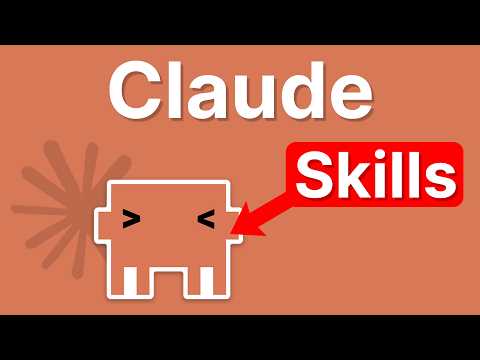
Claude Skills are a mechanism that allows the AI to remember how to follow your instructions for various tasks. For instance, if you want Claude to remember how you prefer your LinkedIn posts structured — keeping them under 1,300 words, avoiding hashtags, and starting with punchy hooks — you can encapsulate these instructions into a skill.
Once stored, you can simply type /LinkedIn followed by your content, and Claude will automatically apply your custom instructions without needing you to explain them again.
The easiest way to create a skill is by using Claude itself. You can ask Claude to use the skill creator to build a skill for a specific task, such as writing LinkedIn posts. Claude will then ask you a series of questions to understand how you want the skill structured and will create it for you.
This means you can invoke the skill anytime within Claude, allowing you to focus on the task rather than repeatedly specifying instructions.
Skills are not limited to writing LinkedIn posts. They can be applied to a wide range of tasks, including:
There is an entire ecosystem where people share their skills, which are ranked and rated by users. Claude Skills exemplify this collaborative environment.
Enterprises often have strict guidelines and rules for completing tasks. Skills provide a standardized and repeatable way to perform these tasks consistently by simply invoking the relevant skill.
Anthropic, the company behind Claude, allows users to customize and add personal plugins that contain packages of skills organized by work type, such as design, engineering, finance, and data.
For example, a legal plugin can automate many tasks a law firm might need, while a design plugin might include skills like design critique, user research, and UX copywriting. Activating these plugins enables all associated skills.
Portability: Skills are stored as simple text files, making them easy to transfer to other applications like ChatGPT or Claude Code. This ensures that the time invested in building skills is not wasted.
Token Efficiency: Skills save tokens by only reading the header of each skill to determine which to invoke, rather than processing the entire content. This conserves the AI's context window.
Skills have already been integrated into both personal workflows and enterprise systems, helping save time and reduce costs as AI automates more daily tasks. This standardization and automation are transforming how industries operate.
If you want to learn more about using Claude Skills, resources like the How to AI library offer numerous examples that you can download and incorporate directly into your skills library for immediate use in Claude.
Subscribing to newsletters and following tutorials can further enhance your ability to leverage Claude Skills effectively.
Claude Skills represent a significant advancement in AI interaction by enabling personalized, repeatable, and efficient task execution. Whether for individual productivity or enterprise automation, skills help bridge the gap between human preferences and AI capabilities, making AI a more powerful and user-friendly tool.