In his TED Talk, artist JR explores the transformative power of art in bridging divides and fostering connections among people, particularly in challenging environments like prisons. Through various projects, he demonstrates how art can change perceptions, encourage dialogue, and even impact lives, as seen in his work with inmates in California.
In a thought-provoking TED Talk, artist JR shares his passion for art and its potential to unite people across divides. He reflects on his experiences using art to challenge perceptions and foster connections in various communities, including prisons and conflict zones.
JR begins by expressing his love for people and walls, noting that while walls are typically seen as barriers, he has found ways to use them to bring people together. He recounts his project in Israel and Palestine, where he took photos of Israeli and Palestinian workers doing the same job and displayed them in both communities. This initiative highlighted their shared humanity, as people struggled to identify who was who.
JR shares several impactful projects:
JR's journey into the world of prisons began with a conversation over breakfast with a friend. Despite initial hesitations due to bureaucracy and his past arrests, he was inspired to create a project within a prison. He envisioned transforming the prison environment through art.
After gaining permission from the governor of California, JR found himself at Tehachapi, a supermax security prison. Upon arrival, he faced strict security measures but was determined to connect with the inmates. He introduced himself and began to learn their stories, emphasizing the importance of understanding their backgrounds and experiences.
JR encouraged inmates to record their life stories, asking them to reflect on their past and the choices that led them to prison. This process was emotional, with some inmates expressing their feelings through tears. The recordings became a crucial part of the project, allowing their voices to be heard.
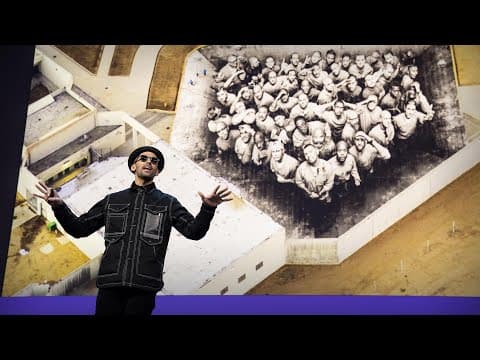
The mural project involved printing large strips of paper that would be assembled in the prison yard. Despite the challenges of working in a supermax facility, the inmates were motivated and completed the mural in just a few hours. JR also sought to involve the guards, breaking down barriers between them and the inmates, which was a significant step in fostering understanding.
Once the mural was completed, JR used a drone to capture the artwork from above, revealing the faces of the inmates. The project not only provided a creative outlet but also allowed inmates to connect with their families through social media, showcasing their pride in the work they accomplished.
One inmate, Kevin, stood out to JR. With a swastika tattoo on his face, Kevin shared his journey and regrets about his past. Through their conversations, Kevin began to reflect on his identity and the impact of his choices. JR facilitated a dialogue between Kevin and the public, allowing him to share his story and seek redemption.
JR returned to the prison to assess the impact of the project. Inmates reported that their families were now engaging with them more than ever, and even the guards began to treat them differently. The walls that once divided them were starting to crumble.
Before leaving, JR created one final piece of art by pasting images of mountains on a wall, symbolizing hope and the possibility of change. Kevin eventually left prison, and with JR's support, he began the process of removing his tattoo, marking a new chapter in his life.
JR's TED Talk raises profound questions about the role of art in society. He emphasizes that while he is not an activist, he believes in the power of art to provoke thought and inspire change. By sharing stories and fostering connections, art can indeed change lives and, potentially, the world.
As JR poignantly asks, if we can change, why can't others?