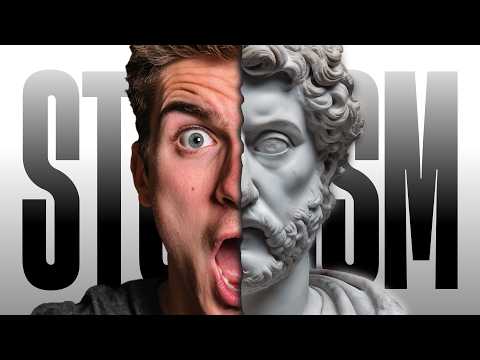
Stoic philosopher Epictetus teaches that true freedom comes from mastering our desires and aversions, especially regarding external things beyond our control. By progressing through stages of attachment, moderation, and finally detachment from externals, we align with nature and achieve inner peace. Using the metaphor of a food trolley on a plane, he illustrates how patience, acceptance, and calmness help us overcome enslavement to external circumstances.
The Stoic philosopher Epictetus believed that the first stage in training wholeheartedly as a practicing Stoic was to gain some level of mastery over our aversions and desires. The goal he believed was to become aligned with nature. While he did think that logic and reasoning were very important components of Stoicism, they should come after this first step of managing our desires and aversions.
For many of us, this is a strange idea. How do we master our aversions and desires? Does that even make sense? What do we do? Just know what to avoid, learn what to desire? Should we stop desiring things? Should we ignore our desires? Should we suppress our aversions? It's not necessarily easy to figure out what that would entail. That's why imagery, principles, and concepts can be very illuminating.
In this article, we will explore three stages to mastering our attachments to desires.
The external world — including people, possessions, things, and even our own body to some degree — is not within our direct control. Because of that, we can't say that it is essentially good. Things breaking, things getting stolen, body parts getting injured, people rejecting us — we label these things as bad, but they are not essentially bad.
Why? Because good things could come from those bad things. Would they even be bad at all? It also depends on perspective. Death, for example, may be unpleasant and distressing, causing grief to family members. But to say that death is bad is an oversimplification. Death makes way for new life and new ideas. In fact, it gives life meaning. If you knew you would never die, what would be the urgency to do anything? Death is what gives our life meaning and our romances depth.
Many of us go through life labeling things good and bad and become attached to the external world. The Buddhists recognize that we identify with thought. Thoughts come and go. Arguments happen in our head. Stories unfold. But we grasp onto them as if we are the thinker of those thoughts. We believe we thought those things, not realizing that the very thought itself came from almost nowhere.
We did not have before us all the possible thoughts in the world and then carefully choose the one we wanted to think about. The thought just arose, and then we identified with it as if we were the thinker.
We can do this with external things too. We have a new fancy piece of tech and become happy when it's delivered. We want to show it off to people. It's almost as if we are saying this item is a part of us. Look how good we are, how great we are because we possess this thing.
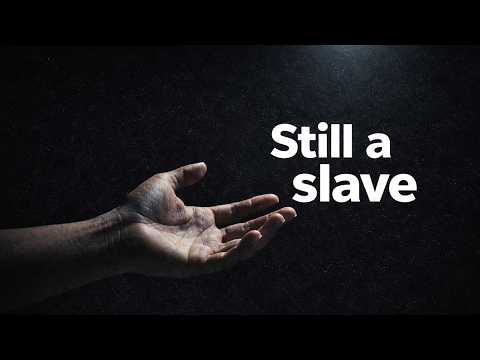
Epictetus himself was a slave at one point and then became free. But he would often remind his students that you can be technically a free person but still a slave to externals. Externals can shackle you in some ways.
You can see this clearly when one has a craving or an addiction, which can be defined as the compulsive behavior to do something that causes one harm. Think of binge eating, social media addiction, pornography addiction, or addiction to drugs and alcohol.
On a slightly less extreme level, whenever we allow the external world, which is not within our control, to dictate how we feel, we are in a sense enslaved to that. This would be the first level of attachments to externals.
Very simply, when we are attached to the external world in some way, we put ourselves in the external world. Our happiness and sadness, our self-esteem is bound up in the things that happen externally. We are enslaved.
The second stage would be moderation with externals.
The third stage would be no concern for externals.
We could say that as you go through each stage in your Stoic practice, you go from enslaved to wise to divine.
Imagine you are sitting on an airplane. You look down the aisle. Physically, you're not comfortable. The noise is loud. You're sitting awkwardly and see the trolley with food coming down the aisle. You're waiting for the trolley to get to you. It takes its time.
As it comes, you're thinking, "What do I want? Coffee, soda, tea, food, a snack?" In this case, however, you realize the trolley has already passed you. The food is gone. You were napping. You missed it.
When this happens, do you feel regret? Do you get frustrated and upset? You just want this trolley to come back. You feel this energy rising in your system: "Come back. Come back. I want the drink."
If this happens, we ought to practice moderation. Yes, we can still want our drink. We still feel some regret over the fact that the trolley has passed. But let's not make a big fuss and allow this feeling to poison our body and the people around us. Let's practice acceptance. We missed it.
In a different scenario, we are waiting for the trolley of food to come to us. It's taking a while as the flight attendant deals with new issues. Now is an opportunity to practice patience. On one hand, we are not getting the food or drink, but on the other hand, we get the opportunity to sit with this feeling of wanting the thing to come sooner. Wanting it to come sooner doesn't make it come sooner.
Finally, when the trolley gets to you and the flight attendant hands you what you ordered, do you need to reach out aggressively to grab it, or can you accept it politely and calmly put it on the table?
Why talk about the food trolley on a flight? This is a metaphor for desire, attachments, and aversions when it comes to our family, finances, and status.
Let's not try to force things to happen prematurely. Let's be patient and content where we are as things come to us.
If we notice we've missed an opportunity or something has slipped by or we've lost something, regret is natural. But commotion, destruction, and despair are unnecessary.
When things do come to us, let's handle them gently. Let's accept them graciously. Let's allow ourselves to receive gifts.
As we practice this way in life — allowing things to pass us by if they're already passed, not forcing things to happen prematurely if they're taking their time, and accepting things calmly and graciously when they arrive — we start to develop mastery of aversions and desires.
Eventually, we can go even further and reach a point where we don't regret the things that pass us by, don't long for the things coming to us, and don't even accept the gifts of reality or the external world because we are already as fulfilled as we can ever be.
There is nothing outside ourselves that will make any difference to how we feel. We no longer rely on the external world.
When you no longer concern yourself deeply with externals, everything that happens can have the flavor of being chosen by you.
For example, if you break a cup, you can be happy with the fact that you broke it. Why? Because it happened and it could have been no other way. It is what it is. In that sense, you choose it.
When you choose everything that happens to you because it has happened to you, it's almost as if you've created it in some sense.
Going through life with the sensation of having chosen everything that has happened to you — which is deep acceptance — has something divine and mystical about it.
At that point, one could say the world no longer happens to you, but simply is.
Mastering our desires and aversions as Epictetus teaches is a journey from enslavement to freedom, from attachment to wisdom, and ultimately to a divine acceptance of life as it unfolds. Through patience, moderation, and deep acceptance, we align ourselves with nature and find true peace within.