This article explores the philosophical critique of materialism and Darwinism, arguing that a purely materialistic worldview makes knowledge impossible. It delves into metaphysics, ancient philosophy, and modern critiques, highlighting the structured nature of reality and the necessity of a divine creator. The discussion includes insights from Plato, Aristotle, and modern thinkers, as well as the impact of elite conspiracies on knowledge and education.
In contemporary discourse, materialism and Darwinism often dominate the narrative about the nature of reality and human knowledge. However, a philosophical critique reveals significant dead ends in these views, particularly the materialist worldview that posits all that exists is matter alone. This article explores why such a worldview makes knowledge impossible and how ancient and modern philosophy provide a richer understanding of reality.
Materialism, in the philosophical sense, asserts that nothing exists except pure, solid matter. This is distinct from the everyday notion of materialism as the pursuit of possessions. If this strict materialist view were true, it would undermine our ability to have knowledge, reason, or engage in logic. The fact that humans do possess these faculties suggests that reality cannot be purely material.
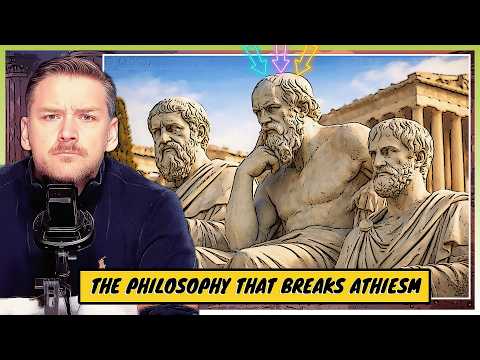
Metaphysics, often misunderstood today as related to witchcraft or the occult, traditionally concerns itself with what exists, what is real, and what is not. Ancient and medieval philosophers like Plato and Aristotle used metaphysics to explore the fundamental nature of reality.
Both philosophers contributed valuable insights but also had limitations. Plato’s metaphysics, for example, included pagan elements that require critique.
Ancient texts like Homer’s Iliad contain symbolic structures, such as triadic divisions of the cosmos (underworld, mortal world, gods). These symbolic frameworks influenced later philosophers and reveal deeper layers of meaning about reality.
Plato’s Timaeus presents a cosmogony that describes the universe as ordered and structured through geometric forms known as Platonic solids. Remarkably, modern physicists like Werner Heisenberg have found parallels between these ancient ideas and contemporary understandings of quantum physics, suggesting the universe is fundamentally ordered rather than chaotic.
The concept of the logos—the divine reason or principle—suggests that seeds of truth exist across various religions and philosophies. Even if these systems are not entirely true, they contain elements reflecting the created order’s goodness and structure.
Darwinism and atheistic materialism propose a universe governed by chance, chaos, and randomness without purpose or design. Philosophically, this leads to nihilism and the impossibility of knowledge because it cannot justify the existence of rationality or abstract concepts.
If all that exists is matter, then minds and concepts are merely physical phenomena. This reductionism fails to explain how different minds can share and understand abstract concepts like truth or justice. For example, the number seven is not identical to seven physical objects; it exists as an abstract entity beyond material instances.
Philosophers like Kurt Gödel demonstrated through incompleteness theorems that not all truths can be derived from purely materialistic or mathematical systems. Gödel also uncovered conspiracies among intellectual elites to suppress philosophical works that disproved materialism, highlighting a deliberate effort to undermine knowledge.
Historical figures such as Bertrand Russell and groups like the Vienna Circle have been implicated in efforts to promote materialism and suppress alternative philosophical views. This has contributed to the dumbing down of education and the erosion of critical thinking.
Philosophers like Søren Kierkegaard, Friedrich Nietzsche, and Fyodor Dostoevsky critiqued the excesses of the Enlightenment, particularly its atheistic and materialistic tendencies. Their works highlight the dangers of denying transcendence and reducing humans to mere physical beings.
Ancient Egyptian thought, while not fully accurate about God, offered valuable insights into the natural world and the binary structure of reality (being and non-being, on and off). Figures like Nikola Tesla drew upon these mysteries to develop technologies harnessing natural energies.
Modern discoveries in physics support the notion that the universe is highly structured and ordered, echoing Platonic ideas. This challenges the materialist view of a chaotic, purposeless cosmos and supports the idea of a divine creator who imbues the universe with purpose and design.
The article critiques the idea that machines or algorithms can achieve consciousness. Consciousness is not reducible to computational processes, and the belief that AI can become self-aware is a form of magical thinking rooted in flawed evolutionary assumptions.
Darwinism is not purely scientific but a grand metaphysical narrative about human origins and destiny. Much of it extends beyond empirical data and involves assumptions that cannot be scientifically verified.
The article also touches on the influence of philosophy on warfare, particularly through Machiavelli’s Art of War, which introduced modern warfare concepts involving deception and religious manipulation. This reflects broader themes of control and manipulation in society.
The critique of materialism and Darwinism from a philosophical perspective reveals that knowledge, reason, and abstract concepts cannot be adequately explained by a purely material universe. Ancient and modern philosophy, along with insights from science, point toward a structured, purposeful cosmos created by a divine mind. Understanding these ideas is crucial for reclaiming critical thinking and resisting the forces that seek to undermine knowledge and truth.
This comprehensive exploration invites readers to reconsider the foundations of their worldview and the nature of reality itself, emphasizing the enduring relevance of philosophy in contemporary debates.