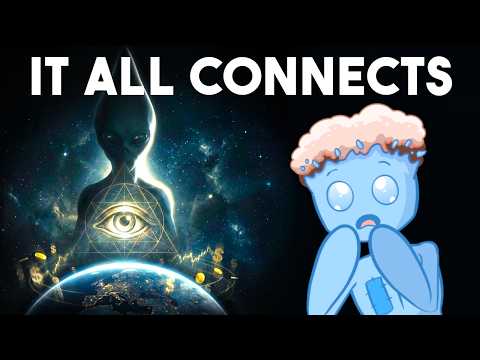
This article explores the concept of the Conspiracy Theory of Everything, examining how human consciousness is influenced by information algorithms, herd mentality, and ancient ideas like the Demiurge. It invites readers to reflect on the nature of reality, the illusion of the physical world, and the importance of seeking deeper truths beyond mainstream narratives.
In an age where information is more accessible than ever, the collective human consciousness finds itself in a state of chaos and confusion. Despite the vast amount of data available through the internet, most people only perceive a narrow slice of reality, shaped by algorithms and social conditioning. This article delves into what is termed the "Conspiracy Theory of Everything," a hypothesis that seeks to explore the deeper, often darker layers of human consciousness and the nature of reality itself.
Before diving into the core ideas, it is important to clarify that this exploration is a set of hypotheses rather than definitive truths. The intention is to encourage self-reflection and independent research, inviting readers to venture down the proverbial rabbit hole where truth can be stranger than fiction.
Human consciousness today is described as being "in quite a pickle." The internet provides near real-time access to information, yet the content individuals encounter is largely filtered by algorithms on platforms like Google, Facebook, and YouTube. These algorithms tend to reinforce existing beliefs by showing users what they already seek or what others with similar behaviors have viewed. This creates an echo chamber effect where people only see what they want to see.
Many ideas, especially those labeled as conspiracy theories, are dismissed by the masses due to ridicule or fear of extremism. This herd mentality discourages exploration of alternative viewpoints, allowing people to maintain comfort in their existing beliefs. Changing one’s beliefs can profoundly alter life experiences, but most prefer to avoid this discomfort.
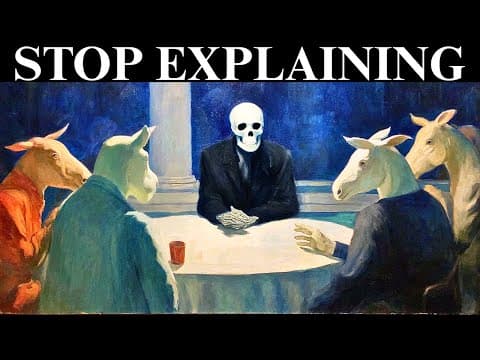
The saying "you can take a horse to water, but you can't make it drink" aptly describes the challenge of encouraging others to think differently. Attempts to force new perspectives often lead to distress rather than enlightenment. Ancient wisdom suggests that true knowledge is not imposed but discovered through personal experience.
This collective avoidance creates a self-imposed deception, distracting humanity from a larger, interconnected reality. The concept that "everything is connected" is fundamental to many spiritual and scientific perspectives. Personal awakening experiences often reveal a unified whole from which all things stem.
However, most people either do not see this interconnectedness or choose not to explore it. This lack of awareness perpetuates the cycle of confusion and separation.
In modern science, there is an ongoing quest for a "theory of everything" that would unify quantum mechanics and relativity. Similarly, the Conspiracy Theory of Everything attempts to unify various ideas about consciousness, reality, and control.
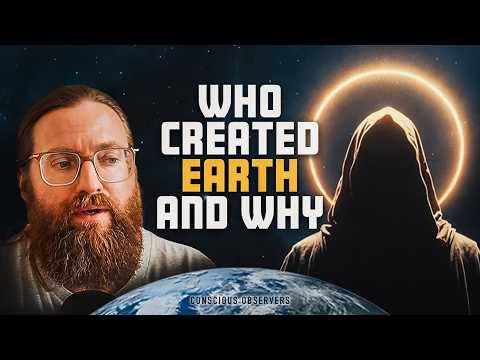
Central to this theory is the concept of the Demiurge, an ancient Greek and Gnostic idea describing a consciousness that created the physical universe but is not the supreme creative force. The Demiurge is often seen as a lesser entity responsible for the material world, which is considered an illusion or a prison for the soul.
The science fiction film The Matrix serves as a useful metaphor for this concept. It portrays a world where humans live in a simulated reality, unaware that their perceived world is an artificial construct. This allegory highlights how individuals may be trapped in a false reality, disconnected from the true nature of existence.
Because many of these ideas are controversial, they are often dismissed or ridiculed, preventing widespread exploration. This dismissal reinforces the status quo and discourages individuals from seeking higher truths.
The Conspiracy Theory of Everything is not about blaming external forces but about self-reflection and liberation from illusions. By recognizing the filters that shape our perceptions and questioning the nature of reality, individuals can begin to break free from limiting beliefs and experience a higher state of consciousness.
This journey requires courage, open-mindedness, and a willingness to explore beyond conventional narratives. Ultimately, the truth may be stranger and more profound than we ever imagined, waiting to be discovered by those willing to look deeper.
This exploration invites readers to consider their own beliefs and experiences, encouraging a personal quest for understanding in a complex and often confusing world.