This blog post delves into the art and architecture of the Jacksonian period (1815-1865), highlighting key themes such as egalitarianism, landscape painting, genre art, and the influence of prominent artists like George Caleb Bingham and John James Audubon. It also discusses the architectural shifts influenced by John Ruskin and figures like Andrew Jackson Downing, showcasing how these elements reflect the cultural and social dynamics of early 19th-century America.
The Jacksonian period, spanning from approximately 1815 to 1865, marked a significant era in American history characterized by the presidency of Andrew Jackson and the ideals he championed. This blog post aims to explore the art and architecture of this period, focusing on the themes of egalitarianism, landscape painting, genre art, and the influence of notable artists and architects.
The Jacksonian period is named after Andrew Jackson, the seventh president of the United States, whose ideals greatly influenced the cultural landscape of the time. This era is often associated with the spirit of egalitarianism, emphasizing the importance of all societal classes, from the lowest socio-economic groups to the urban intellectual elite.
One of the dominant themes of the Jacksonian period was the rise of folk art, produced by untrained artisans. This movement reflected the egalitarian spirit of the time, showcasing the everyday lives of common people. Artists like Edward Hicks exemplified this trend.
Additionally, genre painting flourished during this period, depicting common scenes from daily life rather than grand historical events. William Sydney Mount was a notable genre painter whose work captured the essence of everyday activities. His influence extended to George Caleb Bingham, another prominent artist who initially trained as a cabinet maker before turning to painting.
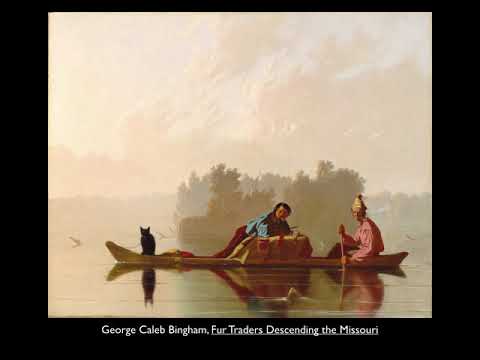
Bingham's notable work, "Fur Traders Descending the Missouri," reflects his interest in the lives of people along the Missouri River. Originally titled "A Fur Trader with His Half-Breed Son," the painting captures the blending of Anglo-Saxon culture with that of Native Americans, a theme prevalent in the expansionist narrative of the time.
Bingham's ability to convey atmosphere, particularly the humidity of the American landscape, is a hallmark of his style. He employed geometric organization in his compositions, often using triangular shapes to create stability and monumentality in his depictions of mundane scenes.
Bingham's work parallels the literary contributions of Mark Twain, particularly in their shared focus on American life along the Mississippi River. Bingham's genre paintings elevated the dignity of everyday activities, much like Twain's narratives.
John Quidor, another genre painter, drew inspiration from literature, particularly the works of Washington Irving. His painting, influenced by Irving's "Tales of a Traveler," depicts a dramatic scene of treasure hunters encountering a ghostly figure.
David Gilmour Blythe focused on the people of Pittsburgh, capturing the struggles of various social classes in his works. His painting, "Art versus Law," illustrates the plight of a starving artist, reflecting the socio-economic challenges of the time.
George Catlin, who began his career as an attorney, became a pivotal figure in documenting Native American tribes. His paintings, created between 1830 and 1836, captured the customs and key figures of over 50 tribes, emphasizing authenticity in his portrayals.
Artists like John James Audubon contributed to the scientific documentation of American wildlife. Audubon’s detailed paintings of birds, created using a unique watercolor technique called gouache, showcased his dedication to ornithology and the natural world.
While genre painting thrived, historical painting remained significant. Emanuel Leutze's iconic work, "Washington Crossing the Delaware," exemplifies the era's historical narrative, despite its artistic liberties. Similarly, Horatio Greenough's sculpture of George Washington reflects the neoclassical influence on American art.
The architectural landscape of the Jacksonian period was influenced by the writings of John Ruskin, who advocated for designs inspired by nature. Andrew Jackson Downing emerged as a key figure in this movement, promoting Gothic architecture as a means to enhance the spiritual and cultural development of American society.
Downing's Gothic design for a cottage exemplifies the integration of natural inspiration into architecture, featuring pointed arches and intricate details that reflect the medieval tradition.
The art and architecture of the Jacksonian period reveal a rich tapestry of cultural expression, reflecting the ideals of egalitarianism, the significance of everyday life, and the evolving American identity. Through the works of influential artists and architects, this era laid the groundwork for future artistic movements and continues to resonate in contemporary discussions of American art and culture.