This blog post delves into the life of Frida Kahlo, focusing on her return to the Blue House after her divorce from Diego Rivera, her emotional struggles, and the creation of her iconic paintings, 'The Two Fridas' and 'The Thorn Necklace'.
Frida Kahlo, a prominent figure in Mexican culture, is known for her unique artistic style and deeply personal works. After her divorce from Diego Rivera, Frida returned to the Blue House, a significant location in her life and art.
The Blue House, or La Casa Azul, is an iconic symbol of Mexican culture. It was here that Frida lived with her family after her separation from Diego. Today, it stands as the most famous and visited museum in Mexico, attracting millions of visitors from around the world.
Inside the Blue House, visitors can explore Frida's personal belongings, including her clothing, her bedroom, and even the kitchen where she cooked. The museum offers a glimpse into her life and the environment that inspired her art.
In 1930, at the age of 30, Frida divorced Diego Rivera, a decision that left her heartbroken. Despite her emotional turmoil, this period marked the beginning of her most successful phase as an artist. Frida channeled her physical and emotional pain into her paintings, creating works that resonated with her experiences.
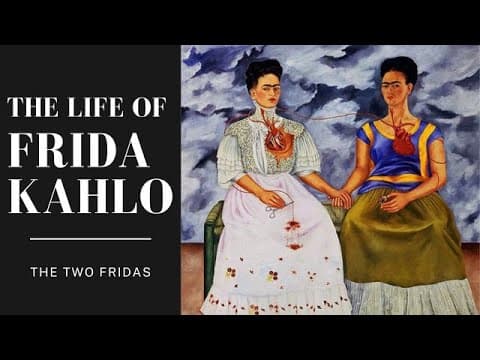
One of her most iconic paintings from this time is "The Two Fridas". This large canvas, measuring 1.73 meters by 1.73 meters, symbolizes Frida's heartbreak over her separation from Diego. The painting features two versions of Frida: one dressed in traditional Mexican attire, representing her married self, and the other in a more European style, symbolizing her single identity.
The two Fridas are connected by a single artery, illustrating that despite their differences, they are fundamentally the same person. The contrasting colors and clothing styles reflect the changes Frida made to please Diego, while the exposed heart signifies her deep emotional pain. Today, this masterpiece is valued at approximately 9 million dollars.
Another significant work from this period is "The Thorn Necklace". In this painting, Frida is depicted at the center, wearing her signature clothing and hairstyle, with a thorn necklace around her neck. This necklace symbolizes both her physical suffering and emotional distress.
Accompanying her in the painting are a monkey, a gift from Diego, a hummingbird representing her eyebrows, and a butterfly symbolizing freedom. These elements combine to convey the complexity of Frida's emotions during this challenging time.
Frida Kahlo's work gained recognition in both Mexico and the United States, showcasing her unique perspective and emotional depth. While her relationship with Diego Rivera may have seemed like a closed chapter, their story continued to evolve.
In the next chapter of her life, Frida and Diego would find their way back to each other, and her health would take a turn for the worse. Frida's journey is a testament to resilience and the power of art as a means of expression.
Frida Kahlo's return to the Blue House marked a pivotal moment in her life and career. Through her art, she transformed her pain into powerful visual narratives that continue to resonate with audiences today. Her legacy as an artist and cultural icon endures, inspiring countless individuals around the world.