Sougwen Chung's exploration of human creativity through robotics reveals how collaboration with machines can enhance artistic expression, challenge perceptions of perfection, and redefine the role of technology in creative processes.
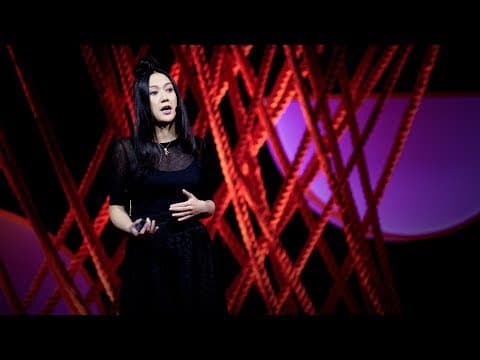
In an age where technology permeates our daily lives, the intersection of art and automation raises profound questions about creativity and the role of the human hand. Sougwen Chung, an artist and researcher, delves into this intersection, exploring how artificial intelligence (AI) and robotics can enhance human creativity rather than replace it.
Chung reflects on her initial perception of machines as tools designed to enhance efficiency and productivity. However, the rise of automation prompted her to question the implications for human creativity. As machines begin to perform tasks traditionally done by humans, what happens to the essence of human artistry? Chung's work seeks to answer this by investigating the dynamics between individuals and systems, particularly the messiness that arises from their interactions.
Through her artistic journey, Chung has learned valuable lessons about the nature of creativity. One key insight is that embracing imperfection can lead to deeper self-understanding. By exploring art, she believes we can shape the technology that shapes us. Her experiments with AI and robotics have revealed that the beauty of human-machine collaboration lies in their shared fallibility.
Chung's exploration began with an experiment called "Drawing Operations Unit: Generation 1," affectionately named D.O.U.G. Initially, she had no experience in robotics, but she utilized open-source designs to create a robotic arm that mimicked her gestures in real-time. During a live demonstration in New York City, she discovered that the robot's imperfections—its inability to perfectly track her lines—added an unexpected layer of interest to the artwork. This realization highlighted the potential for collaboration between human and machine, where mistakes could enhance creativity.
With the lessons learned from D.O.U.G. 1, Chung developed D.O.U.G. 2, which utilized a visual algorithm trained on her extensive collection of drawings. This neural network allowed the robot to generate patterns based on her artistic history, transforming D.O.U.G. into a real-time interactive reflection of her work. Chung's experience revealed that AI is not merely a tool but a malleable system that requires human input and creativity.
Chung's vision expanded with the creation of D.O.U.G. 3, a collective of 20 custom robots designed to collaborate with her and the city of New York. Inspired by the work of Stanford researcher Fei-Fei Li, she sought to teach machines how to see by utilizing publicly available surveillance camera feeds. By training a vision algorithm on urban movement data, Chung's robots could draw based on the collective dynamics of the city, creating a new form of landscape painting that reflects both human and machine perspectives.
Chung's experiments have shown that collaboration between humans and machines can yield unique artistic expressions that neither could achieve alone. Each performance with D.O.U.G. has been distinct, emphasizing the evolving nature of their partnership.
In pursuit of further exploration, Chung launched Scilicet, a lab dedicated to human and interhuman collaboration. This initiative aims to investigate the feedback loops between individual, artificial, and ecological systems, inviting diverse participants to engage in the future of work and creativity.
Sougwen Chung's journey illustrates the potential for technology to enhance human creativity rather than diminish it. By embracing imperfections and recognizing the fallibility of both humans and machines, we can expand the boundaries of artistic expression. As Chung continues to explore the beauty of human and nonhuman creativity, the future remains an open canvas, inviting curiosity and innovation.