Liberty art, also known as Art Nouveau or floral style, emerged in Europe between 1880 and 1910, characterized by its natural forms and curves. This blog post delves into the origins, key figures, and notable works of the Liberty movement, highlighting its impact on design, architecture, and the arts during the Belle Époque.
Liberty art, often referred to as Art Nouveau, floral style, or modernism, represents a significant artistic movement that flourished between 1880 and the early 1910s. This period, known as the Belle Époque, was marked by relative peace in Europe and a burgeoning confidence in progress and industrial production. The movement was heavily influenced by positivism, a rationalist philosophy that emphasized the importance of science and natural studies.
The term "Liberty" derives from an Englishman named Arthur Liberty, who established a design line in decorative arts and opened a store in London. The movement sought to create beautiful, functional objects that were accessible to all social classes, reflecting the optimism of the time. A notable example of this industrial production is the Thonet chair, introduced in 1859, which was the first mass-produced chair made of bent wood, combining beauty with affordability.
Liberty art is characterized by its use of natural forms and flowing lines, often described as having a "whiplash" effect. This style is evident in various forms of design, including interior decoration, furniture, advertising posters, and metalwork. The movement frequently drew inspiration from nature, incorporating elements such as flowers, plants, and animals into its designs.
One of the significant innovations of the Liberty movement was the Tiffany glass technique, developed by Louis Comfort Tiffany. This method allowed for the creation of intricate stained glass windows and lamps using small pieces of glass wrapped in copper foil, enabling more detailed and colorful designs than traditional methods.
Alphonse Mucha, a Czech painter and sculptor, became a prominent figure in the Liberty movement after his collaboration with actress Sarah Bernhardt. Mucha's work in theater set design and advertising featured elegant women in decorative floral settings, often with a strong emphasis on graphic design. His posters for products like biscuits and bicycles showcased his signature style, characterized by flowing lines and vibrant colors.
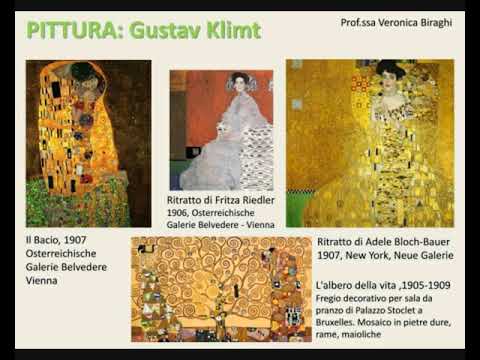
Gustav Klimt, known for his decorative and symbolic works, is another key figure of this period. His famous painting, "The Kiss," exemplifies the use of gold leaf and intricate patterns, drawing from Byzantine art influences. Klimt's female figures are often depicted with elaborate hairstyles and clothing, embodying the elegance and sensuality of the Liberty style.
Antoni Gaudí, a Catalan architect, is celebrated for his unique approach to modernism. His works, such as the Sagrada Família and Casa Batlló, are characterized by organic shapes and vibrant colors, reflecting his deep connection to nature. Gaudí believed that art should be seductive and accessible, aiming to captivate both art connoisseurs and the general public.
Milan became a hub for Liberty art, particularly appealing to the burgeoning bourgeoisie of the time. The city saw the construction of numerous elegant buildings that showcased the Liberty style, blending floral motifs with neo-medieval elements. Notable examples include the Castello Cova and Palazzo Castiglioni, the latter of which sparked controversy due to its provocative sculptures.
The 1906 International Exhibition in Milan marked a significant moment for the Liberty movement, leading to the construction of many pavilions in this style. Although most were later demolished, they played a crucial role in popularizing Liberty art in the city.
The Liberty movement was a vibrant and transformative period in art and design, characterized by its embrace of natural forms and decorative elegance. From the intricate glasswork of Tiffany to the architectural wonders of Gaudí, Liberty art left an indelible mark on the cultural landscape of the early 20th century. Its legacy continues to inspire artists and designers today, reminding us of the beauty that can be found in the harmony between art and nature.