This blog post delves into the evolution of modernism in American architecture and art during the pre-war decade, focusing on influential figures like Frank Lloyd Wright and the impact of socio-economic factors on artistic expression.
In this blog post, we will continue our exploration of modernism in American architecture and art, particularly during the pre-war decade of the 1930s. This period was marked by significant socio-economic changes and artistic innovations that shaped the landscape of American culture.
Modernism in art and architecture signifies a departure from traditional styles, focusing instead on the characteristics of modern life. Artists and architects sought to create works that embodied the spirit of the industrial and mechanized nature of contemporary existence. This movement encouraged a forward-thinking approach, emphasizing innovation and the unique qualities of modern society.
Frank Lloyd Wright is widely regarded as the leading architect of the first half of the 20th century. Interestingly, his formal education began in engineering at the University of Wisconsin, which laid the groundwork for his architectural vision. His real education, however, came from his time working at the architectural firm of Sullivan and Adler, where he was influenced by Louis Sullivan, a key figure in the Chicago School of architecture.
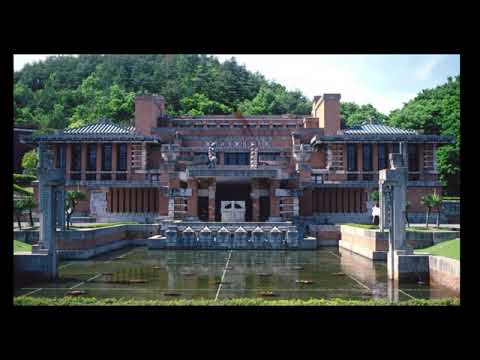
Wright's innovative ideas included ambitious projects such as a mile-high skyscraper, showcasing his forward-thinking approach to urban architecture. One of his most notable achievements was the design of the Imperial Hotel in Tokyo, which featured a unique floating structure that withstood the devastating earthquake of 1923. This design exemplified his ability to integrate architecture with the environment, a principle he held dear.
Another significant work by Wright is the Robie House, completed in 1909 in Chicago. This residence is a prime example of the Prairie Style, characterized by its horizontal lines and integration with the surrounding landscape. Wright believed that architecture should harmonize with its environment rather than dominate it. The Robie House features extensive overhangs and open interior spaces, reflecting his commitment to blending indoor and outdoor living.
Wright's Fallingwater, designed between 1936 and 1939 for Edgar Kaufman, further illustrates his innovative approach. Built over a natural stream, this residence exemplifies his philosophy of integrating architecture with nature. The use of cantilever construction allowed for dramatic overhangs and a seamless connection to the landscape, creating a unique living experience.
The pre-war decade was also marked by the Great Depression, which began with the stock market crash of 1929. This economic turmoil led to widespread unemployment and hardship, influencing the themes and styles of contemporary art. Artists responded to the socio-economic climate by exploring themes of resilience, identity, and the American experience.
During this time, a group of artists known as the Precisionists emerged, focusing on the beauty of industrialization and mechanization. Charles Sheeler, a prominent figure in this movement, created works that celebrated American factories and urban landscapes. His painting "Classic Landscape" reflects the precision and clarity associated with this style, portraying industrial complexes as monumental achievements.
In contrast to the Precisionists, the Regionalists sought to depict rural American life, emphasizing traditional values and the simplicity of the heartland. Artists like Grant Wood became synonymous with this movement, producing iconic works such as "American Gothic." This painting, featuring a stern farmer and his daughter, critiques the rigid values of rural America while simultaneously celebrating its essence.
The pre-war decade was a transformative period for American architecture and art, characterized by the innovative spirit of modernism and the socio-economic challenges of the Great Depression. Figures like Frank Lloyd Wright and movements such as Precisionism and Regionalism reflect the diverse responses to the changing landscape of American life. As we continue to explore these themes, we gain a deeper understanding of how art and architecture can mirror societal values and aspirations.