This blog post delves into the evolution of American photography and painting from the late 19th century to the early 20th century, focusing on the F-64 group, key figures like Edward Weston and Ansel Adams, and the impact of the Armory Show on American art.
As we approach the second exam on February 18th, it's essential to recap the evolution of American art, particularly focusing on the transition from realism to modernism in photography and painting. This post will cover the significant developments in American photography, particularly the emergence of modernism, and how it set the stage for the Armory Show in 1913.
Photography emerged as a primary mode of artistic expression in the United States during the 19th century, particularly with the introduction of the daguerreotype in the 1830s. Samuel F. B. Morse played a crucial role in popularizing this new medium across the Atlantic. Photography quickly became a favored method for portraiture and social documentation.
New York City became the epicenter of American photography, largely due to the influence of Alfred Stieglitz. He was a pivotal figure in advocating for photography as an artistic medium rather than merely a scientific tool. Stieglitz operated a gallery at 291 Fifth Avenue, where he showcased both pictorial and straight photography. His efforts in editing and publishing photography periodicals helped elevate the status of photography in the art world.
On the West Coast, the F-64 group, formed in 1932 in San Francisco, represented a significant movement in straight photography. This group included renowned photographers such as Edward Weston and Ansel Adams, along with Imogen Cunningham and Willard Van Dyke. The F-64 group emphasized several key tenets:
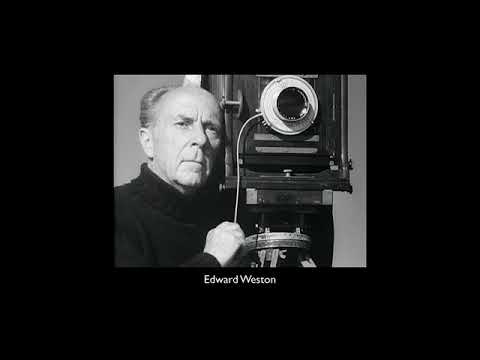
Edward Weston, a leading figure in the F-64 group, believed in pre-visualizing photographs. He aimed to capture the essence of objects, transforming everyday items like peppers and nautilus shells into profound representations of their inherent beauty. Weston’s work exemplified the principles of straight photography, focusing on detail and clarity. He famously stated, "Peppers never repeat themselves; they are always excitingly individual," highlighting his belief in the uniqueness of each subject.
Ansel Adams, another prominent member of the F-64 group, approached photography with a focus on the emotional response to landscapes. His work, particularly in Yosemite National Park, showcased the grandeur of the American West. Adams developed the Zone System, a technique for controlling exposure and contrast in black and white photography, allowing him to manipulate the final image to reflect his artistic vision.
As we transition from photography to painting, it is crucial to understand the impact of the Armory Show in 1913. This exhibition introduced American audiences to avant-garde European artists like Henri Matisse and Pablo Picasso, who were pushing the boundaries of color and form.
Before the Armory Show, American painting was heavily influenced by realist painter Thomas Eakins. Eakins emphasized the importance of depicting contemporary life and encouraged artists to draw inspiration from their surroundings. His teachings were passed down to a new generation of artists, including Robert Henri, who would lead a group known as "The Eight."
The Eight, also referred to as the Ashcan School, rebelled against the conservative tastes of the National Academy of Design. They sought to depict the everyday life of urban America, focusing on the vibrancy and diversity of city life. Artists like George Wesley Bellows and John Sloan captured scenes of street life, sports, and the working class, often using a rough, energetic style that reflected their subjects' dynamism.
The evolution of American photography and painting from the late 19th century to the early 20th century marked a significant shift towards modernism. The F-64 group and the Armory Show played pivotal roles in shaping the artistic landscape, encouraging artists to explore new forms of expression and embrace the complexities of contemporary life. As we prepare for the upcoming exam, understanding these movements and their key figures will be essential in grasping the broader narrative of American art during this transformative period.