Philadelphia's mural arts program, founded by Jane Golden, has created nearly 4,000 murals since 1984, transforming the city into an outdoor art gallery that addresses social issues, fosters community, and promotes healing through art.
Philadelphia is renowned for its iconic Art Museum, but the city boasts an even more extensive and vibrant collection of artwork displayed on its streets. This outdoor art gallery not only celebrates the ordinary but also pays tribute to the extraordinary. One of the latest murals unveiled features Pope Francis, who signed a panel during his visit to the city last year.
Since its inception in 1984, the Philadelphia Mural Arts Program has created close to 4,000 murals, making it the most prolific program of its kind in the world. Jane Golden, a Stanford-educated visionary, was hired by the city to lead a short-term anti-graffiti campaign. Initially, the program aimed to repaint the Spring Garden Street Bridge, a project that surprised many as it remained untouched by graffiti.
Golden's passion for art and its transformative power quickly turned the program into a long-term initiative. She describes art as a medium that uplifts, inspires, challenges, educates, and connects people.
The murals created through this program are not merely decorative; they serve as powerful statements about social issues, including addiction and recovery. One notable mural involved the contributions of 100 artists, many of whom were patients at a methadone clinic. Golden recalls how individuals expressed their transformation from feeling like addicts to feeling like artists, highlighting the humanizing effect of collaborative art.
The process of creating these murals is as significant as the final product. Each community plays a vital role in determining the subject of a mural, ensuring that the artwork resonates with local experiences and narratives. An experienced artist coordinates a diverse team, often including participants from the mural arts after-school program.
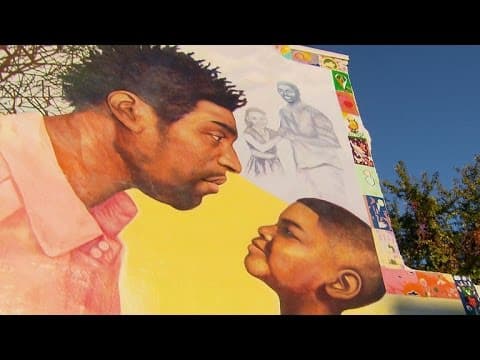
The program has also facilitated personal healing and family reunification. For instance, Danan Williams and his 11-year-old son worked together on a mural while Williams was incarcerated for a drug offense. This initiative allowed them to bond and reconnect, illustrating the mural's role in family healing.
Michael Whittington, another participant, found redemption through the program after serving time for his involvement in a shooting. He expressed a desire to apologize to the victim, Kevin Johnson, and with Golden's encouragement, he confronted his past. The mural they created together, titled "Forgiveness," symbolizes their journey towards healing and reconciliation.
The story of forgiveness between Whittington and Johnson's family is a poignant example of the murals' impact. Johnson's mother, Janice Jackson, recalls her son's words, urging her to forgive so they could live. This powerful sentiment encapsulates the essence of the mural arts program: it holds up a mirror to society, reminding individuals that their lives matter and that change is possible.
Philadelphia's mural arts program is more than just an artistic endeavor; it is a movement that fosters community, addresses social issues, and promotes healing through creativity. Each mural tells a story, reflecting the struggles and triumphs of the city's residents. As the program continues to grow, it remains a testament to the power of art in transforming lives and communities, making Philadelphia a living canvas of hope and resilience.