This blog post delves into the contrasting movements of realism and romanticism in 19th century American art, highlighting key artists like Thomas Eakins, Winslow Homer, and William Rimmer, and their unique approaches to portraying human emotion, nature, and the complexities of life during a transformative period in American history.
In this post, we will explore two significant movements in 19th century American art: realism and romanticism. These movements reflect the changing social, political, and economic landscapes of the time, showcasing how artists responded to their environments through their work.
Realism emerged as a reaction against the idealized representations of earlier art movements. It focused on depicting everyday life and the human condition with honesty and accuracy.
One of the giants of American realism, Thomas Eakins, is known for his penetrating observations of human figures and their relationships with their environments. Unlike Winslow Homer, who often depicted humanity's connection to nature, Eakins emphasized individual human presence in his portraits. His works, such as the portraits of Miss Van Buren and his wife, Susan McDowell Eakins, are characterized by a melancholic tone and a focus on the subject's emotional state rather than their attire.
Eakins believed that a neutral or sad expression, combined with a somber background, conveyed dignity and nobility. His mastery of eye direction and balance in composition further enhanced the emotional impact of his portraits.
Homer's work often depicted the struggles of individuals against the forces of nature, showcasing the human spirit's resilience. His paintings, rich in detail and emotion, captured the essence of life during the late 19th century.
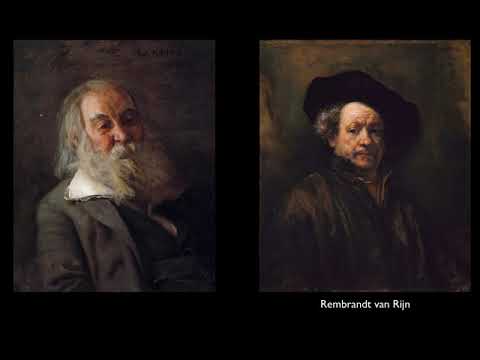
Eakins was influenced by the techniques of Baroque painters like Diego Velazquez and Rembrandt. He employed dramatic lighting and a focus on the human form, which can be seen in his portrait of Walt Whitman. This technique, known as Rembrandt lighting, highlights the subject's features while creating a sense of depth and realism.
Eakins was not only a painter but also an influential educator at the Pennsylvania Academy of Fine Arts. He advocated for life drawing classes using live models, including nude models of both genders, challenging the norms of his time. His progressive approach to art education laid the groundwork for future generations of artists.
Romanticism arose as a counterpoint to realism, emphasizing emotion, imagination, and the sublime. It sought to evoke feelings and explore the complexities of the human experience.
Romantic art often features themes of melancholy, exoticism, and a sense of the mysterious. Artists aimed to elicit strong emotional responses from viewers, often reflecting their own anxieties about societal changes, such as the industrial revolution and economic disparities.
William Rimmer, an eccentric figure in American art, combined his medical knowledge with his artistic pursuits. His works, such as "Flight and Pursuit" and "The Falling Gladiator," reflect themes of exoticism and emotional turmoil. Rimmer's belief in his royal lineage influenced his art, which often depicted dramatic and intense scenarios.
Elihu Vedder, inspired by Michelangelo and Goya, created works that explored the enigmatic and the exotic. His paintings, such as "The Sphinx" and "Questioner of the Sphinx," evoke a sense of mystery and invite viewers to ponder deeper meanings.
Ryder's work, including "Toilers of the Sea," showcases a mystical quality, often drawing inspiration from literature. His unique application of paint and use of light create a dreamlike atmosphere, further emphasizing the romantic sensibility.
The movements of realism and romanticism in 19th century American art reflect the complexities of a society undergoing significant transformation. Through the works of artists like Thomas Eakins, Winslow Homer, William Rimmer, Elihu Vedder, and Albert Pinkham Ryder, we gain insight into the emotional and social currents of their time. These artists not only shaped the landscape of American art but also provided a lens through which we can understand the human experience in a rapidly changing world.