This blog post delves into the themes of Romanticism, focusing on Caspar David Friedrich's painting 'Monaco in Riva al Mare'. It discusses the significance of landscape painting, the concept of the sublime, and the emotional depth conveyed through color and composition in Romantic art.
In this post, we will conclude our analysis of Caspar David Friedrich's masterpiece, "Monaco in Riva al Mare," a significant work within the European Romanticism movement. We have previously discussed the painting and its main themes, so let’s summarize the key aspects of Romanticism before diving deeper into this artwork.
Romanticism is characterized by several prominent themes, among which landscape painting stands out as a favorite among audiences. Landscape painting can be divided into three main categories:
Idyllic Landscape: This type represents a perfect, harmonious world, often depicted by English painter John Constable. It embodies a dreamlike paradise, which, while beloved by the public, lacks artistic novelty.
Mystical Landscape: This category conveys a sense of spirituality or religious undertones, often evoking a connection to the divine.
Sublime Landscape: This theme captures the awe-inspiring and terrifying aspects of nature, with British artist J.M.W. Turner being a key figure in this genre.
Friedrich's work often straddles the mystical and sublime, making him a pivotal figure in Romantic landscape painting.
"Monaco in Riva al Mare" is approximately the size of a classroom blackboard, emphasizing the vastness of the sky and the solitary figure of the monk depicted in the painting. The monk, dressed in a traditional austere robe with a tonsured head, is a small yet significant presence against the expansive backdrop of nature.
The painting employs a predominantly cool color palette, with lighter shades in the foreground (the beach) and darker tones in the background (the sea and sky). This choice of colors evokes a sense of desolation and solitude, reflecting the Romantic theme of man’s insignificance in the face of nature's grandeur.
Friedrich's work resonates with the poetic ideas of Giacomo Leopardi, particularly the notion of nature as a "mother" that is simultaneously nurturing and indifferent. The infinite sky and dark sea create a feeling of being lost in an immense, uncaring world, a common sentiment in Romantic art.
The monk, depicted in shadow and turned away from the viewer, symbolizes humanity's smallness compared to the vastness of nature. This positioning invites viewers to identify with the figure, as he gazes into the same horizon that we, as spectators, are drawn to. This modern approach to representation connects deeply with the poetry of the era.
The painting encapsulates the duality of nature as both nurturing and harsh. The monk's solitary figure, almost a mere dot in the landscape, emphasizes the overwhelming power of nature, which remains indifferent to human existence. The absence of shadows cast by the monk further enhances this theme, suggesting a lack of grounding in the face of such vastness.
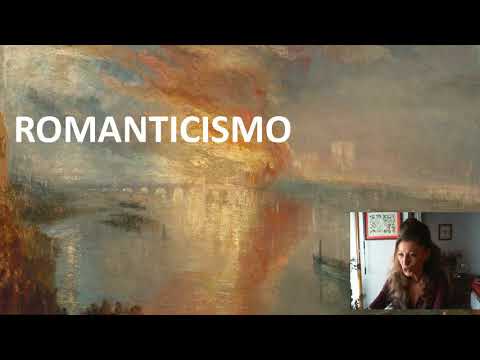
Following our analysis of Friedrich, we briefly touch upon another Romantic masterpiece: J.M.W. Turner's "The Burning of the Houses of Lords and Commons." This painting, inspired by a real event, captures the terrifying beauty of an inferno, showcasing the sublime through the interplay of light and color.
Turner's depiction of the fire contrasts warm colors of the flames with the cool blues of the surrounding water and sky. The dynamic curves of the flames and horizon draw the viewer's eye to the center of the chaos, embodying the Romantic fascination with nature's power and unpredictability.
In conclusion, both Friedrich and Turner exemplify the core themes of Romanticism through their landscape paintings. Friedrich's "Monaco in Riva al Mare" invites contemplation of humanity's place within the vastness of nature, while Turner's works evoke a sense of awe and terror in the face of natural phenomena. These artists not only shaped the Romantic movement but also left a lasting impact on the evolution of art, resonating with audiences even today.