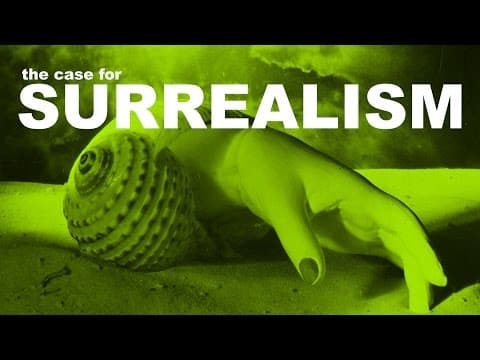
Surrealism emerged as a revolutionary artistic and political movement in the early 20th century, aiming to liberate the individual through the exploration of the unconscious mind. Rooted in Romanticism and Dada, it employed techniques like automatism and chance operations to challenge conventional norms and inspire collective liberation. Despite its decline after World War II, surrealism's influence persists in contemporary art and culture, reminding us of the power of imagination in transforming reality.
Surrealism is often associated with melting clocks, bowler hats, and peculiar household objects, evoking images of dream sequences and uncanny incidents. However, the term has evolved into a catch-all for the bizarre and irrational, particularly in contemporary usage. To truly understand surrealism, we must delve into its origins and the revolutionary ideals that shaped it during the tumultuous years following World War I.
The term 'surrealism' first appeared in the writings of French poet Guillaume Apollinaire in 1917, where he used it to describe Jean Cocteau's ballet Parade and his own play The Breasts of Tiresias. For Apollinaire, surrealism represented the fruits of human imagination liberated from the constraints of imitating nature. Its roots can be traced back to the ethos of Romanticism and the eccentric figures of the 19th century, such as symbolist artist Gustave Moreau, self-taught artist Henri Rousseau, and visionary Arnold Böcklin, alongside writers like Edgar Allan Poe.
Surrealism also emerged from the Dada movement, which sought to abandon artistic traditions and disrupt the conventionality of modern life. Dadaists weaponized nonsense against the institutions that led to the devastation of World War I. However, surrealists aimed not only to disrupt the world order but to reinvent it through experimental tactics.
One of the foundational concepts of surrealism is automatism, defined by poet André Breton in his 1924 Surrealist Manifesto. He described surrealism as "psychic automatism in its pure state dictated by thought, in the absence of any control exercised by reason, exempt from any aesthetic or moral concern." This idea was influenced by the work of Sigmund Freud, who theorized that human beings are divided between conscious and unconscious minds. The surrealists believed that liberating the unconscious could lead to significant political and social change.
To access the unconscious, surrealists engaged in various practices, such as transcribing dreams and recording trance states. Their publications featured dream accounts, stream-of-consciousness writings, and automatic drawing exercises, all aimed at bypassing the conscious mind's control. One of the first surrealist films, created by Germaine Dulac and Antonin Artaud, explored the consciousness of a clergyman and was marketed as a dream on screen, highlighting the parallels between film and dreams.
Surrealists also employed chance operations in their creative processes, often surrendering control to their materials. Artists like André Masson and Man Ray experimented with techniques such as pouring sand over glue stains and illuminating objects on light-sensitive paper, respectively. These methods aimed to achieve what Breton called the "marvelous," a state beyond rational thought.
Collaboration was a hallmark of surrealist practice. Artists played literary and drawing games, such as the famous exquisite corpse, where the final work was a product of collective imagination. Chance encounters and found objects also played a significant role in their art. Breton famously noted the beauty of unexpected combinations, encapsulated in the phrase, "as beautiful as the chance encounter of a sewing machine and an umbrella on an operating table."
Found objects became integral to surrealist art in the 1930s, often arranged in compositions that resembled reliquaries or erotic contraptions. Meret Oppenheim created one of the most iconic surrealist objects—a fur-covered cup and saucer—after a conversation with Picasso. Similarly, Max Ernst utilized images from pamphlets and ads in his collage books, creating narratives that blended reality with fantasy.
The surrealists also drew inspiration from non-Western cultures, incorporating objects from these cultures into their exhibitions. They identified their movement as anti-colonialist and anti-imperialist, actively protesting against the racist assumptions of their time.
The concept of the uncanny, as explained by Freud, involves something that is both familiar and strange. Surrealists explored this idea by combining ordinary objects in extraordinary ways, often featuring ghosts, masks, and dolls in their works. Photography, with its ability to manipulate reality, became a powerful tool for generating uncanny effects. Claude Cahun's photographs exemplified this, playing with identity and doubling.
As the threat of fascism grew and World War II approached, many surrealists dispersed across Europe. Breton fled to New York, where exiled artists staged the First Papers of Surrealism exhibition in 1942, confronting their displaced status. Meanwhile, Juan Miro began a series of paintings that reflected the complex networks of existence amidst the chaos of war.
While the core European surrealists disbanded, new movements emerged globally, from Mexico City to the Caribbean, as a new generation of artists continued the quest for psychic liberation.
Surrealism largely concluded with World War II, but its techniques and ideas permeated wider culture, often repurposed for commercial ends. Despite this, the movement left a lasting impact on contemporary art, with artists still employing found objects, automatism, and collage techniques.
Ultimately, surrealists believed that by uncovering meanings beyond rational thought, individuals could break free from the mundane and discover deeper truths. Surrealism serves as a reminder of the connection between individual creative freedom and collective liberation, illustrating how reimagining ourselves can lead to transformative change in the world. In retrospect, while some may view these ideals as naive, the pursuit of such visions remains essential in our ongoing quest for understanding and freedom.