San Vitale, a sixth-century church in Ravenna, Italy, is renowned for its unique octagonal design and stunning mosaics that reflect themes of sacrifice and eternal life. The church's architecture and art represent a blend of imperial power and religious significance, showcasing the transition from classical to early Christian styles.
Nestled in the Italian city of Ravenna, the Church of San Vitale stands as a significant example of early Christian architecture and art. Built in the sixth century, this centrally planned church deviates from the traditional cross-shaped design commonly associated with churches of its time. Instead, it features an octagonal structure that captivates visitors with its unique layout and breathtaking mosaics.
San Vitale is notable for its octagonal shape, which is complemented by a smaller octagon that rises higher within its central space. Unlike typical churches that have a long nave, San Vitale incorporates an ambulatory that encircles the central area, providing a distinct spatial experience. The eastern end of the church features an apse, enhancing its architectural complexity.
Upon entering San Vitale, visitors are greeted by towering piers that support the structure, alongside delicately designed columns that are doubled, creating a sense of verticality and lightness. The walls are adorned with numerous windows, allowing natural light to illuminate the interior, which is richly decorated with some of the most magnificent mosaics from the early medieval period.
The mosaics within San Vitale are not merely decorative; they convey profound themes of sacrifice and eternal life. Art historians have identified a unifying theme of offering, illustrated through scenes such as Abel and Melchizedek making offerings to God, and the near-sacrifice of Isaac by Abraham. These narratives connect to the Eucharist, symbolizing Christ's sacrifice for humanity's redemption.
The mosaics are crafted from glittering gold tesserae, colored glass, and other materials like silver and mother of pearl, creating a dynamic interplay of light and texture. The artists employed techniques that allowed the mosaics to appear naturalistic from a distance, while up close, the individual tesserae reveal a meticulous attention to detail. Bright colors, such as orange, are used strategically to highlight features, enhancing the overall visual impact.
The mosaics also depict a lush paradise, filled with vibrant flora and fauna. Birds, flowers, and fruits abound, symbolizing the abundance of life and the promise of eternal life in heaven. Notably, dolphins entwined in each other are thought to represent Christ and the apostles, adding layers of meaning to the artwork.
At the apex of the apse mosaic, Christ is depicted in royal purple, seated on an orb representing the universe, flanked by angels. He holds the Book of the Apocalypse, symbolizing divine authority. The imagery above the altar features the Lamb of God, reinforcing the theme of sacrifice and the triumph of Christianity.
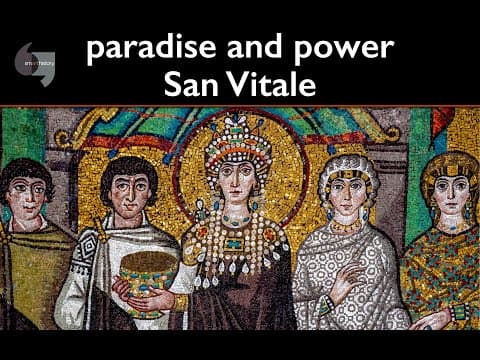
Flanking the apse are two significant mosaics depicting Emperor Justinian and Empress Theodora. Although they never visited Ravenna, their presence in the mosaics serves to assert imperial control over the city. Justinian is portrayed in purple, surrounded by religious and military figures, symbolizing the intertwining of church and state. Theodora, equally adorned, mirrors Justinian's panel, emphasizing her co-equal status.
The mosaics and architectural elements of San Vitale reflect a departure from classical naturalism towards a more abstract and symbolic representation. The figures are depicted in a schematic manner, floating in an eternal space rather than a realistic earthly setting. This shift marks a significant evolution in artistic expression during the early medieval period.
The elaborate stone revetment and dynamic patterns seen in San Vitale draw inspiration from ancient Roman and Hellenistic traditions. The church's design and decoration celebrate the richness of life and the divine, creating a vibrant atmosphere that speaks to its historical and cultural significance.
San Vitale in Ravenna is not just a church; it is a testament to the artistic and architectural innovations of the early Christian era. Its unique design, stunning mosaics, and rich symbolism offer a glimpse into the spiritual and political landscape of the time. As visitors explore this remarkable site, they are invited to reflect on the themes of sacrifice, redemption, and the promise of eternal life that resonate through its walls and artworks.