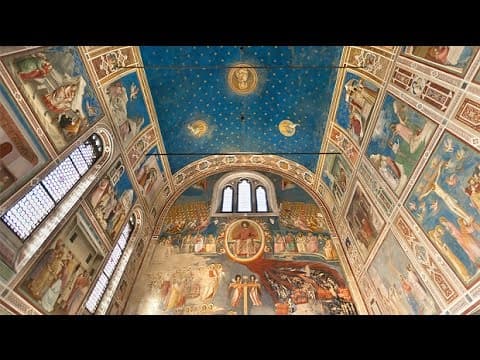
The Scrovegni Chapel in Padova, Italy, showcases Giotto's groundbreaking 14th-century frescoes that depict the lives of Jesus and Mary, marking a significant shift from medieval art to a more humanistic approach, paving the way for the Renaissance.
Padova's Scrovegni Chapel is a treasure of Italian art, renowned for its exquisite 14th-century frescoes painted by the master artist Giotto. This chapel is not only a significant historical site but also a pivotal point in the evolution of Western art.
Due to the fragility of its artwork, the Scrovegni Chapel is open to a limited number of visitors, requiring advance reservations. This exclusivity adds to the allure of experiencing Giotto's masterpieces in person.
Painted around the year 1300, the chapel is adorned with a stunning cycle of frescoes that narrate the lives of Jesus and Mary. Giotto is often hailed as the first modern painter, as he broke away from the medieval conventions of art that had dominated for centuries. His frescoes are characterized by a remarkable realism and humanity, which were revolutionary for their time.
Giotto's work marks a significant departure from the flat, two-dimensional styles of medieval art, which often relied heavily on gold leaf backgrounds. Instead, he introduces natural elements such as rocks, trees, and animals, creating a more immersive backdrop for the religious scenes depicted in the chapel.
The figures in Giotto's frescoes are robust and monumental, reminiscent of Greek statues. Their clothing, with voluminous and deeply creased robes, adds to their physical presence. Giotto's ability to convey emotion through simple yet expressive gestures is one of the hallmarks of his style. For instance:
Giotto's storytelling approach is straightforward, allowing anyone familiar with the Bible to interpret the scenes as if reading a picture book. One of the most striking frescoes is the Betrayal of Christ, where amidst the chaos of Jesus' arrest, Judas embraces Jesus and kisses him, creating a poignant focal point.
In The Deposition, the emotional weight is palpable as Jesus' followers mourn over his lifeless body. John the Evangelist, with arms wide open, cries out in despair, echoed by the anguished expressions of angels above. Each face in this scene is a study in grief, emphasizing the human vulnerability that Giotto captures so well.
On the far wall of the chapel, The Last Judgment serves as a dramatic centerpiece. Here, Christ presides over the scene, with the saved emerging gratefully from their graves on his right, while the damned, depicted as grotesque figures, face eternal torment on his left. Giotto's portrayal of Satan as a monstrous ogre devouring sinners draws inspiration from Dante's Inferno, reflecting the close friendship between the two artists.
Calmly observing the chaos is Enrico Scrovegni, the chapel's patron, who commissioned the artwork in hopes of securing forgiveness for the sins of his wealthy and greedy father. This act of commissioning such a monumental work of art speaks volumes about the cultural and spiritual aspirations of the time.
The frescoes of the Scrovegni Chapel are often regarded as a precursor to the Renaissance, heralding a new era in art. Created 200 years before the likes of Leonardo da Vinci and Michelangelo, Giotto's work signifies a pivotal moment in European history, marking the transition from the Middle Ages to a more humanistic and realistic approach to art.
In conclusion, the Scrovegni Chapel stands as a testament to Giotto's genius and the transformative power of art. It invites visitors to not only appreciate its beauty but also to reflect on the profound changes in artistic expression that it represents.