This blog post delves into the significance of Dutch still life paintings from the 17th century, particularly focusing on the works of artist Heda. It examines the context of these artworks within a hyper-capitalist society, the technical mastery involved in their creation, and how they reflect the wealth and international trade of the time, moving beyond mere symbolism to celebrate the era's economic power.
In the galleries of the Museum of Fine Arts Boston, we find ourselves immersed in the world of Dutch art, particularly the captivating genre of still life painting that flourished in the 17th century. One notable artist from this period is Heda, whose works invite us to look beyond mere symbolism and explore the deeper meanings embedded in these intricate compositions.
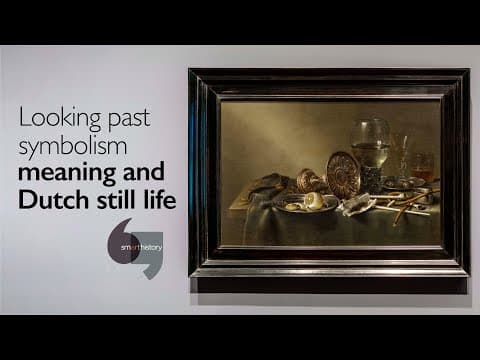
A typical still life by Heda presents a tabletop adorned with a variety of edibles and goods, reflecting the everyday life of a 17th-century Dutch household. At first glance, one might be tempted to interpret individual objects as symbols, such as a broken pipe or a lit rope, which could signify the transience of life. However, this interpretation may not fully capture the essence of Heda's work.
While there exists a specific type of still life known as vanitas, which explicitly addresses themes of mortality and the fleeting nature of life, not all still lifes adhere to this moralistic framework. Instead, Heda's paintings can be understood within the broader context of the hyper-capitalist and consumer society of the Dutch Republic during the 17th century.
The objects depicted in Heda's still life serve as a window into the wealth and sophistication of Dutch society at the time. Items such as a solid silver tazza and delicate Venetian glass were luxury goods, not accessible to the average person. These objects were often imported, highlighting the mercantile culture that characterized the Netherlands during this period.
For instance, the tobacco featured in the painting likely originated from Virginia, while the silver used in the tazza may have come from mines in South America or Germany. This international trade not only enriched the Dutch economy but also influenced the artistic choices made by painters like Heda. The still life was not merely a representation of objects; it was a reflection of the economic landscape and the aspirations of the society that commissioned such works.
Heda's technical skill is evident in his ability to render various surfaces and textures with remarkable precision. The subtlety of color in his paintings is striking, with tonalities that are closely related yet distinct. The craftsmanship of the silver tazza, for example, is so expertly depicted that one can almost feel the weight of the object.
The positioning of the tazza presents an artistic challenge, as Heda skillfully creates the illusion of depth and perspective. The highlights and shadows are executed with such finesse that they draw the viewer's eye across the canvas. The interplay of objects, such as the waxed rope and clay pipes, creates a dynamic composition that invites exploration.
Ultimately, Heda's still life paintings celebrate the wealth and economic power of the Netherlands in the 17th century. They are not just a collection of objects but a sophisticated commentary on the society that produced them. Viewers of the time were discerning, able to appreciate the quality of goods and apply that same critical eye to the art before them.
The careful arrangement of objects in Heda's work encourages the viewer to engage with the painting actively. For example, the contour of a lemon echoes the plate surrounding it, while the distribution of color guides the viewer's gaze from the nuts to the tobacco and finally to the beer in the background. This meticulous attention to detail enhances the overall experience of the painting, making it a triumph of both artistic skill and cultural commentary.
In conclusion, Dutch still life paintings, particularly those by Heda, offer a rich tapestry of meaning that extends beyond simple symbolism. They reflect the economic realities of their time, showcasing the wealth and sophistication of 17th-century Dutch society. Through a careful examination of the objects and their context, we gain a deeper appreciation for the artistry and cultural significance of these remarkable works.