This blog post delves into the evolution of art during the late medieval era, highlighting key figures such as Giotto, Masaccio, and Jan van Eyck, and their contributions to the transition from medieval to Renaissance art, emphasizing the development of perspective, naturalism, and the influence of classical antiquity.
The late medieval era marked a significant transformation in the world of art, transitioning from the spiritual and religious focus of earlier periods to a more humanistic and naturalistic approach. This blog post explores the artistic masterpieces of this time, focusing on key figures and their contributions to the evolution of Western art.
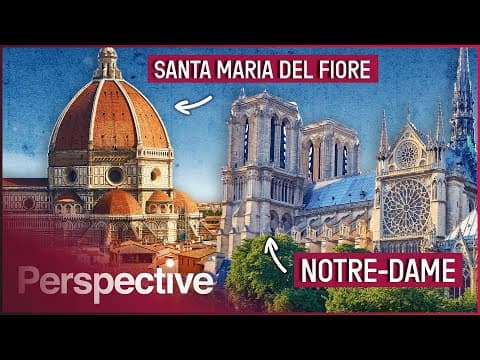
In the heart of Paris stands the Notre Dame Cathedral, a monumental testament to the power and glory of the medieval Church. Its tall, vertical decorations draw the eye upward, symbolizing the Church's dominance in society. During this period, most art was produced in monasteries, primarily in the form of illuminated manuscripts, with artists often remaining anonymous.
As we move into the late medieval period, artists began to draw inspiration from the ancient classical world. This shift marked a transition from a divine perspective to a more human-centered view of the world. Artists started to explore spatial distribution and movement, laying the groundwork for the artistic innovations of the Renaissance.
The late medieval period saw the emergence of secular thinking, particularly in urban centers like Florence. Here, trade and commerce flourished, leading to a new economy based on money. This environment fostered the growth of great artists who would redefine the art world.
One of the most influential artists of this era was Giotto, whose work in the early 1300s in Padua marked a turning point in painting. Giotto rediscovered the fresco technique, allowing for greater depth and realism in his works. His frescoes, such as the "Lamentation of Christ," showcased spatial depth and emotional expression, moving away from the flat representations of earlier medieval art.
While Giotto was transforming painting in Italy, the Byzantine tradition continued to influence art, particularly in the form of icon painting. Artists like Simone Martini incorporated elegant lines and naturalism into their works, bridging the gap between medieval and Renaissance styles.
The 14th century brought catastrophic events, including famine and the plague, which decimated populations and halted artistic progress. This period saw a return to more conservative Gothic styles until the early Renaissance began to emerge around 1400.
The beginning of the 15th century saw Florence flourish economically, symbolized by the golden Florin. The Medici family played a crucial role in this prosperity, promoting humanism and a renewed interest in classical antiquity. This cultural revival set the stage for groundbreaking artistic achievements.
Filippo Brunelleschi emerged as a master architect during this time, solving the architectural challenge of constructing a dome for the Cathedral of Santa Maria del Fiore. His innovative techniques combined Gothic and Roman styles, resulting in a masterpiece that remains a symbol of Florence.
Brunelleschi's discoveries in perspective revolutionized painting. Masaccio, a contemporary of Brunelleschi, applied these principles in his works, such as the "Holy Trinity," creating a dramatic illusion of space that had never been seen before.
Alongside Brunelleschi and Masaccio, Donatello emerged as a leading figure in early Renaissance art. His sculptures, such as the marble statue of Saint George, showcased a deep understanding of human anatomy and emotion, blending classical influences with contemporary themes.
While Italy was experiencing a renaissance of its own, the international Gothic style dominated Northern Europe. Artists like the Limbourg brothers produced richly colored works that emphasized decorative elements, though they lacked the mathematical perspective that characterized Italian art.
Jan van Eyck, a master of the Northern Renaissance, pioneered oil painting techniques that allowed for unprecedented realism and detail. His works, such as the "Ghent Altarpiece," showcased his ability to create depth and luminosity, setting a new standard for artists.
The late medieval era laid the foundation for the artistic innovations of the Renaissance. Artists like Botticelli and Leonardo da Vinci would build upon the principles established during this time, leading to a flourishing of creativity and exploration in the visual arts.
The great artistic masterpieces of the late medieval era reflect a period of profound change and development in Western art. From the spiritual focus of earlier works to the emergence of perspective and naturalism, this era set the stage for the remarkable achievements of the Renaissance, forever altering the course of art history.