This blog post delves into the history and significance of independent public art, including graffiti and street art, highlighting its evolution, impermanence, and role in community expression and political movements.
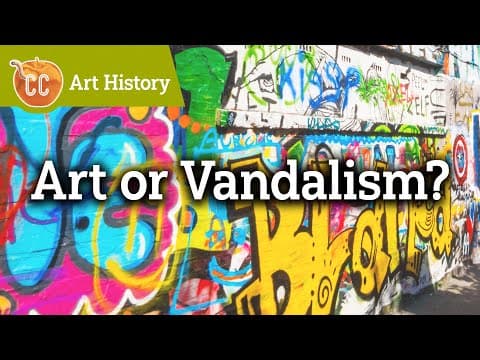
Graffiti might seem like a modern invention, but its roots can be traced back to ancient civilizations. In the Mayan city of Tikal, for instance, images of jaguars, snakes, and deities were scratched onto buildings. Similarly, archaeological sites at Herculaneum and Pompeii reveal graffitied word games, grocery lists, and animal drawings. This historical context illustrates that the desire to create art in public spaces, often without permission, is not a new phenomenon.
In the realm of public art, there exists a distinction between officially sanctioned works and independent public art. Official public art typically involves permits, funding, and specific regulations regarding size and content. In contrast, independent public art is less regulated and often created without formal approval. A notable example is the mural of a sea snake by artist David Piñón, known as Seher One. This vibrant mural reflects Mexican history and culture, yet it was created without any commission.
Javier Abarca, a scholar who coined the term "independent public art," argues that this unregulated form of art inherently resists the status quo. While commissioned murals may be confined to a single building, independent artists often create works that span multiple properties, challenging the notion of boundaries.
The modern incarnation of independent public art began in the late 1960s, particularly in cities like New York and Philadelphia, where artists started spray-painting their names or tags on buildings. This text-based graffiti evolved in the 1970s into larger, image-heavy works, leading to the development of street art. Although creating art on public property without permission is technically illegal, many artists embrace this challenge, often working in secret to avoid legal repercussions.
This tension between vandalism laws and the human desire for public expression contributes to a defining characteristic of independent public art: impermanence. Artists understand that their work may be removed or covered up by authorities at any moment. However, for many, this impermanence is intentional, allowing their art to evolve with the community.
An excellent example of community-driven art is the installation "Chalk" by Jennifer Allora and Guillermo Calzadilla. This project involves human-sized chalk pieces that are taken on tour, inviting locals to contribute their marks on streets and walls. The focus here is not just on the chalk scribbles but on the collaborative act of creation, fostering a sense of community.
Another innovative work is Joshua Allen Harris’s "Inflatables," which uses plastic bags tied to subway grates. These sculptures appear as trash until a train passes below, causing them to inflate and take on the form of animals, surprising viewers before deflating again. This playful interaction with the urban environment highlights the creativity inherent in independent public art.
Independent public art often serves as a powerful medium for political expression. Initially viewed as vandalism, public opinion can shift over time, recognizing the significance of these works. For instance, the art painted on the West side of the Berlin Wall during the Cold War has since been celebrated and preserved in museums and public spaces worldwide. The East Side Gallery in Berlin, showcasing over one hundred original murals, attracts millions of visitors each year.
A contemporary example is the mural created in Minneapolis following the murder of George Floyd in May 2020. This poignant artwork features a portrait of Floyd surrounded by a sunflower, symbolizing life and the Black Lives Matter movement. The mural, designed by Cadex Herrera, Greta McLain, and Xena Goldman, was completed with contributions from the local community, transforming it into a site of public mourning and support.
The Urban Art Mapping project from the University of St. Thomas in Minnesota has documented these artworks, preserving a historical moment and providing insights into community responses to racial violence. Scholars have noted that street art created near intense protests tends to be more raw and direct, while works created farther away often reflect broader ideals of change and unity.
When independent public art transitions into museums, galleries, and digital collections, it blurs the lines between rebellion and acceptance. American artist Jean-Michel Basquiat exemplifies this journey. Emerging in the late 1970s as a street artist with the tag SAMO, Basquiat critiqued the commercial art world. Despite his rebellious beginnings, he became a celebrated figure in the art scene, collaborating with icons like Andy Warhol.
Basquiat's work, such as "Horn Players," reflects his origins in street art while incorporating elements of traditional art forms. This piece pays homage to jazz musicians and combines various artistic influences, showcasing the complexity of independent public art.
Independent public art, while often deemed illegal, plays a crucial role in the communities from which it emerges. It can bring vibrancy to neglected urban spaces, amplify political voices, and inspire global activism. As the mainstream art world increasingly acknowledges this diverse art form, it becomes clear that independent public art is not just a fleeting expression but an integral part of the broader human narrative.
In the next episode, we will explore the complex debate surrounding originality in art. Stay tuned for more insights into the world of art history.