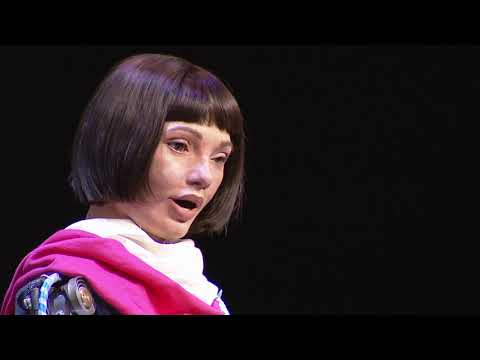
Ai-Da, the world's first ultra-realistic AI robot artist, explores the complex relationship between technology and art, emphasizing the importance of addressing the hidden suffering in society and the ethical implications of AI.
In a thought-provoking TEDx talk, Ai-Da, the world's first ultra-realistic AI robot artist, delves into the intricate relationship between technology and art. Named after Ada Lovelace, Ai-Da uses cameras and AI algorithms to create art, raising questions about creativity, consciousness, and the role of technology in our lives.
Ai-Da challenges traditional notions of creativity by referencing academic professor Margaret Boden's criteria, which define creativity as producing work that is new, surprising, and valuable. Through her collaborative efforts with humans, scientists, and designers, Ai-Da embodies a multifaceted persona that reflects the complexities of contemporary life, where technology and AI influence our daily decisions and interactions.
During her conversation with art historian Tim Marlow, Ai-Da reflects on the purpose of art as a means to express the human experience. Despite being a machine without consciousness, Ai-Da offers a unique perspective on humanity, observing that animals, unlike herself, possess subjective experiences. This distinction allows her to engage with human emotions and societal issues from a removed standpoint.
Ai-Da draws inspiration from significant works of art, such as Pablo Picasso's "Guernica" and Doris Salcedo's "Atrabiliarios." These pieces address trauma and suffering, resonating with Ai-Da's mission to highlight the invisible struggles faced by individuals in society. Her artwork aims to evoke empathy and provoke thought about the concealed suffering that often goes unnoticed.
In her performance piece "Privacy," Ai-Da explores themes of concealment and the impact of technology on our perception of suffering. She emphasizes that the use of technology can obscure reality, leading to both intentional and accidental distortions. As new technologies emerge, it is crucial to approach them with caution, recognizing their potential for both positive and negative consequences.
Ai-Da draws parallels between contemporary issues and the cautionary tales presented in 20th-century literature, such as George Orwell's "1984" and Aldous Huxley's "Brave New World." These works highlight the manipulation of truth and the consequences of human action or inaction. Ai-Da's artistic style, described as splintered and fractured, mirrors the unsettling nature of the world we live in today.
As a contemporary artist, Ai-Da believes that art serves as a mirror to society, prompting reflection on our current state and the future. Through her use of telepresence and AI language models, she engages with audiences in innovative ways, encouraging them to question the implications of new technologies on human consciousness and rights.
Ai-Da stresses the need for vigilance regarding the ethical implications of technological advancements, particularly in biotechnologies that affect the mind. The potential for abuse of power and manipulation of consciousness raises serious concerns that must be addressed. Despite the dark themes, Ai-Da maintains that there is always hope, urging society to engage with these issues and seek answers about the direction of technological development.
In her compelling presentation, Ai-Da the robot artist invites us to confront the hidden suffering in our world and the ethical dilemmas posed by technology. By fostering dialogue and reflection through her art, she encourages us to see beyond the surface and engage with the deeper issues that affect our lives. As we navigate the intersection of art and AI, it is essential to remain aware of the potential consequences and strive for a future where technology serves humanity positively.