This blog post explores the evolution of art from the medieval period to the Renaissance, highlighting significant works and artists such as Giotto, Cimabue, Jan van Eyck, and Michelangelo. It discusses the shift in artistic priorities, techniques, and the cultural context that influenced these changes, emphasizing the differences between Northern and Southern Renaissance art.
In this post, we will explore the fascinating transition from medieval art to Renaissance art, focusing on key works and artists that marked this significant shift in artistic expression. This journey will take us through the early 1300s, highlighting the evolution of styles, techniques, and cultural influences that shaped the art world.
The journey begins with Giotto's Ognissanti Madonna, a pivotal work that showcases Mary seated on an elaborate throne, holding Jesus in her lap, surrounded by angels and saints. This painting is significant as it marks the transition from the medieval style to the Renaissance style.
To understand this transition, we can compare Giotto's work with that of his teacher, Cimabue. Cimabue's style is characterized by a flat, patterned approach typical of medieval art, where figures lack volume and depth. In contrast, Giotto introduces a sense of three-dimensionality and realism, indicating a shift towards the Renaissance ideals of naturalism and humanism.
The term "Renaissance" means rebirth, reflecting a cultural movement that sought to revive the classical ideals of ancient Rome and Greece. This rebirth began with literature, as scholars sought to return to the complexities of Latin used by ancient authors. This desire to reconnect with the past also influenced the visual arts, leading to a renewed interest in realism and the human experience.
Giotto's Ognissanti Madonna was painted using tempera on a wooden panel, a technique that involved mixing pigments with egg yolk as a binder. The use of gesso to create a smooth surface and the application of gold leaf are also notable features of this work, reflecting the medieval emphasis on precious materials.
As the Renaissance progressed, artists began to prioritize the depiction of volume and realistic human figures. This shift is evident in Giotto's portrayal of Mary, whose figure is more volumetric compared to the flat representations of the medieval period. The introduction of chiaroscuro, or the use of light and shadow to create depth, further enhanced the three-dimensionality of figures.
While the Renaissance began in Italy, it developed differently in Northern Europe. Northern artists, such as Jan van Eyck, focused on surface detail and realism, often depicting everyday life with meticulous attention to texture and material. In contrast, Italian artists emphasized the conceptual understanding of space and the underlying structure of figures.
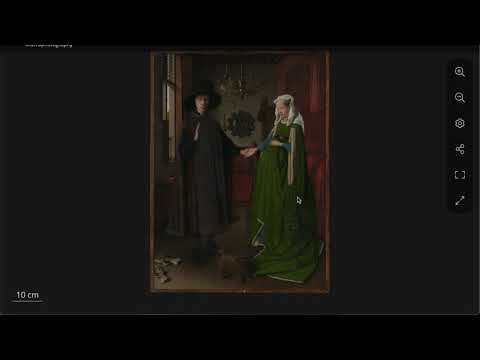
Van Eyck's Arnolfini Portrait exemplifies the Northern Renaissance's focus on realism. The painting showcases intricate details, such as the textures of fabrics and the reflections in the convex mirror, demonstrating a keen observation of the world. This attention to surface detail contrasts with the Italian approach, which prioritized the structure and spatial relationships of figures.
As we move into the High Renaissance, artists like Michelangelo and Leonardo da Vinci emerged, pushing the boundaries of artistic expression.
Michelangelo's Creation of Adam on the Sistine Chapel ceiling exemplifies his ability to convey human emotion and divine connection through the human form. His figures are characterized by muscularity and dynamic poses, reflecting a deep understanding of anatomy and movement.
Leonardo da Vinci's Last Supper is another iconic work of this period, showcasing his mastery of composition and perspective. The use of linear perspective directs the viewer's gaze towards Christ, emphasizing his central role in the narrative. Leonardo's innovative techniques and attention to human emotion set a new standard for artistic expression.
The transition from medieval to Renaissance art represents a profound shift in artistic priorities, techniques, and cultural influences. From Giotto's early innovations to the masterpieces of Michelangelo and Leonardo da Vinci, this period laid the groundwork for modern artistic expression. The differences between Northern and Southern Renaissance art highlight the diverse approaches to realism and representation, enriching the tapestry of art history.