This blog post delves into the rich history and artistic achievements of the Byzantine Empire, highlighting key figures, architectural marvels, and the evolution of art from its origins in Constantinople to its enduring influence today. It examines the cultural significance of mosaics, the impact of religious beliefs on art, and the resilience of Byzantine traditions despite centuries of turmoil.
The art of the Byzantine East has often been dismissed as crude and primitive, a view popularized by the first art historian, Giorgio Vasari. However, this perspective overlooks the vibrancy, color, and energy that characterized Byzantine art. This blog post aims to explore the rich tradition of Byzantine art, tracing its origins in Constantinople and its evolution through centuries of change.
The story of Byzantine art begins in the city of Constantinople, founded by Emperor Constantine in 324 AD. This city became the heart of a powerful Christian empire, and its architectural marvels, such as the Hagia Sophia, stand as testaments to its glory. Built in just five years during the reign of Emperor Justinian I, the Hagia Sophia is an architectural wonder with a dome that seems to defy gravity. Its construction marked a significant moment in world architecture, influencing countless structures that followed.
The Hagia Sophia was not just a church; it was a symbol of the Byzantine Empire's might. The massive dome, measuring 32 meters across, was a daring architectural feat that showcased the empire's engineering prowess. The interior, adorned with mosaics and intricate designs, reflected the belief that the emperor was God's representative on Earth. By commissioning such grand structures, Justinian asserted his divine right to rule.
As the Byzantine Empire expanded, so did its artistic influence. Key centers of Byzantine art emerged, such as Thessaloniki and Ravenna, each contributing unique styles and themes.
In Thessaloniki, the Church of St. Demetrius became a focal point for Byzantine art. The mosaics here, dating back to the sixth and seventh centuries, depict St. Demetrius as a warrior saint, embodying the city's spirit. The people of Thessaloniki often turned to St. Demetrius for protection and miracles, reflecting the deep connection between art, faith, and community.
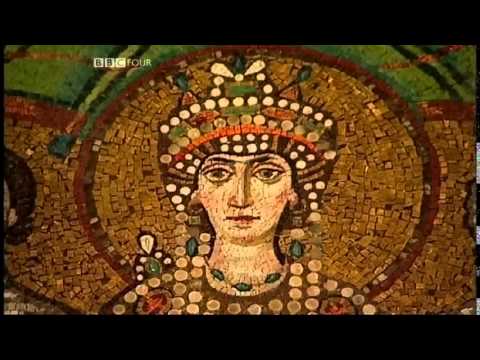
Ravenna, once the capital of the Western Byzantine Empire, is home to the Church of San Vitale, renowned for its stunning mosaics. These artworks depict Emperor Justinian and Empress Theodora, surrounded by their retinue, asserting their divine right to rule. The mosaics in San Vitale represent a confident expression of imperial power, showcasing the close relationship between the church and the state.
The Byzantine Empire faced significant challenges, including the Iconoclast Controversy, which questioned the use of religious images. This theological conflict led to the destruction of many artworks, but ultimately, the supporters of icons prevailed, allowing Byzantine art to flourish once again. The resolution of this controversy in 843 AD marked a turning point, leading to a resurgence of religious imagery in churches across the empire.
Monastic life played a crucial role in the preservation and creation of Byzantine art. Monasteries became centers of artistic production, where monks created stunning mosaics and icons dedicated to God. The Monastery of Hosios Loukas in Greece exemplifies this tradition, with its mosaics reflecting a deep spiritual aspiration and connection to the divine.
The mosaics in Hosios Loukas are characterized by their austerity and solemnity, with figures that seem to gaze directly into the soul of the viewer. This style emphasizes the spiritual journey of the faithful, inviting them to participate in the divine through prayer and contemplation.
Despite centuries of decline and the eventual fall of Constantinople in 1453, the legacy of Byzantine art endures. The transition from a Christian to an Islamic artistic landscape did not erase the influence of Byzantine traditions. Instead, elements of Byzantine art can still be seen in modern religious practices and artistic expressions.
Today, Byzantine art continues to thrive, particularly within the Greek Orthodox Church. Icons remain central to worship, serving as a bridge between the divine and the faithful. The connection established at baptism, where children are named after saints, highlights the ongoing relevance of these traditions in contemporary society.
The art of the Byzantine Empire, often dismissed as primitive, is a testament to the creativity, spirituality, and resilience of a civilization that shaped the course of art history. From the grandeur of the Hagia Sophia to the intimate mosaics of monastic life, Byzantine art invites us to explore the depths of faith and the human experience. As we reflect on this vibrant legacy, it becomes clear that the art of eternity continues to inspire and resonate with audiences today.