This blog post explores essential techniques for improving line work in art, focusing on concepts like line weight, T-lines, and whisper lines. It emphasizes the importance of studying other artists' work to gain new perspectives and enhance one's own artistic skills.
Art is a journey of discovery, and for many artists, mastering line work is a crucial step in creating dynamic and engaging pieces. In this post, we will explore key tips and techniques that can transform your line work from flat and boring to interesting and three-dimensional. We will delve into concepts such as line weight, T-lines, and whisper lines, providing insights into how to apply these techniques effectively.
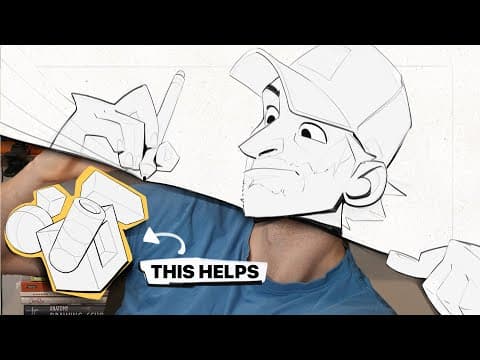
Line weight refers to the thickness or thinness of a line in a drawing. It plays a vital role in creating the illusion of depth and dimension on a two-dimensional surface. By varying line weight, artists can guide the viewer's eye and emphasize certain aspects of their work.
The primary goal of using line weight is to create the perception of three-dimensional objects. When all lines are of the same width, the artwork can appear flat. By incorporating variations in line weight, artists can suggest which elements are in the foreground and which are in the background. This technique can also be a stylistic choice, depending on the desired effect.
One effective way to improve your line work is to study the techniques of other artists. Platforms like Pinterest are excellent resources for discovering various styles and approaches. Artists such as Jin Kim, TB Choy, and Loish offer fantastic examples of line work that can inspire your own creations.
The idea of "new eyes" is a powerful analogy for learning. As you progress in your artistic journey, you develop a deeper understanding of your craft. Initially, you may see only the surface of an artwork, but as you gain experience, you begin to notice the subtleties and techniques that contribute to its success. This concept encourages artists to look beyond mere replication and to seek understanding in the work of others.
T-lines are a specific technique that helps create the illusion of depth. These lines resemble the letter "T" and indicate where one object overlaps another. For example, a chin in front of a neck or a nose in front of an eye can be illustrated using T-lines. Recognizing and applying T-lines can significantly enhance the dimensionality of your drawings.
Whisper lines are another favorite technique that adds subtlety to line work. These thin lines suggest the meeting of two planes without competing with the darker, more prominent lines. For instance, the edge of a nose where the top and bottom planes meet can be indicated with a whisper line. This technique helps describe the form and adds depth without overwhelming the viewer.
When applying line weight in your artwork, consider the following scenarios:
Mastering line work is an essential skill for any artist looking to create dynamic and engaging artwork. By understanding and applying techniques such as line weight, T-lines, and whisper lines, you can significantly enhance the dimensionality of your drawings. Remember to study the work of other artists and embrace the concept of new eyes as you continue your artistic journey. With practice and exploration, your line work can evolve into a powerful tool for expression and creativity.