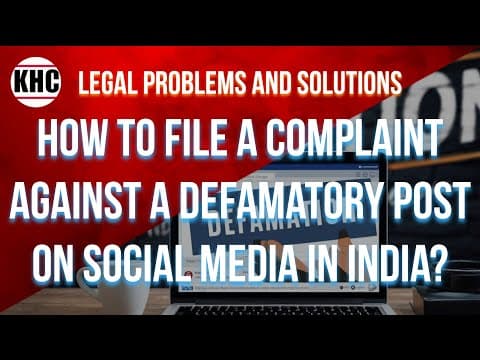
This blog post outlines the steps individuals in India can take to file a complaint against defamatory posts on social media, including gathering evidence, reporting to platforms, and pursuing legal action.
In the digital age, social media defamation has become a growing concern, necessitating a clear understanding of the legal recourse available to victims. Defamation, which can be either written or spoken, involves making false and damaging statements that harm someone's reputation. When faced with such a situation on social media platforms in India, individuals can take several steps to protect their reputation and seek justice.
Defamation can manifest in various forms, including slander (spoken defamation) and libel (written defamation). The impact of defamatory statements can be significant, affecting personal and professional relationships, mental health, and overall reputation. Therefore, it is crucial for victims to know their rights and the steps they can take to address the issue.
The first step in addressing defamation on social media is to identify the specific post that is harmful. This involves:
Evidence is key in any defamation case. Ensure that you have:
Once you have gathered sufficient evidence, the next step is to file a complaint with the social media platform hosting the content. Major platforms like Facebook, Twitter, and Instagram have dedicated channels for reporting defamatory content. This can typically be done through their respective Help Centers.
If the social media platform fails to remove the content after your complaint, you can take further action by approaching a magistrate. In India, you can file a case under Section 499 of the Indian Penal Code, which deals with defamation. This legal provision allows individuals to seek justice against those who make false statements that harm their reputation.
In cases where there has been a violation of the provisions of the Indian Penal Code, the Information Technology Act of 2000, or other relevant laws, you can lodge a complaint with the police. This step is crucial if the defamatory content also violates any penal laws.
Apart from filing a police complaint or taking recourse before the magistrate, victims can also file a civil suit claiming damages and compensation. This involves filing a civil suit in court, which can help recover losses incurred due to the defamatory statements.
Throughout this process, it is advisable to maintain detailed records of all correspondence related to the case. Seeking legal advice before proceeding can also provide clarity on the best course of action. It is essential to remain patient and persistent, as the legal process can be complex and time-consuming.
A recent judgment by the Honorable High Court of Kerala highlighted the absence of adequate punishment for defamatory statements and posts on social media. The court urged the legislature to address this issue, particularly given the pervasive influence of technology and social media in modern society. This judgment emphasizes the need for a robust legal framework to protect individuals from defamation in the digital realm.
In conclusion, while the process of addressing defamation on social media can be daunting, individuals in India have several avenues to protect their reputation. By following the outlined steps and understanding their legal rights, victims can take action against defamatory posts and seek justice. It is crucial to remember that the law provides a framework for addressing such issues, and with the right approach, individuals can navigate the complexities of social media defamation effectively.