This article explores a detailed legal argument based on the Federal Reserve Act and Supreme Court rulings, explaining how mortgage notes are classified as securities and not simple contracts. It highlights the rebuttable presumption established by the Supreme Court, empowering homeowners to challenge foreclosures by proving their mortgage notes are securities deposited as collateral, potentially saving their homes.
In recent weeks, a complex but crucial legal argument has emerged that could empower homeowners to save their homes from foreclosure. This argument hinges on the interpretation of mortgage notes under the Federal Reserve Act and a key Supreme Court case, Reeves v. Ernst & Young. The Supreme Court recognized that every note is presumed to be a security, but this presumption is rebuttable, meaning homeowners have the right to challenge it. This article breaks down the intricate legal framework and statutory history behind this argument.
When you obtain a mortgage loan, it is commonly understood as a loan agreement or a simple contract where you promise to pay back the lender. However, the reality is more complex. According to the Federal Reserve Act, what you sign is not merely a loan but a deposit of a note, draft, bill of exchange, or banker's acceptance — all classified as "eligible papers" or securities.
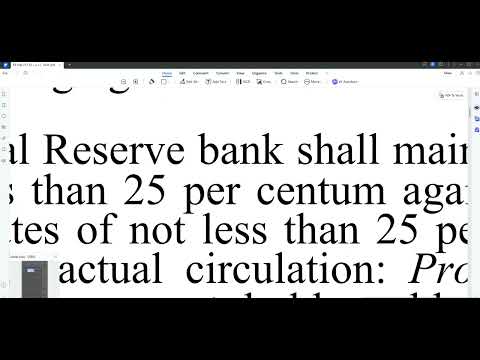
The Federal Reserve Act, enacted in 1913 and amended in 1933, defines these notes as securities and collateral. These notes are deposited with the Federal Reserve or the U.S. Treasury and are received at par value, meaning their full face value is accepted. This deposit transforms the note into an obligation of the Federal Reserve, not just a simple IOU.
The Federal Reserve issues Federal Reserve notes (currency) backed by these deposited securities. The Treasury accepts these obligations as collateral, which supports the issuance of currency and government bonds. This mechanism is fundamental to the monetary system and the economy.
In Reeves v. Ernst & Young, the Supreme Court held that every note is presumed to be a security. However, this presumption is rebuttable, meaning it can be challenged with evidence to the contrary. The Court introduced the "family resemblance test" to determine whether a note is a security or a simple contract.
The family resemblance test compares the note in question to a family of instruments defined under the Federal Reserve Act, including drafts, bills of exchange, banker's acceptances, and trade acceptances. These instruments are securities when deposited with the Federal Reserve and Treasury.
Mortgage notes are often treated as simple contracts in foreclosure proceedings, leading to quick judgments against homeowners. However, if homeowners can prove their mortgage notes are securities deposited as collateral under the Federal Reserve Act, they can rebut the presumption that their note is a simple contract. This opens the door for evidentiary hearings and challenges to foreclosure actions.
The argument relies heavily on the explicit language of the Federal Reserve Act, which mentions "any notes" as securities multiple times. Congress clearly intended these notes to be securities and collateral backing Federal Reserve notes.
Legal principles dictate that when a statute's language is clear and unambiguous, courts must apply the plain meaning without rewriting the law. The Federal Reserve Act explicitly classifies these notes as securities, and this classification should control over any judicial presumption to the contrary.
While the Supreme Court found ambiguity within the Securities Act of 1933 and 1934, it did not consider the Federal Reserve Act's classification of notes. Courts must respect congressional intent, especially when it is explicit, and cannot override it with judicial interpretation.
Homeowners can use this legal framework to challenge foreclosure actions by asserting that their mortgage notes are securities deposited as collateral, not simple contracts. This requires courts to allow evidentiary hearings rather than summarily dismissing defenses.
The Supreme Court's recognition of a rebuttable presumption means homeowners have the right to present evidence to rebut the claim that their note is a simple contract. Courts blocking this argument can be appealed on the basis that the right to rebut is constitutionally protected.
Legal professionals have begun drafting letters and documents to help homeowners assert these rights with creditors and courts. Understanding the Federal Reserve Act and Supreme Court rulings is essential to effectively use this defense.
The Supreme Court's decision in Reeves v. Ernst & Young and the Federal Reserve Act's explicit classification of mortgage notes as securities provide a powerful legal basis for homeowners to challenge foreclosures. By understanding and applying these laws, homeowners can rebut the presumption that their mortgage notes are simple contracts and protect their homes.
This legal argument is complex and requires careful study, but it represents a significant opportunity for homeowners facing foreclosure. The door is open, and it is time to walk through it with knowledge and confidence.
This article has provided a comprehensive overview of the statutory and judicial framework that supports this argument. Homeowners and legal advocates are encouraged to delve deeper into the Federal Reserve Act, the Reeves case, and related legal materials to fully harness this defense.
Remember, your mortgage note is not just a promise to pay; it is a security deposited as collateral, and you have the right to challenge how it is treated in court. Use this knowledge to protect your home and your future.