This blog post explores the principles of occupier's liability, focusing on the duties owed to visitors and children, the significance of warning notices, exclusion clauses, and disclaimers, and relevant case law that illustrates these concepts.
In the realm of tort law, occupier's liability is a crucial area that addresses the responsibilities of property owners towards individuals who enter their premises. This blog post delves into the principles of occupier's liability, particularly focusing on the duties owed to visitors and children, the significance of warning notices, exclusion clauses, and disclaimers, along with relevant case law that illustrates these concepts.
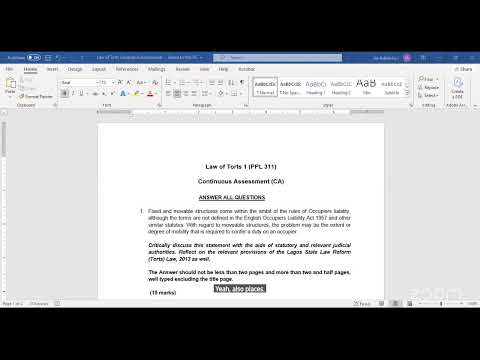
Occupier's liability refers to the legal responsibility of a person or entity that controls a property to ensure the safety of visitors. The primary legislation governing this area in the UK includes the Occupiers' Liability Act of 1957 and the Occupiers' Liability Act of 1984. The former primarily deals with lawful visitors, while the latter addresses the responsibilities towards trespassers.
Under the Occupiers' Liability Act of 1957, occupiers owe a common duty of care to lawful visitors. This duty requires them to take reasonable steps to ensure that visitors are safe while on their premises. The standard of care expected can vary based on the nature of the visitor and the circumstances surrounding their visit.
A significant aspect of occupier's liability is the heightened duty of care owed to children. It is recognized that children may not be as cautious as adults, and therefore, occupiers must take extra precautions to protect them from potential hazards.
In the case of Malone and Lambert, a child under five years old tripped on a staircase with a gap that was not wide enough for an adult to pass through. The court held that the local authority was liable because it was foreseeable that children would use the staircase unaccompanied. This case illustrates the principle that the duty of care owed to children is higher than that owed to adults.
Another pertinent case is Glasgow Corporation v. Taylor, where a young boy died after consuming poisonous berries in a public garden. The court found the corporation liable for failing to protect children from the dangers posed by the berries, reinforcing the idea that occupiers must take reasonable steps to safeguard children on their premises.
Occupiers can mitigate their liability through the use of warning notices, exclusion clauses, and disclaimers. Each of these serves a different purpose in managing risk and liability.
Warning notices are intended to inform visitors of potential hazards. If a warning is deemed sufficient, it can satisfy the standard of care required under the law, thus preventing a breach of duty. For example, signs indicating wet floors or hazardous areas serve to alert visitors to exercise caution.
Exclusion clauses aim to limit or exclude liability for certain risks. For instance, a notice stating that the occupier is not responsible for lost or stolen items can serve as an exclusion clause. However, such clauses must be reasonable and clearly communicated to be enforceable.
Disclaimers are legal statements that protect a party from claims related to inaccuracies in provided information. For example, a website may include a disclaimer stating that the information is provided "as is" without guarantees of accuracy. While disclaimers can limit liability, their enforceability may vary based on the circumstances.
Occupiers can defend against liability claims through various defenses, including contributory negligence and voluntary assumption of risk.
This defense applies when a visitor's own negligence contributes to their injury. For instance, if a visitor disregards warning signs and suffers an injury, the occupier may argue that the visitor's actions were a contributing factor.
The principle of voluntary assumption of risk means that if a visitor knowingly accepts a risk, they may not be able to claim for injuries sustained as a result. This principle is particularly relevant in cases where visitors engage in activities that inherently carry risks.
Understanding occupier's liability is essential for both property owners and visitors. The principles governing this area of law emphasize the importance of ensuring safety, particularly for vulnerable individuals such as children. By utilizing warning notices, exclusion clauses, and disclaimers, occupiers can manage their liability effectively. Furthermore, being aware of defenses such as contributory negligence and voluntary assumption of risk can help occupiers navigate potential claims. Through case studies, we see how these principles are applied in real-world scenarios, highlighting the ongoing relevance of occupier's liability in tort law.