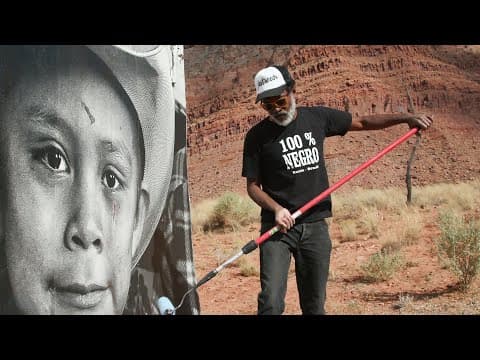
Chip Thomas, known as Jetsonorama, uses street art to highlight the struggles and beauty of the Navajo Nation, addressing issues like land disputes and the legacy of uranium mining while fostering community pride and awareness.
In the realm of street art, few artists have managed to intertwine personal narrative, cultural heritage, and social justice as effectively as Chip Thomas, also known by his street art name, Jetsonorama. Living on the Navajo Nation, Thomas uses his art to provoke thought and inspire pride among his community, while also addressing pressing issues that affect Native Americans today.
Chip Thomas describes part of his artistic mission as being an intentional provocateur. He aims to place his work in unexpected spaces, particularly large-scale pieces that challenge viewers to engage with the narratives he presents. One significant piece addresses a land dispute involving the Peabody Coal Company and the Hopi tribe, which resulted in the forced removal of Navajo people from their land. This piece, rooted in a photograph taken in 1983 by a dear friend of Thomas, serves as a reminder of ongoing struggles that remain relevant today.
Thomas emphasizes the multilayered nature of his work, reflecting the complexities of life itself. His art often features themes of family and community, as seen in a piece that resonated with a passerby who was captivated by the image of a parent throwing their child into the air. This interaction highlights how art can evoke personal connections and shared experiences.
Living approximately 35 miles south of the Utah border, Thomas is deeply embedded in the culture and landscape of the Navajo Nation. He notes that despite the rich cultural heritage, the Diné people face significant economic challenges, with an unemployment rate exceeding 50%. In this context, Thomas seeks to create art that reminds the community of their inherent beauty and resilience.
In addition to his work as an artist, Chip Thomas is a physician in a primary care clinic. His journey to the Navajo Nation began with the National Health Service Corps program, which encourages healthcare professionals to serve in underserved areas. After fulfilling his four-year obligation, Thomas chose to remain, drawn by the community and the land. His experiences in healthcare inform his art, as he often incorporates narratives from his patients into his work.
One of the critical themes in Thomas's art is the legacy of uranium mining on Navajo lands. He participated in an exhibition aimed at raising awareness about the dangers of uranium exposure, which has had devastating effects on the community. Despite knowledge of the risks dating back to the 1950s, little was done to protect workers on the reservation. Thomas's work serves as a powerful reminder of this toxic legacy and the ongoing fight against nuclear colonialism.
Thomas's art is not just about aesthetics; it is deeply personal and rooted in the stories of those around him. He recalls a poignant moment when a patient shared the impact of uranium mining on their family, particularly the cancer diagnosis of a loved one who worked in the mines. This narrative inspired Thomas to create imagery that honors these experiences and keeps the memory of those affected alive.
Cyndy Begaye, a long-time collaborator of Thomas, reflects on the emotional impact of his work. She shares how seeing his piece brought tears to her eyes, as it serves as a testament to her father's sacrifices and the importance of remembering their history for future generations.
Chip Thomas's work as Jetsonorama is a powerful blend of art, activism, and community engagement. Through his murals and installations, he not only beautifies abandoned spaces but also challenges viewers to confront uncomfortable truths about history and identity. His commitment to representing the dignity of Native Americans and fostering a sense of pride within the community is a testament to the transformative power of art. Living amidst the struggles and triumphs of the Navajo Nation, Thomas continues to find inspiration in the resilience of his people, using his art as a means of expression and a call to action.