Samsung is reportedly developing a groundbreaking fully transparent smartphone, the 'Galaxy Glass,' which integrates transparent OLED technology, under-display cameras, and semi-transparent batteries. Expected around 2026, this innovation could redefine smartphone design, challenge Apple's market dominance, and usher in a new era of mobile technology with transparent devices becoming mainstream.
In a development that has captured the attention of the global tech community, Samsung is reportedly preparing to unveil a revolutionary smartphone that could change the industry forever. According to sources from The Elec and Korea Herald, Samsung is working on a fully transparent next-generation smartphone, a project that was considered nearly impossible just a year ago.
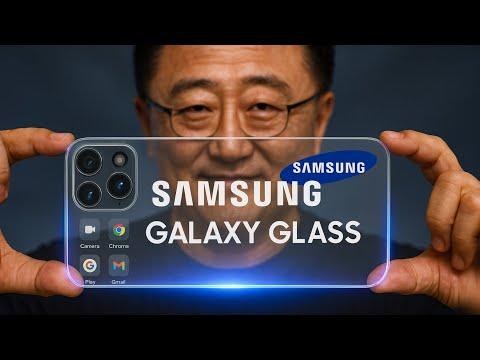
The development of this transparent smartphone has been underway in deep secrecy for over five years, with significant technological breakthroughs occurring in the last 18 months. Insiders from Samsung Display's engineering centers reveal that the company is close to creating a transparent monolithic device where the glass serves as both the body and the display. The internal components are so skillfully hidden that the device appears as a single transparent block, coming to life only when the interface is activated.
Samsung began filing patents for new transparent OLED panels, hybrid structural composites, and under-display sensors embedded in transparent materials. These patents closely align with the presumed architecture of the transparent phone.
While transparent OLED displays have existed, they were previously fragile, expensive, and required electronics to be housed separately. Samsung has developed a unique layout featuring an ultra-thin side module that houses part of the electronics. Floating elements are embedded inside the transparent glass structure, hidden by a new transparent conductive material that becomes visible only under direct light, creating the illusion of absent components.
Samsung engineers are testing new semi-transparent batteries, known as hybrid mini cells, which allow partial light transmission. The camera system is fully integrated under the glass using improved under-display camera technology refined over several Galaxy generations.
To address the challenge of switching between transparency and display visibility, Samsung created a multilayer OLED module with an instant dimming mode. This electrochromic glass effect allows the phone to become matte or fully darkened on command, enabling it to function as a regular smartphone when the interface is active and revert to transparency when the screen is off or during special effects. Adaptive dimming technology is also being tested to adjust transparency based on lighting conditions.
If Samsung releases this transparent smartphone in 2026, it could trigger a massive technological restructuring in the smartphone market:
IDC experts suggest that even a limited premium series of transparent devices could establish Samsung as a technological leader.
The official name of the device remains unknown, with leaked possibilities including Galaxy Crystal, Galaxy Glass Edition, or Galaxy Zero View. Specifications are also under wraps, but the anticipation is high that Samsung is close to revealing the first commercial transparent smartphone.
Samsung has increased investments in transparent panels by over 40% in the past two years and has established a dedicated team for sixth-generation transparent OLED modules. The project is considered a historical challenge within Samsung, aiming not only to introduce a new form factor but also to demonstrate superiority in materials, electronics, and manufacturing technologies.
South Korean media report that Samsung envisions the transparent smartphone as the beginning of a product line including transparent tablets, AR-compatible transparent terminals, and hybrid smart home devices with interfaces embedded in glass surfaces.
The smartphone market is ripe for such innovation, as the era of classic smartphones has entered stagnation with uniform designs and incremental updates. A fully transparent phone could restore the sense of technological magic reminiscent of the first iPhone launch.
There is also speculation about integrating the transparent smartphone into Samsung's AI ecosystem, with visual effects that make the interface appear to float inside the glass. This would combine augmented reality, electrochromic dimming, and adaptive OLED layers to blur the line between physical objects and digital interfaces.
Analysts from TechRadar and GSMArena describe the leaks as unusually consistent and call the project Samsung's boldest and most complex. If Samsung successfully combines transparent OLED panels, new batteries, under-display cameras, composite glass, and miniaturized chips into a single structure, it will mark the beginning of a new era in mobile technology.
The first official hints of Samsung's transparent smartphone may appear as early as mid-2026. If confirmed, the release of the transparent Galaxy phone could be an event comparable to the launch of the first iPhone, potentially rewriting the history of the smartphone industry and positioning Samsung as the new leader in innovation.
The world eagerly awaits this groundbreaking device that promises to bring the futuristic concept of transparent phones from science fiction to reality.